Tehran says any disruption in the strategic waterway will be treated as a threat to its national security….reports Asian Lite News Desk
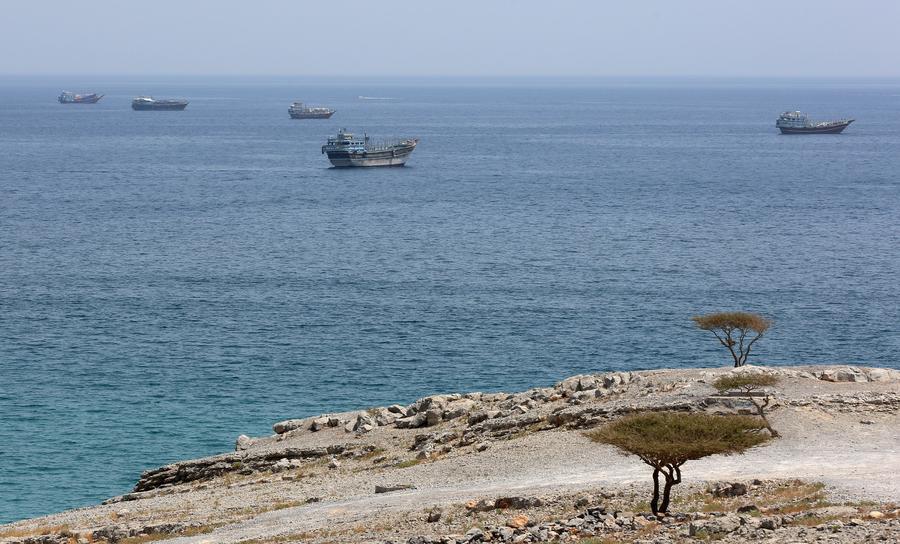
Iran on Thursday warned that any attempt by the United States to interfere in the Strait of Hormuz would be met with a “swift and decisive” military response, asserting that the strategic waterway falls under Iran’s sovereignty and is not an area for US intervention.
In a statement carried by Iranian media, the Khatam al-Anbiya Central Headquarters, Iran’s main military command, said the Strait of Hormuz was not the “aggressive US playground” but part of Iran’s “undisputed sovereignty,” adding that maintaining its security and stability remains a red line for the country’s armed forces, Xinhua news agency reported.
The headquarters said all oil tankers and commercial vessels transiting the strait must adhere to routes designated by Iran and comply with its navigation protocols.
It warned that any vessel deviating from the prescribed routes or ignoring Iranian regulations would face an “immediate and decisive” response from the Iranian armed forces, putting the safety of such vessels at risk.
The military command further stated that any US attempt to interfere in security matters or disrupt activities in the Strait of Hormuz would be viewed as a direct threat to Iran’s national security and would trigger a rapid military response.
It also criticised the continued presence of US manned and unmanned military aircraft over the strategic waterway, saying such deployments undermine regional security. Iran, it said, would not hesitate to take necessary action to “crush any aggression” by US forces or their allies in defence of its sovereignty.
Separately, Iran’s Deputy Foreign Minister for Legal and International Affairs, Kazem Gharibabadi, reiterated Tehran’s position in a post on social media platform X, declaring that the Strait of Hormuz “is defined under Iran’s command, not the US Central Command (CENTCOM).”
His remarks came a day after the US Central Command (CENTCOM) hosted a regional security dialogue in Bahrain involving military representatives from 12 countries. The meeting focused on regional security, strengthening defence cooperation and reaffirming a shared commitment to ensuring the free flow of commerce through the Strait of Hormuz.
Responding to the meeting, Gharibabadi argued that such gatherings could not establish “legal order and security” in the Gulf. He maintained that lasting security in West Asia would only be achieved if the United States ended its interventions, withdrew its military presence from the region, respected the sovereignty of regional states and recognised the changing geopolitical landscape.