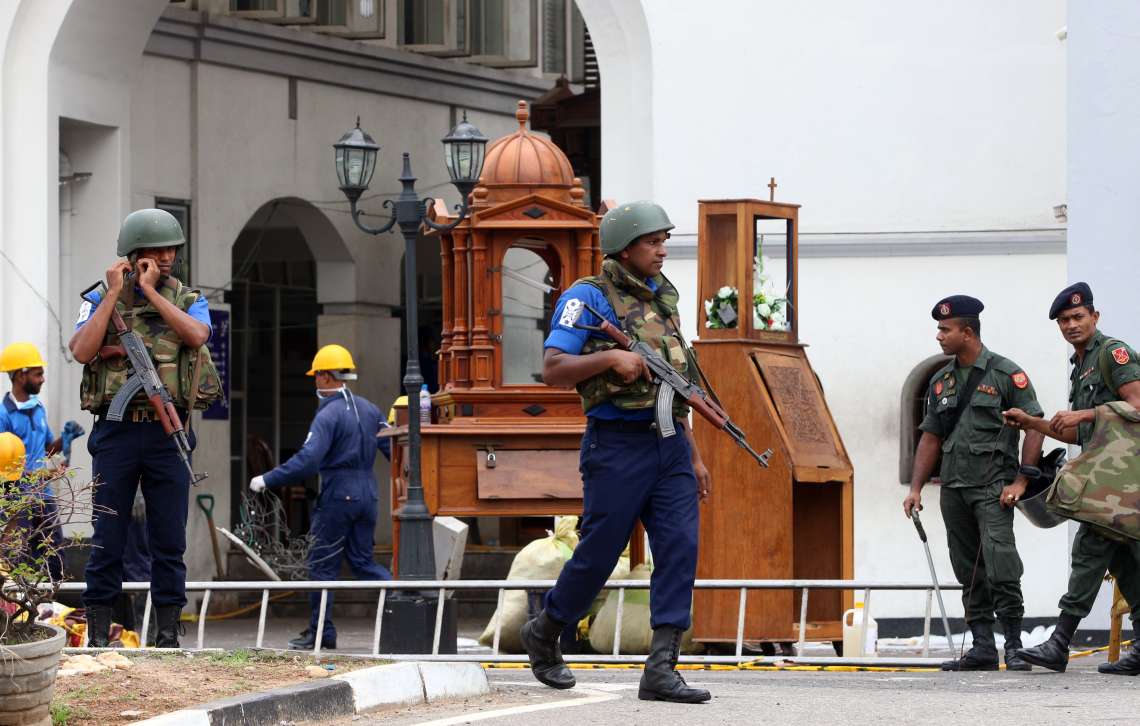
Former intelligence chief Sallay is the most senior figure to be taken into custody in connection with the long running investigation into the coordinated suicide attacks of April 21, 2019….reports Asian Lite News
Sri Lanka’s President Anura Kumara Dissanayake has authorised the detention of the country’s former intelligence chief for up to three months of questioning over his alleged involvement in the 2019 Easter Sunday bombings, according to a report by Arab News citing police officials.
The president signed a detention order under the Prevention of Terrorism Act permitting investigators to hold retired Major General Suresh Sallay for 90 days. Police said the order was issued following an initial three day detention period after his arrest on Wednesday.
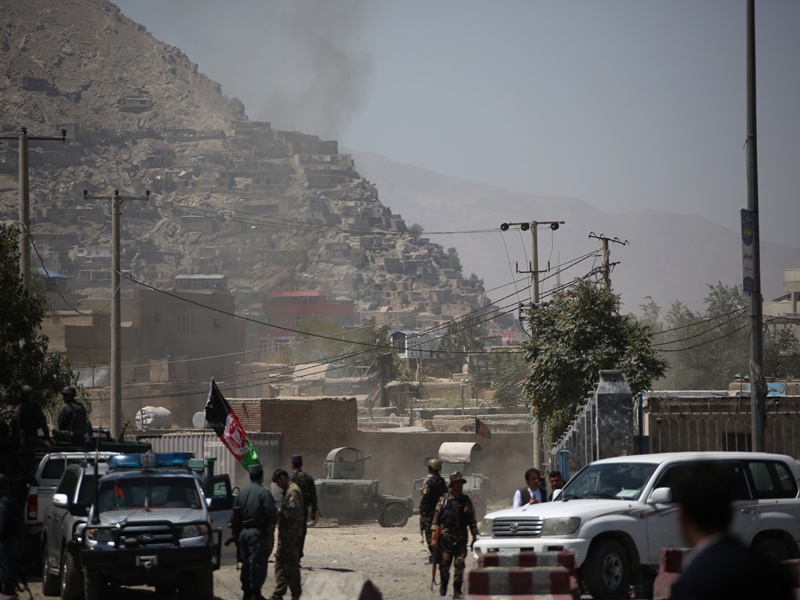
Sallay is the most senior figure to be taken into custody in connection with the long running investigation into the coordinated suicide attacks of April 21, 2019. The bombings targeted two Roman Catholic churches, an evangelical Protestant church and three luxury hotels, killing 279 people and injuring around 500 others. Among the dead were 45 foreign nationals.
Nine suicide bombers carried out the attacks, which remain one of the deadliest episodes in Sri Lanka’s recent history.

A police spokesperson said the president signed the detention order late Friday, allowing authorities to continue questioning Sallay under the Prevention of Terrorism Act. The legislation enables security forces to detain suspects for extended periods without formal charges or immediate judicial review. Those held under the law are not eligible for bail through the courts.
Opposition parties have criticised the arrest, alleging it amounts to a politically motivated move. However, Sri Lanka’s Catholic Church, which has consistently called for accountability over the attacks, welcomed the development. Church leaders said investigators should be allowed to proceed without political interference.
The Church had previously accused former president Gotabaya Rajapaksa of obstructing earlier probes after he rose to power months after the bombings, pledging to eradicate Islamist extremism.
The arrest of Sri Lanka’s former Intelligence chief, Retired Major-General Suresh Sallay is a turning point in the investigations into the 2019 Easter Sunday bombings that killed 279 people.
The move was a bold one taken by President Anura Kumara Dissanayake who won the presidency in 2024.
He had promised that all persons involved in the attack would be brought to justice.
Sallay was made State Intelligence Service (SIS) chief in 2019 after Gotabaya Rajapaksa became President.
The allegation against Sallay was that he had permitted the attack to take place with the intention of influencing that year’s presidential election, which was eventually won by Rajapaksa.
Sallay had become a prominent figure in Sri Lanka and was widely credited with dismantling the LTTE. His arrest has led to a political storm and many state that it could revive tensions relating to the LTTE.
Ali Sabry, former Sri Lankan Minister for Foreign Affairs said that the developments are deeply troubling.
An Indian official said that the developments in Sri Lanka are being monitored closely.
On the question whether the LTTE issue would come back into the picture following the arrest of Sallay, the officer said that attempts are being made, but it would be very tough.
There have been several cases that the National Investigation Agency (NIA) has been probing concerning the revival of the LTTE.
The ISI, too, has tried its hand in ensuring the revival of the LTTE, but has not been successful so far.
To prevent the revival of the LTTE, both India and Sri Lanka have been working very closely.

Another official explained that the current ties with Sri Lanka have gone from ideological to an investment-led partnership.
Prime Minister Narendra Modi and President Dissanayake share a pragmatic relationship and this has gone a long way in ensuring cooperation on all fields including security, the official explained.
While some in Sri Lanka do not subscribe to Dissanayake’s decision on Sallay, the fact is that the Easter Bombing case has to be probed from every possible angle.
An Intelligence Bureau official says that a major concern today are the activities of the National Thowheeth Jama’ath (NTJ) and Jamathei Millathu Ibrahim (JMI), the two outfits responsible for this attack.
The NTJ in particular has a vast presence in South India and has managed to radicalise a large number of youth in Tamil Nadu and Kerala.
The mastermind of the attack, Mohammad Zahran Hashim was a frequent visitor to Tamil Nadu. He was also responsible for the radicalisation of Jamesha Mubeen who carried out an unsuccessful attempt to bomb a temple in Coimbatore in 2022.
The Indian agencies have been actively pursuing the role played by Hashim. A probe by the NIA in the South India radicalisation case revealed that the entire plot was being run by Hashim from Sri Lanka.
At least 50 of the 100 radicalisation videos seized by the agency were discourses by Hashim, who had close links with the Islamic State.
Officials say that Sallay could provide details to investigators about the module that Hashim ran.
This would come in handy for the Indian agencies who are probing cases directly linked to the NTJ in South India.
Hashim, who was the ring leader for the suicide bombers during the Easter Bombing had spent a considerable amount of time in India.
The Indian agencies would want to learn if any of the locals that Hashim interacted with had any idea about the Easter Bombings.
While in India, Hashim had focussed his radicalisation programmes mainly at Mallapuram, Coimbatore, Nagapattinam, Kanyakumari, Ramnathpuram, Vellore, Trichy and Thirunelveli, the NIA probe found.
Pallay has for now denied any links to the Easter Bombings.
Indian officials say that they do not want to comment on Pallay and his alleged links.
However, it is important that the bombings are probed thoroughly since the activities of the NTJ have a direct bearing on India, particularly the southern states, the official also added.