A new report warns that joining the Mecca Pact could force Bangladesh into conflicts unrelated to its national interests…reports Asian Lite News Desk
Bangladesh should carefully assess the potential strategic and economic risks before joining the Mecca Pact or any similar military alliance, as membership could expose Dhaka to conflicts in which it has no direct interest, a report has warned.
The report, published by Bangladesh’s leading newspaper The Daily Star, argued that Bangladesh’s interests would be better served by maintaining an independent foreign and security policy and preserving the flexibility to engage with all sides.
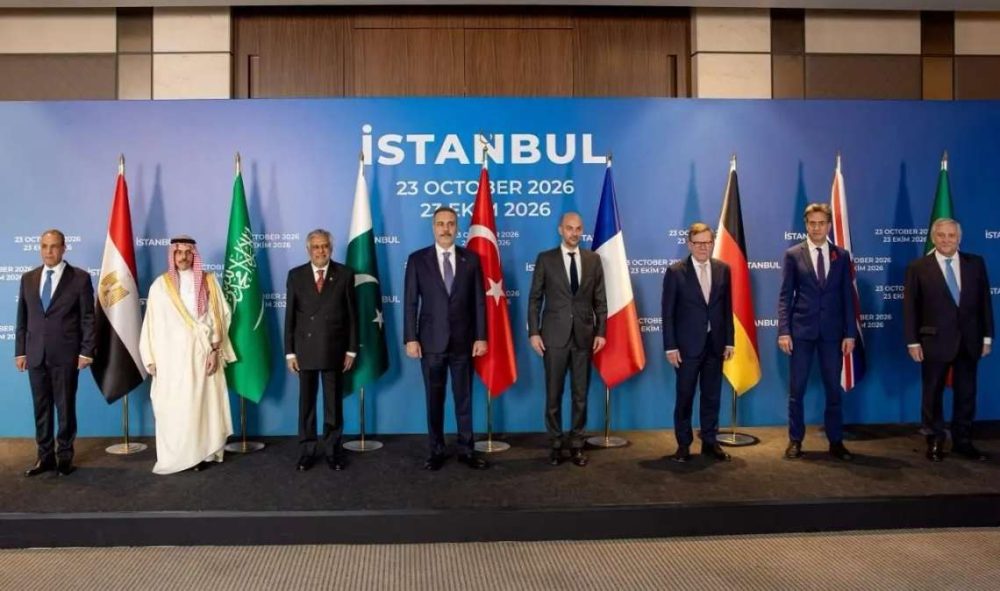
It said the security priorities outlined in the Mecca Joint Defence Agreement, signed by Saudi Arabia, Turkey and Pakistan on August 7, do not necessarily correspond with Bangladesh’s national interests.
The report cautioned that joining a military alliance could force Dhaka to take positions in conflicts involving its treaty partners, even when Bangladesh itself has no dispute with the opposing side.
“Bangladesh should not import the Middle East’s architecture of conflict into its foreign policy,” the report said, warning that a country with which Dhaka currently has no dispute could become a source of diplomatic tension if it became an adversary of one of Bangladesh’s military partners.
It argued that Bangladesh should retain the ability to assess international crises independently and determine its response according to its own national interests.
The report highlighted Bangladesh’s relationship with Iran as an example. Dhaka has no territorial dispute or military conflict with Tehran and has no apparent interest in becoming involved in a potential confrontation in the Gulf.

However, if Saudi Arabia were drawn into a future conflict with Iran while Bangladesh was a member of the Mecca Pact, Dhaka could face pressure to support its treaty partner, the report said.
Such a scenario could damage Bangladesh’s relations with both Riyadh and Tehran while also putting its economic and energy interests at risk.
The report pointed to Bangladesh’s dependence on international shipping routes through the Strait of Hormuz and the Bab el-Mandeb Strait, both of which are strategically important waterways vulnerable to disruption during regional conflicts.
A major concern is the pact’s collective-defence provision, under which an armed attack against one member is treated as an attack against all members.
The report compared the arrangement with NATO’s Article 5, arguing that the provision could potentially draw Bangladesh into a military confrontation even if Dhaka had no direct involvement in the original dispute.
“Bangladesh has never built its foreign policy around military confrontation, and there is little reason to begin doing so now,” the report stated.
It further warned that membership of such an alliance could limit Bangladesh’s diplomatic flexibility and require it to commit military resources to conflicts determined by the strategic calculations of other countries.
Instead, the report advocated maintaining broad relationships with different powers while avoiding military blocs that could force Bangladesh to take sides.
“Bangladesh should manage each relationship on its own merits, cooperate widely and remain outside military blocs that could compel it to take sides,” it said.
The report also argued that Dhaka’s foreign policy should remain focused on Bangladesh’s own strategic priorities rather than becoming influenced by rivalries elsewhere.
The Mecca Joint Defence Agreement between Saudi Arabia, Turkey and Pakistan has raised wider questions about the future shape of security cooperation among Muslim-majority countries and the potential expansion of the arrangement.
For Bangladesh, the debate comes as it seeks to balance relations with regional and global powers while protecting its economic, energy and security interests.
The report ultimately urged Dhaka to preserve its freedom of action, warning that entering a collective-defence arrangement could create obligations extending well beyond Bangladesh’s immediate security concerns.
It said an independent approach would allow the country to cooperate with a wide range of partners without automatically inheriting their geopolitical disputes.