Nepal’s Home Minister quits over financial controversy, as questions on transparency, asset disclosure and conflict of interest shake a reform-driven government under rising public scrutiny, reports Asian Lite Newsdesk
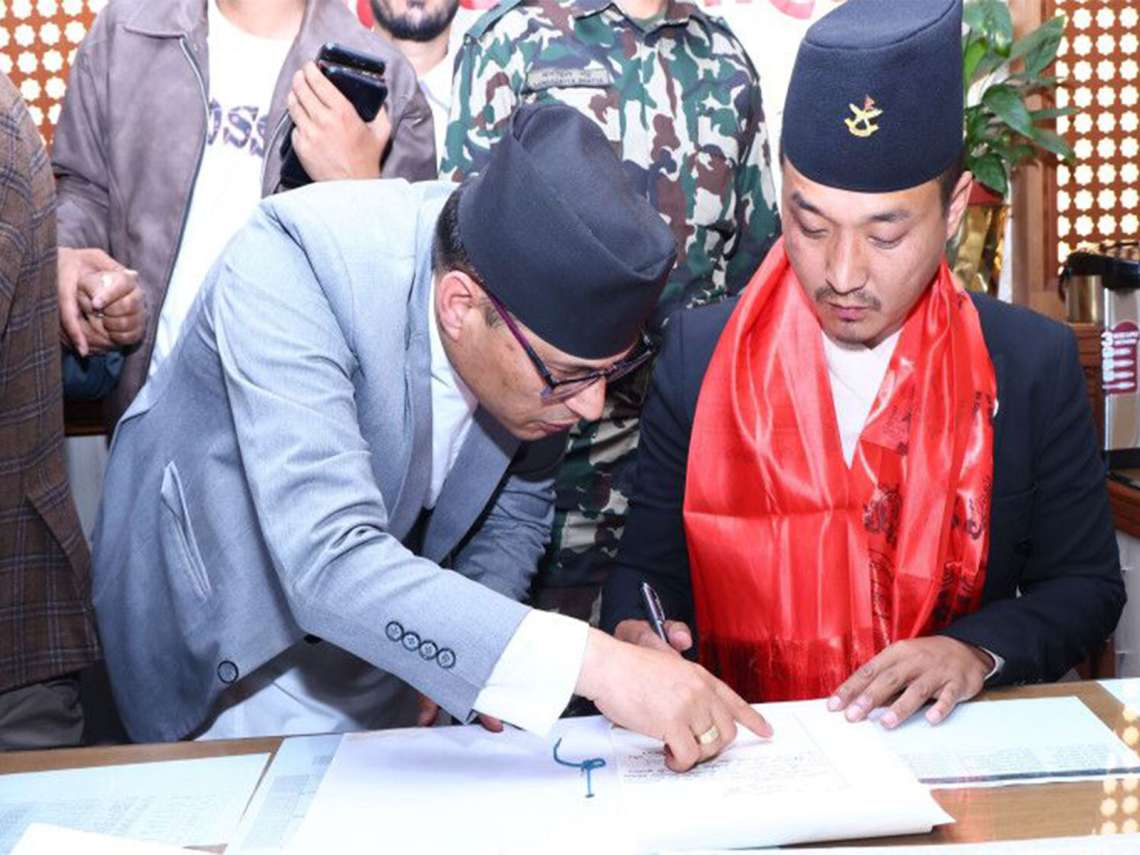
Nepal’s Home Minister Sudhan Gurung has stepped down from office following mounting political pressure and public scrutiny over his financial links to a businessman under investigation for alleged money laundering, in a development that has intensified debate over transparency and accountability in the country’s young government.
Gurung tendered his resignation to Prime Minister Balendra Shah, widely known as Balen, bringing a sudden halt to a tenure that had initially been marked by an assertive anti-corruption stance. His departure comes amid a widening controversy surrounding his shareholdings in companies associated with Deepak Bhatt, who was recently arrested as part of a money laundering investigation.
In a public statement shared on social media, Gurung said his decision was guided by moral considerations and the need to ensure an impartial investigation. He stressed that public trust must take precedence over political office, noting that the current wave of youth-led demands for cleaner governance had reinforced expectations of accountability in public life. He said stepping down would eliminate any perception of conflict of interest and allow due process to proceed without interference.
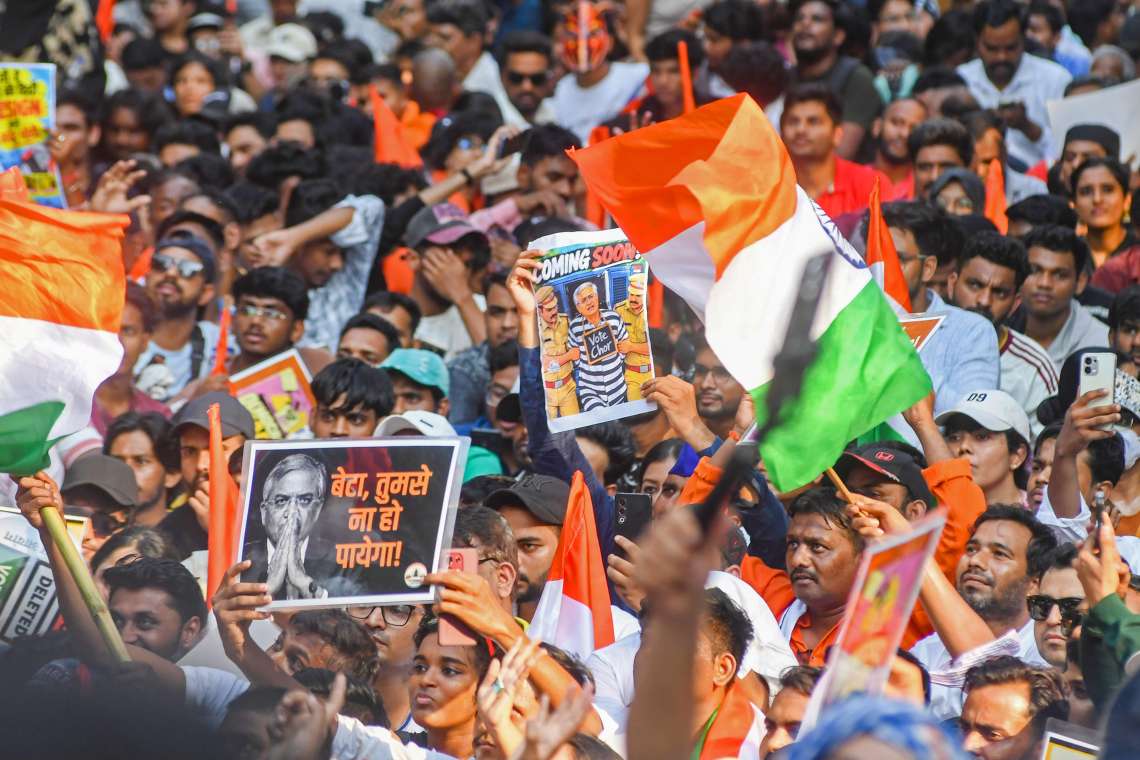
Gurung, who emerged as a prominent political figure following the Gen-Z protests in September and went on to secure victory from Gorkha in the March 5 elections, had been seen as part of a new generation of leaders promising reform. His appointment as Home Minister on the day the government was formed had symbolised a shift towards a more activist approach to governance, particularly in tackling corruption.
During his early months in office, Gurung gained attention for authorising action against high-ranking officials, including arrests linked to alleged financial irregularities. However, the narrative began to shift as questions emerged over his own financial disclosures and business connections.
The controversy erupted after documents made public revealed that Gurung held shares in Star Micro Insurance and Liberty Micro Insurance, companies reportedly linked to Bhatt. The revelation triggered a wave of criticism from opposition figures, civil society groups and even members within the ruling establishment, who raised concerns about a possible conflict of interest given the ongoing investigation.
As scrutiny intensified, calls for his resignation grew louder, with some leaders within his own party arguing that his continued presence in office could undermine the credibility of the government’s anti-corruption agenda. The issue quickly became a flashpoint in Nepal’s political discourse, highlighting the challenges faced by reformist leaders navigating entrenched systems.
Gurung responded to the allegations on multiple occasions, maintaining that his investments were legitimate, transparent and part of his declared financial portfolio. He said his total investment in the securities market exceeded NRs 20 million and argued that there was no reason to conceal a relatively smaller holding of NRs 2.5 million in the companies under scrutiny.
He also emphasised that the shares had been acquired prior to his assumption of office and that being a shareholder did not equate to direct involvement with other individuals associated with the company. Addressing concerns over a conflict of interest, Gurung pointed out that the investigation into Bhatt was being conducted by the Department of Money Laundering Investigation under the Ministry of Finance, not the Home Ministry.
Despite these clarifications, questions persisted over discrepancies in his asset declarations. Reports indicated that while Gurung had disclosed a consolidated figure for his investments in the securities market, the specific shareholdings in Star Micro Insurance and Liberty Micro Insurance were not listed separately. This raised concerns about the transparency and accuracy of his disclosures, particularly after it emerged that the companies had not yet begun public trading.
Further complicating matters were revelations that Gurung’s investments may have been financed through a bank loan, a detail that was not explicitly mentioned in his official asset filings submitted to the Office of the Prime Minister and Council of Ministers. Critics argued that such omissions, whether intentional or procedural, warranted closer examination.
In his defence, Gurung dismissed allegations against him as part of a coordinated campaign aimed at discrediting his efforts to combat corruption. He suggested that individuals threatened by enforcement actions had sought to undermine him through what he described as “media trials” and “sponsored rumours.” He insisted that his crackdown on financial misconduct would have continued unabated had he remained in office.
Nevertheless, the political cost of the controversy proved difficult to contain. With public trust emerging as a central theme of his own political messaging, Gurung’s position became increasingly untenable. His resignation reflects both the pressure of public expectations and the fragility of reform-driven leadership in politically volatile environments.