Rising education costs, examination controversies and limited postgraduate residency places are raising questions about medicine’s appeal among young Pakistanis…writes Dr SaKariya Kareem
For generations of Pakistani families, becoming a doctor has represented more than a professional achievement. It has promised social standing, financial security and a career built around public service.
Yet the numbers entering the country’s medical admission race tell a different story. Applications for the Medical and Dental College Admission Test (MDCAT) have fallen sharply, raising questions about whether medicine still offers young Pakistanis the future they once imagined.
Official figures show that MDCAT registrations declined from 204,253 in 2022 to 138,158 in 2026, a drop of approximately 32 percent.
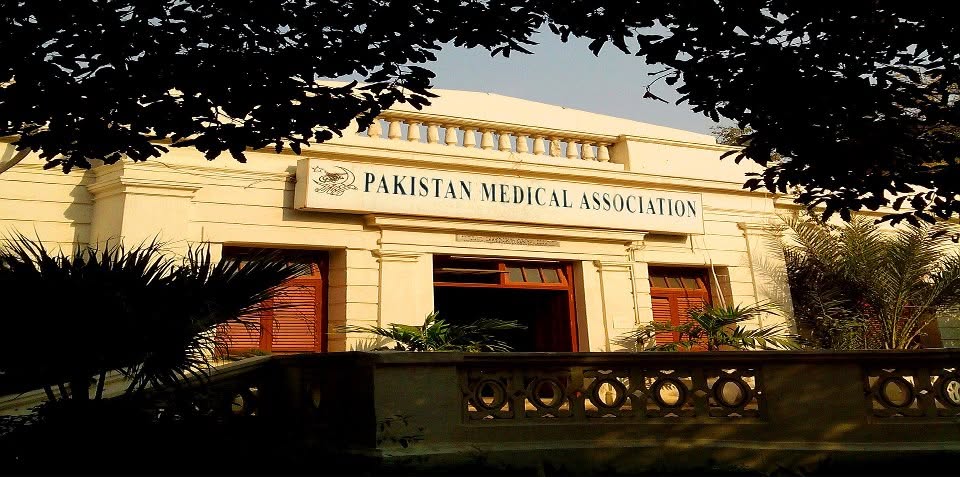
The Pakistan Medical Association (PMA) has warned that the trend reflects growing disillusionment with medicine as a career, citing high tuition fees and concerns about doctors’ earnings.
The figures do not establish that every student turning away from the profession has the same motivation. However, the sustained decline has placed the country’s medical education system under renewed scrutiny.
The fall comes as aspiring doctors face intense competition, expensive education, recurring controversies over entrance examinations and uncertainty about postgraduate training.
For many, the question is no longer simply whether they can secure a medical college seat, but whether the long and costly journey towards becoming a practising specialist remains worth pursuing.
A steady decline in applications
The change in MDCAT registrations has been substantial. According to figures reported by Dawn and attributed to the Pakistan Medical and Dental Council (PMDC), 204,253 candidates registered in 2022.
The number fell to 180,534 in 2023, rose to approximately 182,000 in 2024, and then dropped to 140,071 in 2025.
Registrations reached 138,158 in 2026. Even after the PMDC reopened registration following the postponement of the examination, only 2,063 additional candidates signed up.
The PMA described the decline as a structural concern rather than a temporary fluctuation. Its warning reflects apprehension within the medical profession that fewer students are choosing the conventional route into medicine.
The 2026 examination had initially been scheduled for 16 August but was rescheduled to 20 September following internet service suspensions in Azad Jammu and Kashmir and prevailing tensions.
The examination subsequently took place across the country and at an international centre in Riyadh, Saudi Arabia.
The disruption may have affected individual candidates, but it does not explain the entire decline. Registrations had already fallen considerably in 2025, before the latest scheduling changes.
The longer trend points towards broader questions about the attractiveness of medical education and the confidence students place in its admission process and career prospects.
Shadow of paper-leak scandals
For students preparing for one of the country’s most consequential examinations, fairness is fundamental.
Years of preparation, substantial coaching expenses and family expectations can depend on a single competitive test. Controversies over examination security have consequently damaged confidence in the process.
In 2023, authorities in Sindh cancelled the MDCAT after allegations of malpractice and ordered a retest, prompting legal challenges from candidates.
The controversy raised concerns about whether students had been assessed through a process that offered a level playing field.
The 2024 examination brought more serious allegations. An investigation by the Federal Investigation Agency (FIA) found evidence that the MDCAT paper had circulated through WhatsApp before the scheduled examination.
In its November 2024 judgment, the Sindh High Court examined the forensic findings and the circumstances surrounding the leak.
The court’s record referred to digital evidence indicating that material from the examination had been circulated before the test. The investigation also recovered deleted WhatsApp messages from a seized device.
The findings exposed weaknesses in examination security and raised questions about the possibility of candidates gaining an unfair advantage.
The consequences extend beyond the immediate dispute over results. When students believe that examination outcomes may be compromised by leaked papers or malpractice, the value of legitimate preparation comes under question.
Candidates who have invested years in their studies may feel that their efforts cannot guarantee a fair assessment.
The available evidence does not establish how many students subsequently abandoned plans to study medicine because of these controversies. Nevertheless, the repeated disputes have become part of the wider environment in which young Pakistanis assess their educational choices.
Financial burden of becoming a doctor
Medical education is a lengthy and expensive undertaking, particularly for families seeking admission to private colleges. Tuition fees, accommodation, transport, books, examination preparation and other living expenses can add substantially to the cost of a medical degree.
The financial pressure is especially significant when families must commit resources over several years without certainty about their children’s eventual earnings or employment.
Students who cannot secure public-sector places may face a difficult choice between the expense of private education and pursuing another degree.
Also Read: Munir’s Pakistan Province Plan Sparks Fears of Military Power Grab
Pakistan’s medical education authorities have also faced scrutiny over fee disparities.
In August 2026, the National Assembly’s Standing Committee on National Health Services directed the relevant ministry and PMDC to examine vacant medical college seats, differences in tuition fees and the monitoring of institutions charging higher fees.
The committee’s intervention highlighted a difficult tension: medical colleges may have available places while prospective students remain unable or unwilling to meet the financial cost of attending them.
Vacant seats alone do not prove that medicine has lost its appeal, but they raise questions about affordability and the relationship between educational capacity and student demand.
For households with limited financial resources, the decision carries consequences well beyond admission.
A medical degree requires years of study before graduates can establish themselves professionally. The possibility of taking on substantial financial commitments without a clear path towards a stable career can make other educational options appear more attractive.
More graduates, fewer training opportunities
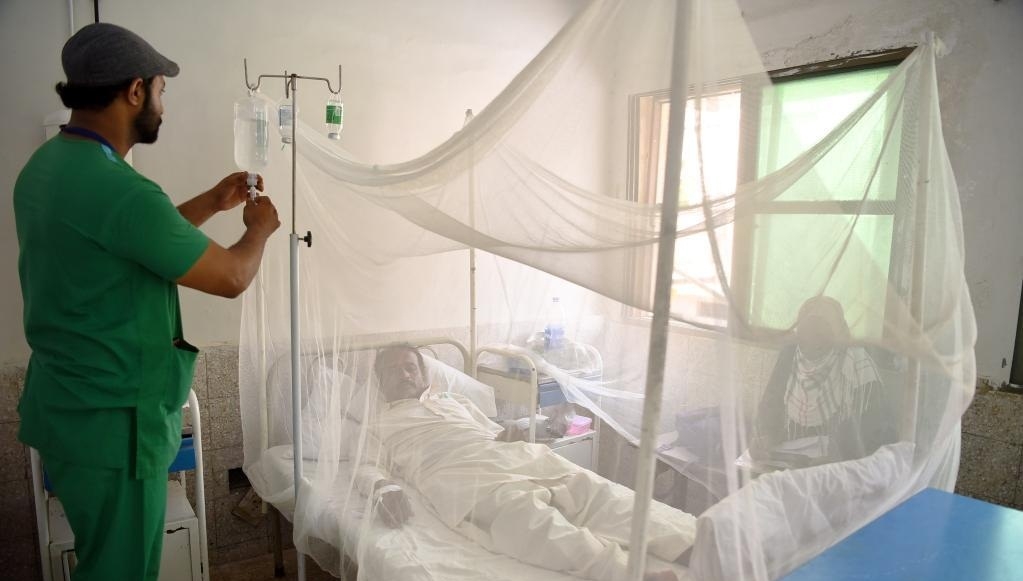
The financial commitment does not end with graduation. In March 2026, the PMDC acknowledged a growing mismatch between the number of medical graduates and the availability of funded postgraduate residency positions.
In a statement issued on 19 March, the council said Pakistan had expanded undergraduate medical education over two decades, producing an adequate supply of graduates and, in some disciplines, a surplus.
However, the country had not created enough structured postgraduate training opportunities to match that expansion.
The council urged provincial health departments to increase residency positions, warning that large numbers of qualified doctors were competing for limited places, particularly in the public sector. It identified the shortage of training opportunities and subsequent employment pathways as a major bottleneck.
This gap complicates the career calculations facing prospective students. Completing an undergraduate medical degree does not automatically guarantee a funded specialist training position or a clear route to career progression.
Graduates must navigate further examinations, competitive selection and additional years of training before reaching many of the professional positions they seek.
The mismatch also raises questions about the planning of medical education.
Expanding undergraduate enrolment without a corresponding increase in postgraduate training capacity can leave graduates competing for opportunities that do not grow at the same pace as the number of degree holders.
For students weighing a demanding course against alternative careers, uncertainty over the years following graduation adds another layer of risk.
The pull of alternative careers
Medicine is no longer the only profession offering ambitious young Pakistanis the prospect of international mobility and career advancement.
Artificial intelligence, biotechnology, software development and other technology-related fields have expanded the range of educational paths available to students.
These sectors differ significantly in their entry requirements, earning potential and employment conditions. Not every graduate will secure a high-paying technology job, just as a medical degree does not guarantee a lucrative career.
Nevertheless, the perception that some alternative professions offer shorter training periods or quicker entry into paid employment can influence educational choices.
Medicine demands years of formal study, clinical training and often postgraduate specialisation. Students must also account for the financial costs incurred before they can establish themselves professionally.
In technology-related fields, some career routes allow graduates to enter the workforce after shorter degree programmes or specialised training, although opportunities vary widely.
International mobility is another consideration. Doctors can pursue overseas qualifications and employment, but these routes often involve licensing examinations, language requirements and additional costs.
Technology professionals face their own barriers, yet the possibility of accessing international employers through remote work can make their career paths appear more flexible.
There is insufficient evidence to quantify how many Pakistani students have specifically switched from medicine to artificial intelligence, biotechnology or software development.
The decline in MDCAT registrations should therefore not be treated as proof of a direct migration towards those fields. It does, however, coincide with a broader range of choices for students deciding where to invest their education and working lives.

An admissions crisis or a career crisis?
The decline in MDCAT registrations reflects more than a single examination cycle.
The PMA has linked the trend to high educational costs and poor pay, while the PMDC’s own assessment has exposed the gap between undergraduate medical output and postgraduate training opportunities.
Examination controversies have added a separate concern: whether candidates can trust the process through which medical college places are awarded.
The 2023 retest and the evidence of a paper leak in 2024 demonstrate that these concerns have had concrete institutional consequences, even though their precise influence on application numbers remains unmeasured.
The figures also need careful interpretation. Registration numbers measure participation in the admission process, not the total number of young people interested in medicine.
Changes in eligibility, family finances, admission strategies and the availability of alternative courses can all influence the annual total. The 2026 rescheduling also affected the examination timetable, although the broader decline began earlier.
Even with these qualifications, the scale and persistence of the reduction are significant.
From the 2022 peak of 204,253 registrations to 138,158 in 2026, the number of candidates fell by 66,095. That is a decline of approximately 32.4 percent in four years.
Pakistan’s medical education system now faces a difficult question about the relationship between the number of students it attracts, the cost of educating them and the professional opportunities available after graduation.
The declining MDCAT figures do not, by themselves, establish that the country is heading towards a doctor shortage. Nor do they prove that the medical profession has lost its standing among all young people.
They do show that fewer candidates are entering the medical admission competition than at the start of the period.
With examination integrity under scrutiny, private education carrying substantial costs and postgraduate training places failing to keep pace with undergraduate output, the reasons for that decline extend beyond changing student preferences.