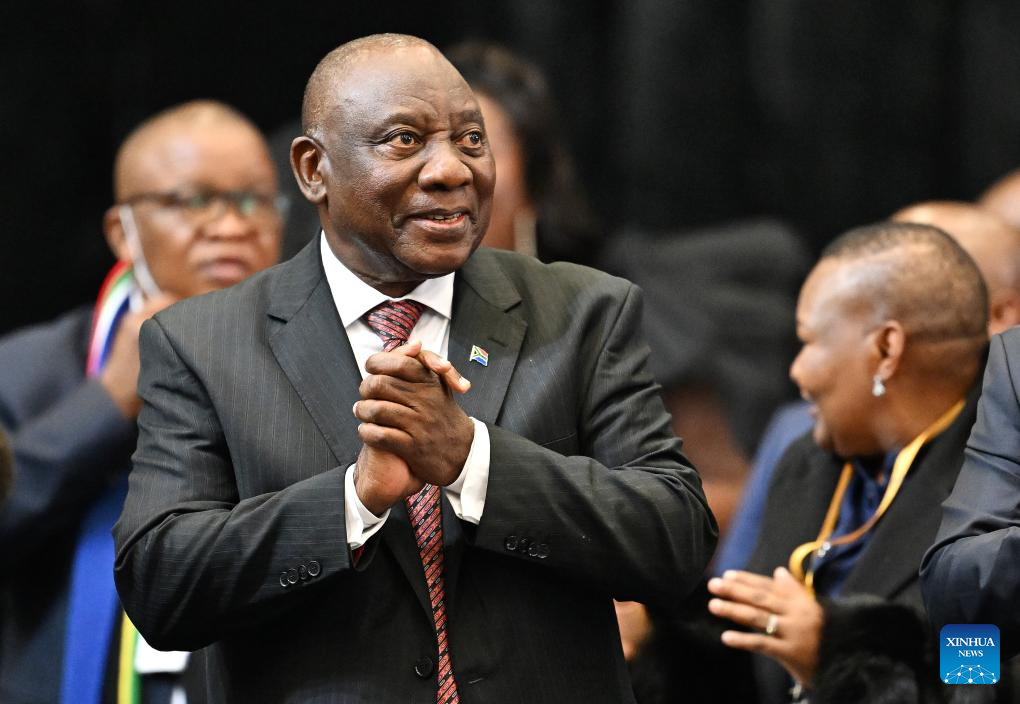
South Africa has ordered Israel’s deputy ambassador to leave the country within 72 hours, accusing him of violating diplomatic norms and insulting President Cyril Ramaphosa on social media…reports Asian Lite News
South Africa ordered Israel’s deputy ambassador to leave the country within 72 hours on Friday, accusing him of undermining relations between the two countries with social media posts that insulted President Cyril Ramaphosa and of breaching diplomatic protocols.
The South African foreign ministry said it was expelling Ariel Seidman, the chargé d’affaires at the Israeli embassy, and declared him persona non grata, a diplomatic term indicating that an individual is no longer welcome in a country. Seidman is the most senior Israeli diplomatic representative in South Africa after Israel recalled its ambassador in 2023.
Hours later, Israel’s foreign ministry said on X that it was expelling a senior South African diplomat, Shaun Edward Byneveldt, in response, and ordered him to leave Israel within 72 hours.
The reciprocal expulsions come against the backdrop of severely strained relations between South Africa and Israel following South Africa’s decision to bring a case against Israel at the International Court of Justice, accusing it of genocide against Palestinians in Gaza. South Africa has long described itself as a supporter of the Palestinian people.

Israel has strongly denied the allegations and accused South Africa of acting as the legal arm of Hamas by bringing the case before the court. Israeli officials have repeatedly said the case is politically motivated and ignores what they describe as Israel’s right to defend itself.
Seidman’s expulsion is also likely to draw attention in Washington. The United States, a close ally of Israel, has been especially critical of South Africa under President Donald Trump. The Trump administration has previously characterised South Africa as a supporter of Iran and Hamas and accused it of pursuing an anti-American foreign policy, which South Africa has denied.
Last year, Washington expelled South Africa’s ambassador to the United States, Ebrahim Rasool, over comments he made about the Make America Great Again movement, which he said was partly a response to a “supremacist instinct”.
In a statement, South Africa’s foreign ministry said expelling Seidman “follows a series of unacceptable violations of diplomatic norms and practice which pose a direct challenge to South Africa’s sovereignty”. It said official Israeli social media platforms had been used to launch “insulting attacks” against Ramaphosa.
The ministry did not provide details of the posts it referred to, and it was not immediately clear what the comments contained or when they were made.
The ministry also said there had been a deliberate failure by Israeli officials to inform South Africa of visits by Israeli representatives. It did not elaborate, but David Saranga, an official at the Israeli foreign ministry tasked with promoting Israel’s image on social media, was in South Africa earlier this week.
South Africa said it had informed the Israeli government of the decision to expel Seidman and urged it “to ensure its future diplomatic conduct demonstrates respect” for South Africa and for the conventions governing diplomatic relations.
Israel’s foreign ministry said its decision to expel Byneveldt was a direct response to what it described as South Africa’s hostile actions, and accused Pretoria of escalating tensions rather than seeking dialogue.
The diplomatic dispute has also prompted debate within South Africa’s Jewish community. Some members criticised the decision to expel the Israeli diplomat, warning that it could further polarise an already sensitive political issue.
Karen Milner, the chairperson of the South African Jewish Board of Deputies, said the expulsion was “a drastic move” on the basis of “a few tweets”. She said the decision risked undermining channels of communication at a time when tensions were already high.
Analysts said the expulsions were largely symbolic but reflected a hardening of positions on both sides, with little sign of a near-term improvement in relations.