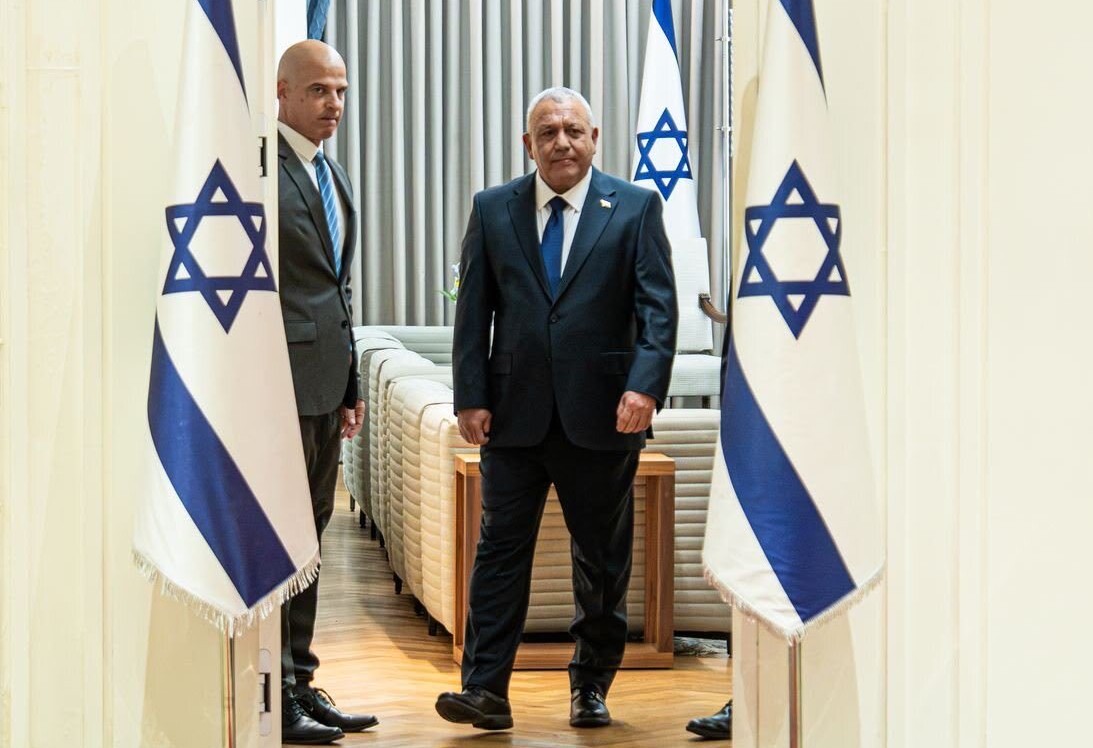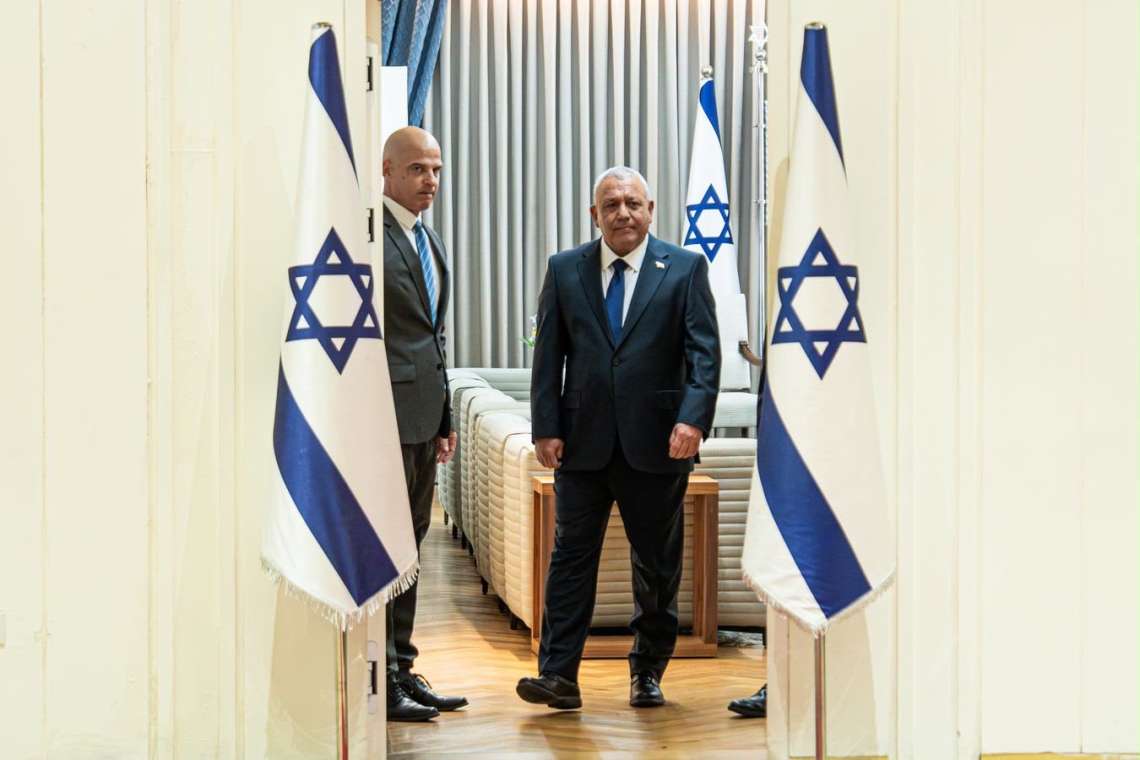
Gadi Eisenkot faces divisions over a unity deal, ultra-Orthodox alliance and minority government as Netanyahu seeks to retain power following Israel’s inconclusive October election…reports Asian Lite News Desk
Gadi Eisenkot is facing mounting political obstacles in his bid to form Israel’s next government, with disagreements over potential alliances threatening to derail negotiations even as he vows to end the political deadlock swiftly.
The former Israeli military chief, who was appointed by President Isaac Herzog to form a government, has warned that he will not allow coalition negotiations to drag on, insisting that he will present a new administration to the Knesset for approval.
However, his 48-seat opposition bloc remains divided over the way forward, with three possible arrangements emerging: a national unity government involving caretaker Prime Minister Benjamin Netanyahu, an alliance with ultra-Orthodox parties, or a minority government relying on support from Arab-majority political groups.
In a statement posted on X on Friday, Eisenkot said he intended to bring a new government before parliament at the appropriate time.
“I have no intention of dragging things out. At the appropriate time, I will bring a new and better government under my leadership to the Knesset for approval,” he wrote.
He also warned that Israel was entering dangerous political territory, accusing Netanyahu of allowing political considerations to influence military priorities.
“We are in very dangerous territory. This is not scaremongering, but a description of reality. A great deal of caution and responsibility is required of us,” Eisenkot said.
He added that military priorities had become entangled with political interests and that the timing of military operations was being linked to the political calendar.
Opposition figures have expressed concern that Netanyahu could pursue another military escalation involving Iran to disrupt negotiations and prolong his time in office. These remain allegations by political opponents rather than an established plan.
Three routes to government
Eisenkot’s first option is to form a national unity government with Netanyahu’s Likud party. Netanyahu has publicly called for such an arrangement, arguing that Israel faces serious security challenges requiring political unity.
However, negotiations have exposed substantial differences over the proposed government’s leadership and policy direction.
According to Ynet, citing sources within Eisenkot’s bloc, Likud has presented conditions that would allow Netanyahu to remain prime minister for the entire four-year term, without a rotational arrangement.
Other reported demands include retaining existing judicial overhaul legislation until a consensus is reached, including far-right politician Itamar Ben-Gvir in the government and advancing legislation on ultra-Orthodox military exemptions.
The reported conditions also include opposition to establishing a state commission of inquiry into the October 7, 2023, Hamas attacks.
A Likud official disputed parts of the account, saying the initial meeting between the negotiating teams had not addressed the details of military conscription legislation or a state inquiry. The official did not dispute that Netanyahu wanted to remain prime minister throughout the government’s term.
Negotiating teams from Likud and Eisenkot’s Yashar party are expected to meet again on Sunday, according to Ynet.
The second option involves securing an agreement with the ultra-Orthodox parties, which together hold 13 seats in the Knesset. Their support could potentially give Eisenkot’s bloc the 61 seats required for a parliamentary majority.
However, negotiations are complicated by disagreements over military service exemptions traditionally granted to ultra-Orthodox men.
Eisenkot has proposed a framework requiring wider military service, with provisions addressing the status of approximately 90,000 ultra-Orthodox men. The proposal has faced resistance from United Torah Judaism, one of the two major ultra-Orthodox parties.
Eisenkot said discussions with the parties were continuing and aimed at finding an arrangement that would strengthen the Israeli military while addressing the concerns of religious communities.
He insisted that the negotiations were not about abandoning his election commitments but about finding a framework consistent with his party’s principle of military service for all.
Minority government faces resistance
The third option is a minority national emergency government that could take office with external parliamentary support from Arab-majority parties Ra’am and the Joint List.
Together, the two groups hold 19 seats. Combined with Eisenkot’s 48-seat bloc, their support could provide a 67-member parliamentary grouping, although they would not necessarily join the government formally.
Both Arab-majority political groups have indicated their willingness to support efforts to prevent Netanyahu from returning to power.
However, this route faces a significant obstacle in Avigdor Lieberman, leader of the right-wing Yisrael Beytenu party and a member of Eisenkot’s wider opposition bloc.
Lieberman has rejected the idea of supporting a minority government dependent on Arab parties and has indicated that his faction would vote against such an arrangement rather than abstain.
Former prime minister Naftali Bennett, another important partner in Eisenkot’s camp, has also yet to clarify his position on the minority-government option. The Democrats leader Yair Golan, meanwhile, has publicly backed the proposal.
Eisenkot has warned lawmakers that they must decide whether to support a new administration or risk another election while Netanyahu continues as caretaker prime minister.
“If the genuine efforts I am leading to establish a broad government do not succeed, I intend to form a national emergency government, which I will seek to expand either before or after it is sworn in,” he said.