Trump’s new Russia sanctions law gives Washington power to impose tariffs of up to 100 per cent, raising fresh pressure on major buyers India and China, reports Asian Lite News Desk
US President Donald Trump has signed a sweeping Russia and Iran sanctions law that gives Washington new powers to impose tariffs of up to 100 per cent on countries buying Russian oil and gas, putting major purchasers India and China under renewed pressure.
Trump signed the Lindsey O. Graham Sanctioning Russia and Iran Act of 2026 at the White House on Friday, expanding statutory sanctions on Russia and extending existing measures against Iran. The law targets Russian officials, financial institutions, defence networks and the country’s so-called shadow fleet of vessels used to transport energy while evading Western restrictions.
The legislation allows the US president to impose tariffs of up to 100 per cent on the five largest purchasers of Russian crude oil or natural gas, as well as countries accused of helping Moscow evade sanctions.
However, the law does not automatically impose a 100 per cent tariff on India, China or any other country. Instead, it creates a statutory route for the Trump administration to introduce such duties if specified conditions are met.
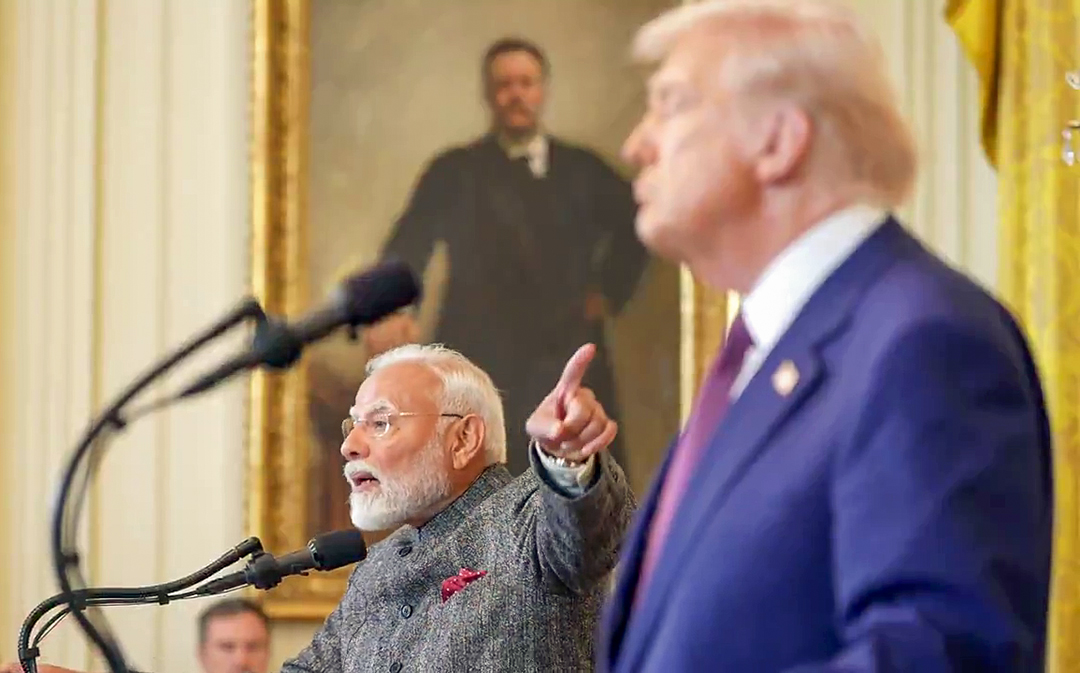
The measure has particular significance for India and China, two of the largest buyers of Russian crude. The possibility of additional US tariffs could put further pressure on their energy procurement strategies while adding another complication to global oil markets.
India responded to the passage of the legislation by reaffirming its energy security priorities. The Ministry of External Affairs said India remained “firmly committed” to ensuring energy security for its 1.4 billion people and was monitoring developments. It also said New Delhi was determined to protect its trade and economic interests.
For China, the legislation comes as Washington and Beijing remain major economic rivals and China continues to be a significant purchaser of Russian energy. US officials have indicated that China could be among the countries affected if the tariff provisions are used. Trump is also due to meet Chinese President Xi Jinping at the White House on September 24, adding a potentially sensitive issue to the talks.
The legislation gives Trump discretion over whether and how to use the tariff powers, as well as authority to grant waivers under specified conditions, including when the administration certifies that a waiver is in the US national interest.
The bill passed the Senate by 86 votes to 11 in August before clearing the House by 262 to 159 earlier this week. It was named after Republican Senator Lindsey Graham, who died in July and had been a leading supporter of tougher measures against Russia.
Supporters argue that the law is intended to reduce Moscow’s energy revenues and increase pressure on Russia to end its war in Ukraine. Ukrainian President Volodymyr Zelenskyy welcomed the legislation, describing sanctions as an important instrument for pushing Russia towards peace.
The law also extends the Iran Sanctions Act for five years, widening its reach beyond the immediate Russia-related measures.
The new powers come as diplomatic efforts to end the war in Ukraine remain unresolved. Trump’s administration has previously expressed frustration over the lack of progress in negotiations, while the latest legislation gives the White House a potentially powerful economic tool against Russia and countries continuing to purchase its energy.
For India and China, the immediate issue is not an automatic 100 per cent tariff, but the prospect that Washington could use the new powers against major Russian energy buyers. That possibility could become an important factor in US relations with both countries in the months ahead.