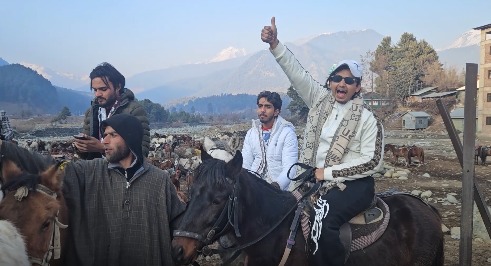
A year after a deadly terror attack, Pahalgam is witnessing a tourism revival, with visitors returning in growing numbers amid tightened security and renewed confidence in Kashmir, reports Asian Lite Newsdesk
Nearly a year after a devastating terror attack shook one of Kashmir’s most scenic destinations, the meadows of Pahalgam are witnessing a steady return of visitors, signalling renewed confidence in the region’s security and tourism prospects.
On April 22, 2025, gunmen linked to Lashkar-e-Toiba carried out a deadly assault in the Baisaran meadow area of Pahalgam in Jammu and Kashmir, killing 26 people, most of them tourists. The attack triggered widespread fear, leading to a sharp drop in tourist arrivals and the temporary closure of nearly 50 tourist spots across the Union Territory as authorities undertook extensive security reviews.
According to a report by Press Trust of India, the situation has since undergone a significant turnaround. Popular destinations in and around Pahalgam are once again bustling with activity, with tourists expressing confidence in the enhanced security measures now in place.
Visitors from across the country say the region feels both safe and welcoming, with visible deployment of security personnel and strengthened infrastructure. A tourist from Chhattisgarh told PTI that visiting Pahalgam had exceeded expectations, noting that the vast landscapes and improved arrangements made the experience memorable. The tourist added in third person that the security presence reminded him of deployments in Bastar, and that he had encountered no difficulties during the trip.
Another visitor from Kolkata told PTI in third person that security arrangements across key tourist locations, including Gulmarg and Sonmarg, were robust. She said the presence of the Army and police had reassured travellers, adding that while there may have been concerns in the immediate aftermath of the attack, the current environment felt secure.

Tourists from northern India echoed similar sentiments, with one visitor from Haryana stating in third person that security checks were thorough and well-managed, and that the region no longer appeared affected by last year’s violence. He observed that while there had once been apprehension about visiting Kashmir, the current situation had significantly improved.
A traveller from Rajasthan also told PTI in third person that the natural beauty of Pahalgam remained undiminished and that the heightened security presence, including frequent Army posts, contributed to a sense of safety.
Officials attribute the revival of tourism to a combination of strengthened security protocols and improved connectivity. The reopening of tourist sites following security audits, along with infrastructure initiatives such as the launch of the Vande Bharat train service linking Katra and Srinagar, has made travel to the Valley more accessible.
The successful conduct of last year’s Amarnath Yatra has further reinforced confidence among visitors, signalling stability and effective management of large-scale pilgrimages.
While the scars of the 2025 attack remain, Pahalgam’s gradual revival reflects a broader effort to restore normalcy in Kashmir’s tourism sector. The return of travellers suggests that, for many, the region’s appeal is once again outweighing past fears.
India, Austria unite against terror
India and Austria on Thursday issued a strong joint condemnation of the Pahalgam terror attack that killed 26 tourists in Jammu and Kashmir last year, calling for enhanced global coordination to combat terrorism, cross-border extremism and radicalisation networks.
The issue featured prominently during talks between Prime Minister Narendra Modi and Austrian Chancellor Christian Stocker, marking the first visit by an Austrian leader to India in nearly four decades. Officials said both sides underlined that terrorism in all its forms must be confronted through sustained and collective international action.

Briefing reporters, MEA Secretary (West) Sibi George said both leaders “categorically and unequivocally” condemned terrorism, with specific reference to the 2025 Pahalgam attack and another incident near Delhi’s Red Fort. The two sides, he said, stressed the need for a comprehensive global response that goes beyond isolated security measures.
According to officials, the discussions focused on strengthening cooperation in counter-terrorism frameworks, including efforts to disrupt terror financing, prevent the misuse of emerging technologies, and counter extremist recruitment networks operating across borders.
A key outcome of the visit was the signing of a Letter of Intent to establish a joint working group on counter-terrorism. The mechanism will focus on information sharing, capacity building, and coordinated action in multilateral platforms, including engagement through the European Union framework.
Both countries also reaffirmed their commitment to strengthening global financial safeguards against terrorism. They highlighted the importance of international mechanisms such as the United Nations system and the Financial Action Task Force in tracking and choking illicit financial flows linked to extremist organisations.
Beyond security cooperation, the visit marked a broader deepening of bilateral relations. Officials confirmed that 15 agreements and joint outcomes were concluded across sectors including defence, trade, innovation, and skills development.