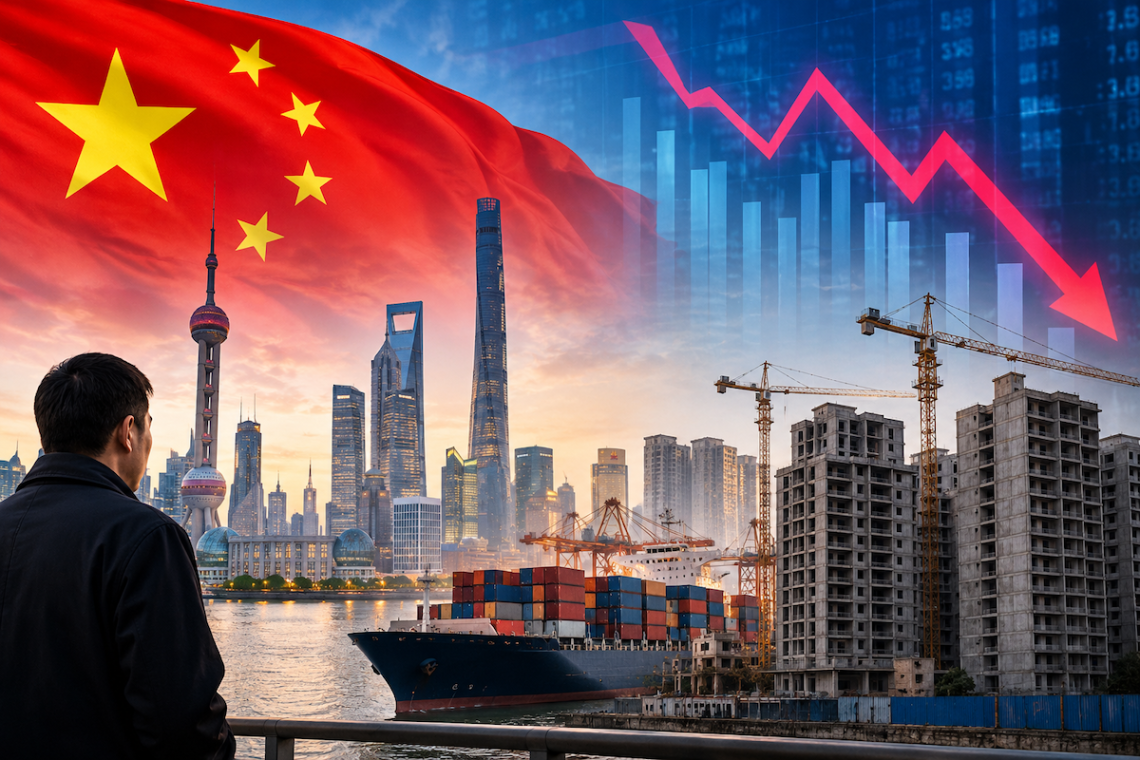
China says it met its 5% growth target last year as exports surged despite US tariffs and a deepening property slump. Economists warn the figures mask a fragile, two-speed economy and intensifying demographic pressures…reports Asian Lite News
China said its economy expanded by 5% last year, hitting Beijing’s official growth target as a record trade surplus helped offset weak domestic demand and a prolonged property downturn. The world’s second-largest economy reached its goal even as growth slowed to 4.5% in the final three months of 2025, underscoring the uneven nature of the recovery.
The past year has been marked by stubbornly cautious consumer spending, a housing market in distress and uncertainty triggered by US tariff policy under President Donald Trump. Analysts say the latest figures point to a “two-speed economy”, with manufacturing and exports driving expansion while households and the property sector continue to drag.
China’s official data suggests the economy made the grade, but some analysts question the strength beneath the headline number given weak investment and subdued consumption. Separate figures released on Monday showed the lowest number of births since records began in 1949, adding to concerns that demographic headwinds will weigh on growth for years to come.
The number of births fell to 7.9 million in 2025, according to the National Bureau of Statistics, intensifying worries about future demand. Economists said the shrinking population will compound domestic challenges by reducing demand for housing and consumer goods, placing further strain on an already struggling property market.
Officials said the population declined for a fourth consecutive year, falling by 3.4 million to about 1.4 billion. The figures underline a deepening demographic crisis even as the government rolls out incentives aimed at encouraging couples to have more children.
The growth target was helped by a powerful external engine. China last week reported the world’s largest-ever trade surplus, at $1.19tn (£890bn), driven by a rise in exports to markets outside the US. The surge in overseas sales cushioned the impact of weaker demand at home and helped factories maintain momentum.
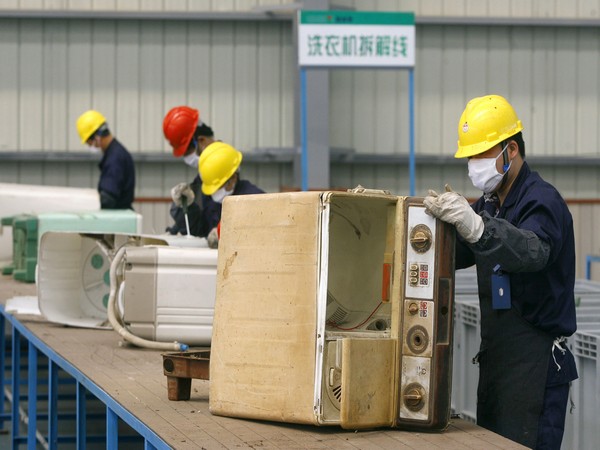
Speaking on Monday, Kang Yi, head of China’s National Bureau of Statistics, said the economy “faces problems and challenges, including strong supply and weak demand”, but added that it would be able to “maintain stable, sound growth momentum this year.” His comments reflect official confidence that export strength and policy support can keep the economy on track.
Analysts caution, however, that growing reliance on exports leaves China more exposed to global trade tensions. Uncertainty has intensified after Trump threatened new levies on countries that trade with Iran or oppose his plan to take control of Greenland, adding another layer of risk to global commerce.
Some economists argue China’s resilience may also reflect lower-than-feared US tariffs after Beijing and Washington agreed a pause that runs until November 2026. The expiry date looms large, with businesses and policymakers braced for a possible shift in US trade policy that could hit exporters.
Nowhere are China’s domestic challenges more visible than in its property sector. Beijing has been grappling with a prolonged housing downturn and rising local government debt, factors that have made businesses more reluctant to invest and households more cautious about spending.
Fresh data on Monday showed house prices continued to fall in December as policymakers struggled to stabilise the market. Prices were down 2.7% from a year earlier, the sharpest decline in five months, while property investment fell 17.2% over the year.
The impact has been severe because real estate once accounted for about a quarter of the economy. The slump has hit construction activity, eroded household wealth and squeezed local government finances. Millions of families have been left with unfinished homes or properties that have lost significant value, undermining confidence in what was long seen as the safest store of savings.
Signs of weakness persist in consumer spending. Retail sales rose just 0.9% in December, the slowest pace in three years, even as factory output picked up to 5.2%, beating November’s 4.8% growth. Analysts at Natixis said that once the 5% target was secured, policymakers appeared to hold back additional stimulus, effectively saving resources for this year.
Chinese leaders have pledged “proactive” policies in the year ahead to shore up confidence among consumers and businesses. But the latest data suggests the underlying economy remains fragile. Beijing faces a delicate balancing act: reviving growth through stimulus while containing rising debt, and reducing dependence on exports in an increasingly uncertain global trade environment.