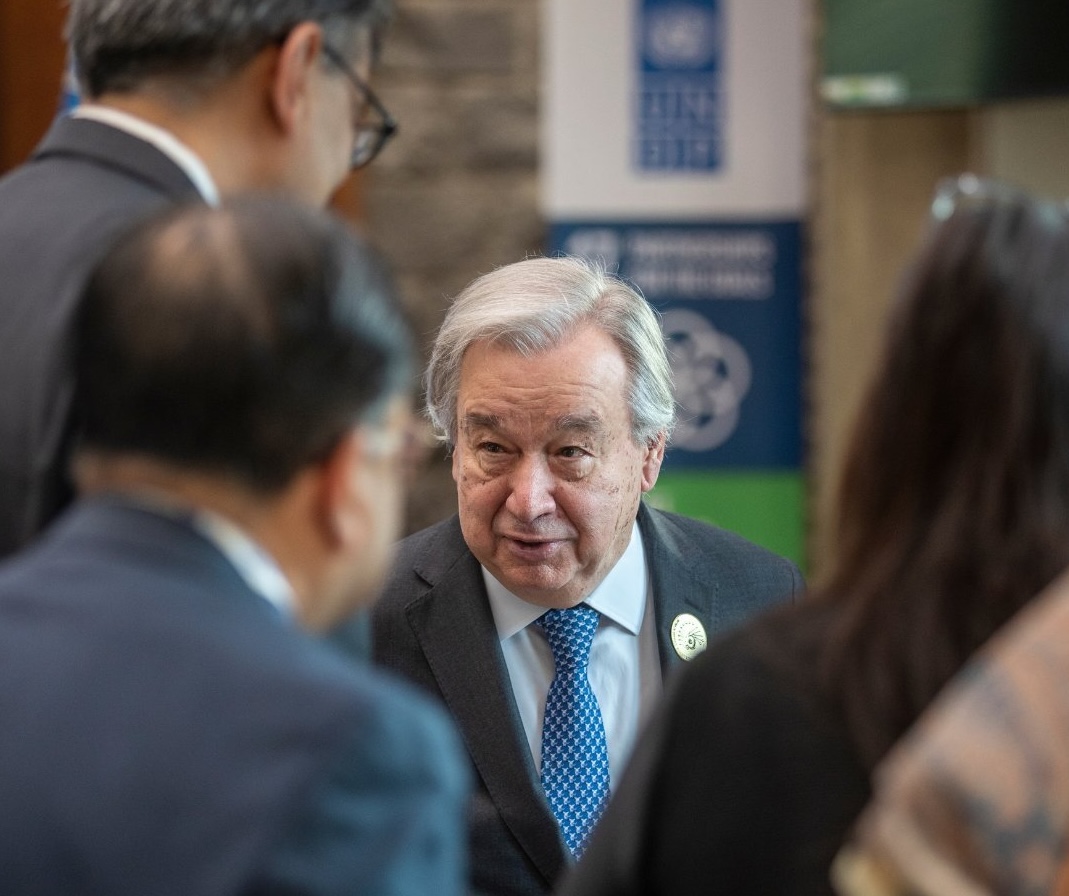
UN Secretary General Antonio Guterres has welcomed the announcement of a US-Iran peace deal, describing it as a critical step towards ending the conflict….reports Asian Lite News Desk
UN Secretary General Antonio Guterres has welcomed the announcement of a peace agreement between the United States and Iran, calling it a significant step towards resolving a conflict that has fuelled regional tensions and disrupted global energy markets.
According to a statement issued by his spokesperson, Stephane Dujarric, the agreement provides for an immediate and permanent ceasefire, the reopening of the Strait of Hormuz and the establishment of a framework for further negotiations between the two sides.
“This represents a critical step towards the peaceful settlement of the conflict,” Dujarric said on behalf of the Secretary General.
The United Nations chief also expressed appreciation for the efforts of several regional countries that played a role in supporting the negotiations leading to the agreement.
The statement highlighted the constructive contributions of Pakistan, Qatar, Egypt, Saudi Arabia, Turkiye and other regional partners in facilitating dialogue and helping bring the parties closer to a settlement, Xinhua news agency reported.
Guterres voiced hope that the agreement would create fresh momentum for diplomacy and encourage both sides to pursue a comprehensive resolution to their differences.
“The Secretary General hopes that the parties will build on this new momentum and redouble their efforts towards a final resolution of the conflict,” the statement said.
It added that the United Nations remained ready to assist the parties in securing a durable and lasting peace.
“The Secretary General reaffirms that the United Nations stands ready to support the parties in achieving a durable and comprehensive peace.”
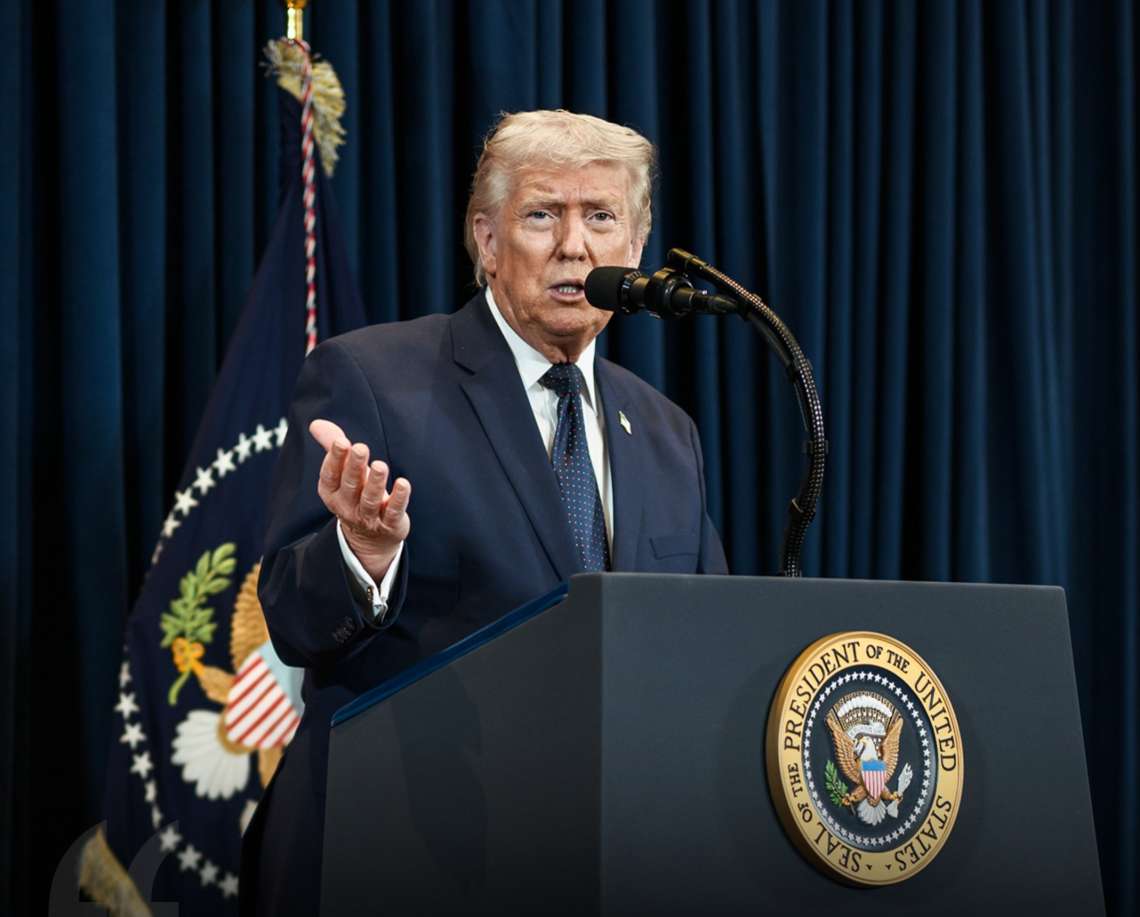
The UN’s reaction came shortly after US President Donald Trump announced that Washington and Tehran had completed a deal aimed at ending months of tensions and restoring freedom of navigation through the Strait of Hormuz, one of the world’s most strategically important waterways.
“The Deal with the Islamic Republic of Iran is now complete. Congratulations to all!” Trump wrote in a post on social media.
The Strait of Hormuz has been at the centre of escalating tensions between the United States and Iran in recent months, with disruptions to shipping through the narrow waterway contributing to uncertainty in global energy markets.
Trump said the agreement would allow the reopening of the Strait and the removal of the US naval blockade that had been imposed during the conflict.
“I hereby fully authorize the toll free opening of the Strait of Hormuz, and, simultaneously herewith, authorize the immediate removal of the United States Naval blockade,” the US President wrote.
The announcement has been widely viewed as a potentially significant diplomatic breakthrough, with hopes that the agreement could reduce tensions in the Gulf region and help stabilise global oil supplies.
While details of the accord have yet to be made public, the agreement is expected to serve as a foundation for broader negotiations on unresolved issues between Washington and Tehran.
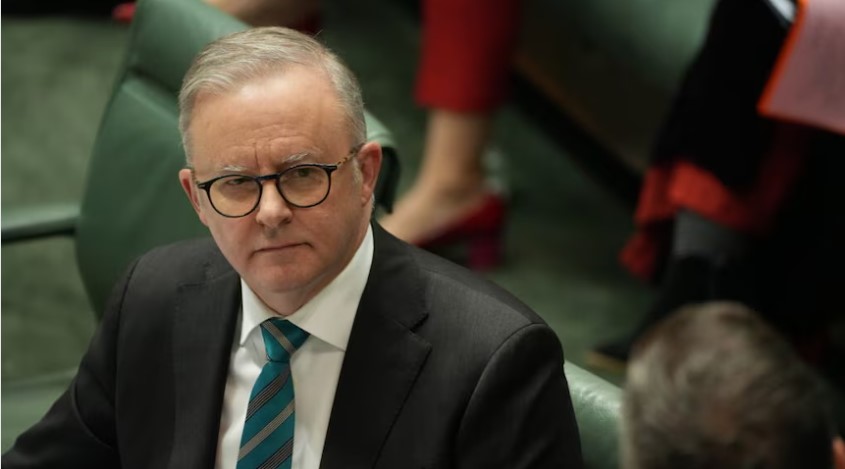
Australia Welcomes Deal
Australian Prime Minister Anthony Albanese on Monday welcomed the peace deal between the US and Iran and issued a call for both sides to show continued restraint.
In a joint statement with Foreign Affairs Minister Penny Wong, Albanese said that the Australian government is “pleased” that the agreement includes steps towards re-opening the Strait of Hormuz and restoring freedom of navigation, reports Xinhua news agency.
“Australia has long called for de-escalation and an end to the conflict, including in Lebanon. As we have said, the longer this war goes on, the greater the impact will be,” they said.
“Continued restraint and constructive engagement will be essential to prevent further escalation and secure a lasting agreement.”
They said that Australia will continue to promote peace, stability and security in the Middle East and that the government would do everything possible to protect Australians from the “worst impacts” of the conflict.

Europe Hails the Deal
The leaders of France, the United Kingdom, Germany and Italy have welcomed the announcement of a memorandum of understanding between the US and Iran, hailing it as a major diplomatic breakthrough and expressing readiness to lift relevant sanctions if Iran takes clear, verifiable steps to address concerns over its nuclear programme.
In a joint statement, the four European leaders congratulated the US, the Iranian government and all parties involved in facilitating the agreement. They also acknowledged the role played by mediators in advancing the diplomatic process.
“We warmly welcome the announcement of the memorandum of understanding between the US and Iran,” the leaders said. “We congratulate the United States, the Iranian government and all those involved, including Pakistan, Qatar and all other mediators, on this diplomatic breakthrough.”
The statement described the development as “a moment of opportunity to restore regional stability and stabilise the global economy,” while stressing the importance of completing detailed negotiations and ensuring the agreement is implemented without delay.
“It is now vital that the detailed negotiations are concluded and this agreement is implemented rapidly and comprehensively. We are ready to support that effort,” the leaders said.
The four countries also underscored the importance of maritime security in the Gulf, calling for the immediate reopening of the Strait of Hormuz and the restoration of unrestricted navigation for commercial vessels.
“The urgent re-opening of the Strait of Hormuz with unconditional and unrestricted freedom of navigation is essential,” the statement said.

New Zealand Backs Iran Accord
New Zealand on Monday welcomed progress toward a US-Iran agreement aimed at ending the Middle East conflict.
“This pivotal, constructive deal is a step toward reducing tensions and promoting stability in a region that is critical to global economic security,” Foreign Minister Winston Peters said in a statement.
Peters noted that disruptions to the Strait of Hormuz, a key oil and shipping route, have had serious impacts on New Zealand’s economy and that of its Pacific partners, Xinhua news agency reported.
He added that Wellington welcomes steps “that will enable the safe reopening of this vital maritime route and restore confidence in key supply chains.”
The minister emphasized that dialogue and diplomacy remain “the most effective means of resolving longstanding issues,” calling the agreement “a good first step” and urging all parties to build on the momentum to resolve tensions in the region.
New Zealand Prime Minister Christopher Luxon called the announced agreement “a positive step toward reducing tensions and strengthening global stability.”
“The conflict has hit Kiwis’ back pockets and put pressure on household budgets,” he wrote on social media platform X, adding “Reopening the Strait of Hormuz will help restore stable trade routes, get fuel flowing, and keep our economy moving.”

Iran Hails End of Conflict
The US naval blockade against Iran will be lifted as of tonight and the immediate and permanent end of the war and military operations on all fronts, including Lebanon, is announced, Iranian Deputy Foreign Minister for Legal and International Affairs Kazem Gharibabadi said early Monday.
Gharibabadi said Iran and the United States will sign the finalised draft of a peace memorandum of understanding (MoU) in Switzerland on June 19, Xinhua news agency reported quoting Iran’s semi-official Tasnim news agency.
Tasnim also cited a source as saying that the Strait of Hormuz will reopen following the signing ceremony in Switzerland.
Meanwhile, Iran’s state-run IRIB TV, also citing Gharibabadi, said Iran’s entry into a 60-day period of negotiations with the United States on its nuclear program and the removal of sanctions will hinge on the US fulfillment of its preliminary commitments, which will be verified by Tehran from now until the signing ceremony.
Earlier in the day, Pakistani Prime Minister Shehbaz Sharif announced on social media platform X that the United States and Iran had reached a peace agreement following intensive negotiations.
Sharif said that both sides had declared the “immediate and permanent termination of military operations on all fronts, including in Lebanon,” and that mediators will facilitate a series of meetings this week aimed at preparing for the implementation of the agreement.