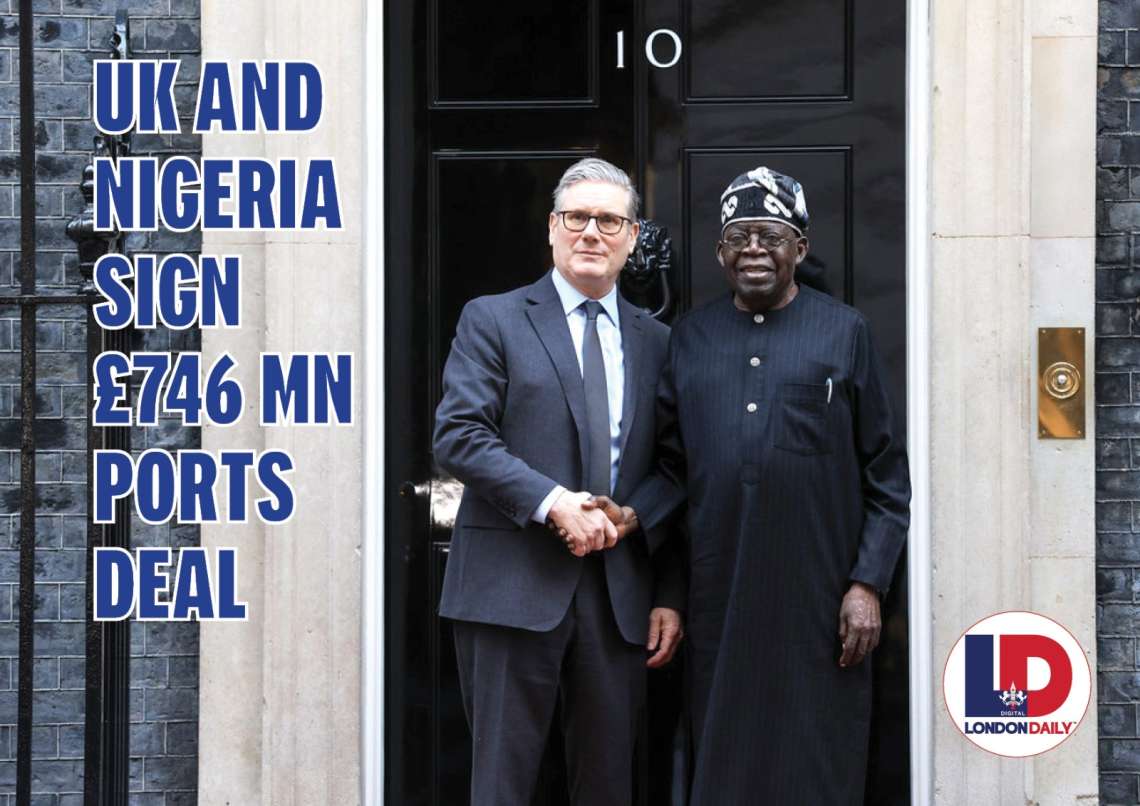
Business and Trade Secretary Peter Kyle described the agreement as a major boost for the sector, saying it builds on the government’s newly launched Steel Strategy, reports LDD News Desk
A landmark £746 million UK backed financing deal to modernise Nigeria’s major ports is being hailed as a powerful vote of confidence in British manufacturing, set to support thousands of skilled jobs while deepening economic ties between the two countries.
The agreement, guaranteed by UK Export Finance, will fund the redevelopment of the Lagos Port Complex at Apapa Quays and the TinCan Island Port Complex, two of Nigeria’s most critical maritime gateways. Delivered through a buyer credit facility arranged by Citi, the deal brings together the Nigerian Ports Authority and the country’s Federal Ministry of Finance in a major infrastructure push.
A significant portion of the investment, at least £236 million, will flow directly to British suppliers. British Steel has secured a record £70 million contract to supply 120,000 tonnes of steel billets to Hitech Nigeria and ITB Nigeria, marking its largest export order backed by UK Export Finance.

Business and Trade Secretary Peter Kyle described the agreement as a major boost for the sector, saying it builds on the government’s newly launched Steel Strategy. He said the deal highlights the strength of UK made steel and the growing UK Nigeria relationship, adding that it will support jobs and growth, particularly in Scunthorpe, while reinforcing British Steel’s global reputation.
British Steel chief executive Allan Bell called the contract a “record breaking” milestone and a “major boost” for the company’s 4,000 employees and its wider supply chain. He said the agreement signals a shift from stabilisation to long term sustainability for the business, describing it as one of the largest billet orders in the company’s history and a strong endorsement of UK manufacturing.

On the Nigerian side, Minister of Marine and Blue Economy Adegboyega Oyetola said the project represents a major step forward in unlocking the country’s maritime potential. He said modern infrastructure, alongside digital and automated systems, will improve efficiency, transparency and competitiveness, positioning Nigeria as a leading maritime hub in West and Central Africa.
Officials expect the upgrades to significantly reduce vessel turnaround times and cargo delays, cut logistics costs and improve the predictability of trade flows, while generating increased revenue for national development.
Alongside the ports agreement, the UK and Nigeria are set to sign a Memorandum of Understanding aimed at expanding future cooperation across trade, infrastructure and investment. The framework outlines a pipeline of priority projects in Nigeria that could benefit from UK Export Finance support, opening further opportunities for British businesses.

Tim Reid, chief executive of UK Export Finance, said the deal demonstrates the agency’s ability to unlock “transformational opportunities” for UK exporters while supporting sustainable growth in key markets. He added that the agreement, alongside the new partnership framework, lays the foundations for a deeper long term relationship between the two countries.
Citi’s global head of export and agency financing, Richard Hodder, said the bank was “delighted” to support the project, describing it as one of the largest export credit backed facilities in West Africa. He noted that the investment will deliver significant economic benefits to Nigeria in the years ahead.
The agreement also reflects the UK’s expanding footprint in West and Central Africa, where support from UK Export Finance has grown by more than £3 billion since 2018, signalling rising demand for diversified trade partnerships and long term investment.