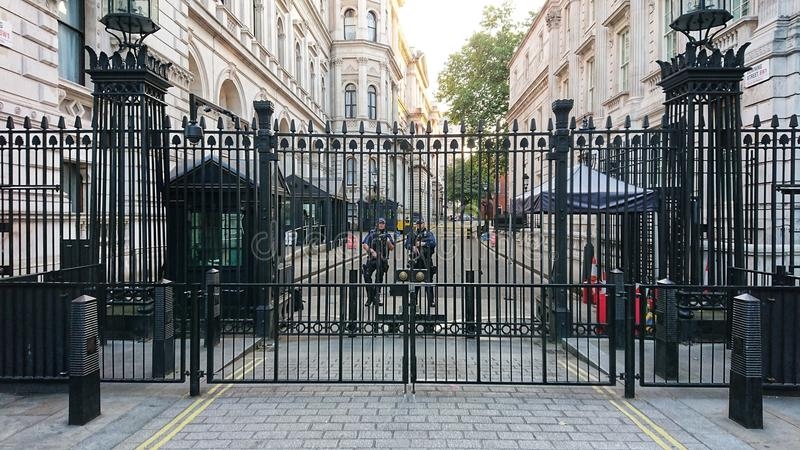
Andy Burnham entered Downing Street as Britain’s new Prime Minister, promising a fresh political era after formally accepting King Charles III’s invitation to form a government.
Andy Burnham began his premiership on Monday by promising to rebuild trust in politics, tackle the cost of living and devolve power across Britain after entering 10 Downing Street as the country’s new Prime Minister.
In his first speech outside No 10, Burnham described his appointment as “a moment for reflection and new resolution”, saying Britain now faced the challenge of proving it could “regain our stability once again”.
Acknowledging widespread public frustration with politics, he said: “I hear you. We have not been good enough and we need to be better. We will be.”
The Labour leader pledged to make the change in government “a circuit-breaker for Britain”, promising “a new political model” focused on collaboration and problem-solving rather than political point scoring.
Burnham also criticised what he described as the “wrong turns” of the 1980s, including privatisation and de-industrialisation, arguing that many communities had never recovered.
Cost of living and devolution
Setting out his priorities, Burnham said his government would transfer power from Westminster to “every postcode in the land”, allowing communities greater control over local decisions.
He also pledged to build a new economy by putting “life’s essentials back under public control”, backing British industry and driving reindustrialisation.
A 10-year national plan setting out his long-term vision for Britain will be published later this year, while measures to give households more “breathing space” on the cost of living will begin from Tuesday, with funding details to follow.
The new Prime Minister also promised changes to education to help more young people into work, expanded mental health support, more council homes and action to reduce the welfare bill.
He said his first instruction in office would be to end rough sleeping across the country.
Burnham said his government would put “the right values and right standards at the heart of government”, adding: “The care of people will be at the heart of everything I will do.”
Calling for public support, he urged the country to seize what he described as the moment “when Britain starts to believe again” and “the moment we bring back hope”.
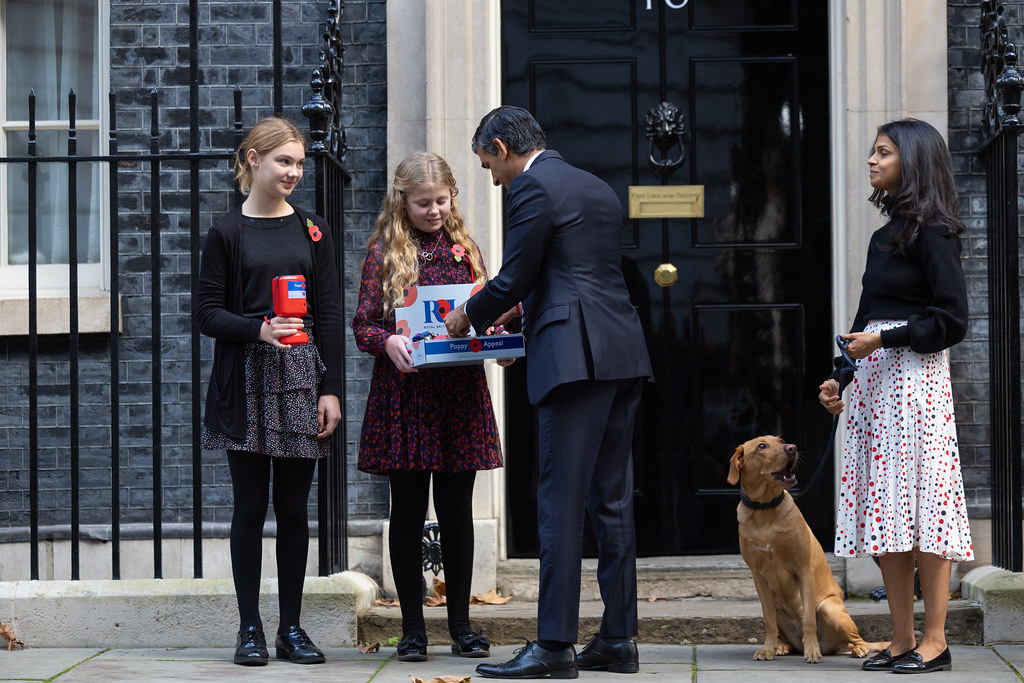
After concluding his speech to applause, Burnham kissed his wife, Marie-France, before the couple entered No 10, where they were welcomed by Downing Street staff. Burnham’s first task as Prime Minister will be to appoint his new Cabinet.
King formally appoints Burnham
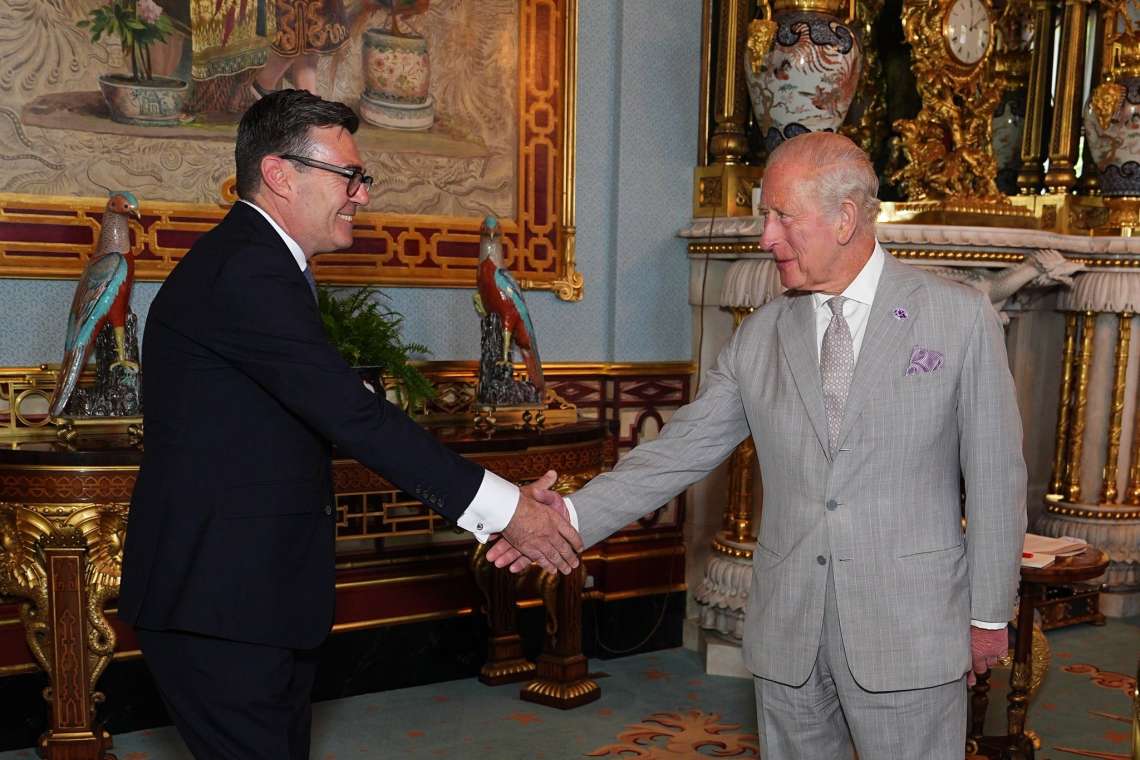
Earlier on Monday, Buckingham Palace confirmed that King Charles III had invited Burnham to form a new government during an audience at Buckingham Palace.
The Labour leader accepted the King’s invitation, formally becoming Prime Minister and First Lord of the Treasury.
The constitutional appointment completed the transfer of power following Burnham’s election as Labour leader.
Before Burnham’s appointment, Keir Starmer visited Buckingham Palace to tender his resignation as Prime Minister after delivering a farewell speech outside Downing Street.
Starmer said Britain was now “stronger and fairer”, urged the country not to “succumb to that division”, and wished Burnham “every success”, saying he had his “full support”.
Starmer led Labour to victory in the July 2024 General Election, ending 14 years of Conservative rule, before announcing on June 22 that he would step down as party leader and Prime Minister once his successor had been chosen.