UAE-UK technology exchange and investment momentum are accelerating hydrogen development, boosting industrial decarbonisation ambitions, and positioning both nations as long-term partners in the global clean energy transition….reports Asian Lite News
Deepening technology exchange and renewed flows of investment between the UAE and the UK are set to accelerate ambitions around hydrogen development and industrial decarbonisation, with experts predicting a sharp rise in bilateral collaboration over the coming decade.
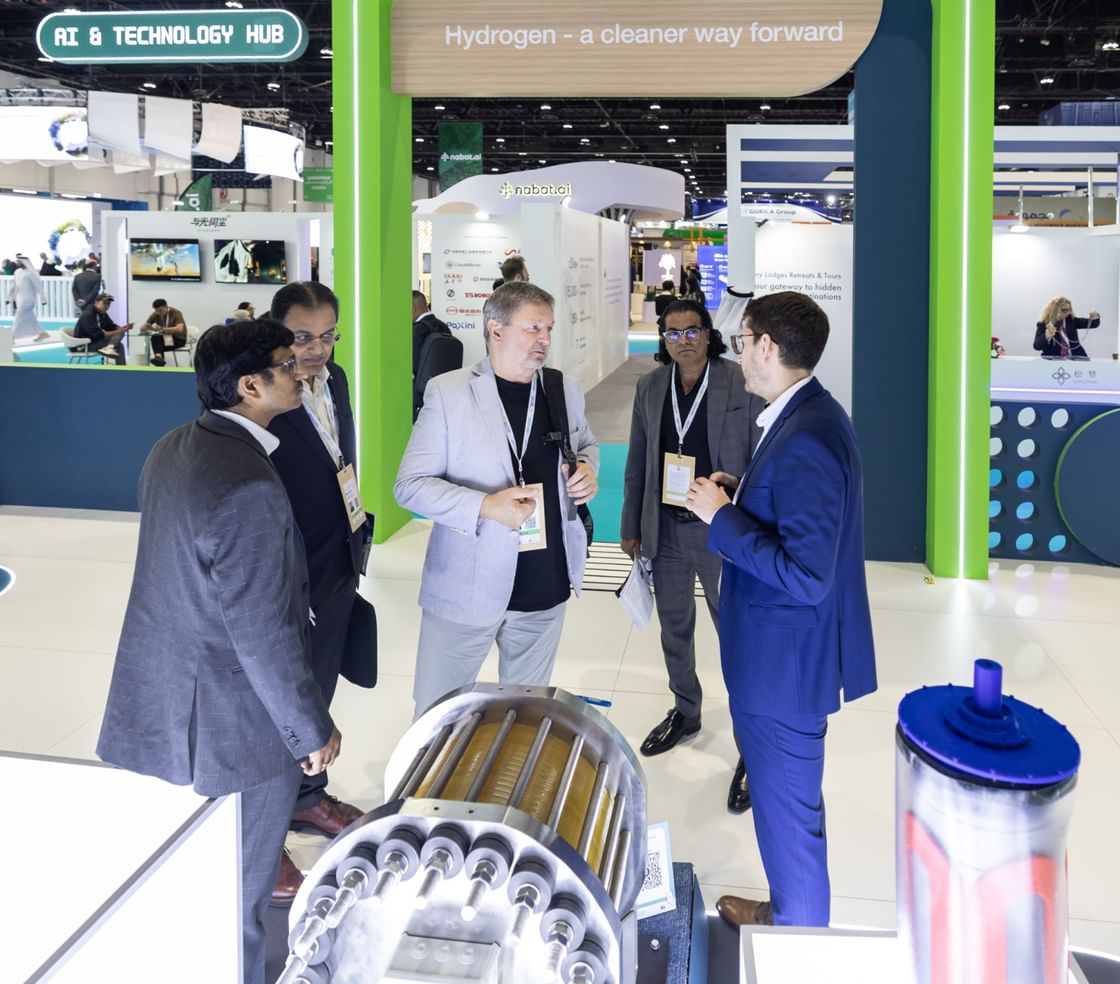
Clean energy specialists speaking at the World Future Energy Summit in Abu Dhabi said the convergence of advanced technology, policy alignment and capital investment is creating strong momentum for joint projects that could reshape how both countries decarbonise heavy industry while stimulating economic growth. Hydrogen, they said, sits at the centre of this evolving partnership.
The UK has set out an ambitious vision to expand low-carbon hydrogen production capacity to 10 gigawatts by 2030, a central pillar of its Hydrogen Strategy first launched in 2021. Achieving that goal, however, will require investment of up to £9 billion, as well as a rapid transition from pilot projects to fully integrated, industrial-scale systems.
With the government preparing to redraw its hydrogen strategy, experts believe the coming months present a critical opportunity for Britain to reaffirm its credentials as a global climate leader. By doing so, it can build a hydrogen economy that not only decarbonises emissions-intensive sectors such as steel, chemicals and aviation, but also delivers long-term industrial competitiveness.
A cornerstone of the UK’s approach is Project Union, an initiative aimed at creating a national hydrogen backbone by repurposing existing natural gas pipelines and constructing new ones where necessary. The proposed 1,500-mile network is designed to link hydrogen producers, storage facilities and end users across key industrial regions, providing the infrastructure needed to scale up clean hydrogen use nationwide.
To date, the UK government has pledged £164 million to Project Union, with regulators Ofgem and National Gas already taking steps to advance the project. Once operational, the network is expected to unlock industrial decarbonisation at scale while strengthening energy security and system flexibility as the country moves towards net zero.
Yet industry leaders caution that infrastructure alone will not be enough. Scaling green hydrogen from isolated use cases to widespread industrial adoption will demand sustained capital, technical expertise and long-term commitment. This is where collaboration with the UAE could prove decisive.
Cammy Booth, UAE Country Manager at the Net Zero Technology Centre, said bridging the UK’s hydrogen investment gap would require more than funding alone. She argued that committed international partners with experience in delivering gigawatt-scale energy projects are essential to transforming ambition into bankable reality.
The UAE, she said, is uniquely positioned to play such a role. Its public and private investors can help finance UK hydrogen infrastructure, manufacturing capacity and first-of-a-kind projects, while securing long-term exposure to one of the world’s most promising hydrogen markets. In return, both economies stand to benefit from diversified supply chains and resilient export routes.
Booth pointed to existing UAE investments in flagship UK blue and green hydrogen projects, including in Teesside, as early examples of what deeper cooperation could achieve. By transferring experience from large-scale industrial hubs and hydrogen “oases” into the UK’s cluster-based model, she said projects could move more rapidly from demonstration to commercial scale ahead of the critical 2030 deadline.
Carbon capture, utilisation and storage is also expected to play a vital role alongside hydrogen, particularly in enabling downstream value chains such as sustainable aviation fuel and synthetic fuels. These technologies are seen as essential for decarbonising sectors where electrification alone is insufficient.
Krishna Kumar Singhania, Chief Growth Officer at UK-based Carbon Clean, said his company’s involvement in the eFuel Design and Planning Centre demonstrated how integrated approaches to hydrogen and carbon capture could deliver benefits well beyond national borders. He said the model being developed in the UK is highly transferable to the UAE, where industrial scale and ambition offer ideal conditions for rapid deployment.
As the UK hydrogen market matures, experts stressed the importance of regulatory clarity and policy stability. A clear framework that gives international partners confidence to commit capital at scale will be critical if the UK is to translate potential into tangible outcomes.
At the same time, the partnership is far from one-sided. The UK’s progress in hydrogen infrastructure, skills development and innovation is expected to directly support the UAE’s own hydrogen ambitions. With its strategic position between Europe and Asia, the Emirates is seeking to establish itself as a globally competitive hydrogen hub.
UK companies, Booth said, can contribute world-class expertise in electrolysers, export infrastructure and skills frameworks to accelerate delivery across the entire hydrogen value chain in the UAE. Initiatives such as the Net Zero Technology Centre’s Hydrogen Backbone Link and Hydrogen Skills Framework could help build a skilled local workforce while supporting long-term industrial growth.
The World Future Energy Summit itself was highlighted as a catalyst for such collaboration. Gareth Rapley, Portfolio Director for Energy and Marine at RX Global, said the event’s role as an international convening platform is increasingly important as countries seek practical partnerships to advance future technologies.
Fostering deeper UAE-UK ties in hydrogen and decarbonisation, he said, underlines the summit’s ability to connect like-minded stakeholders, drive innovation and turn shared climate ambition into action. As both countries race towards net zero, the growing hydrogen partnership is emerging as a powerful symbol of how strategic collaboration can deliver economic opportunity alongside environmental progress.