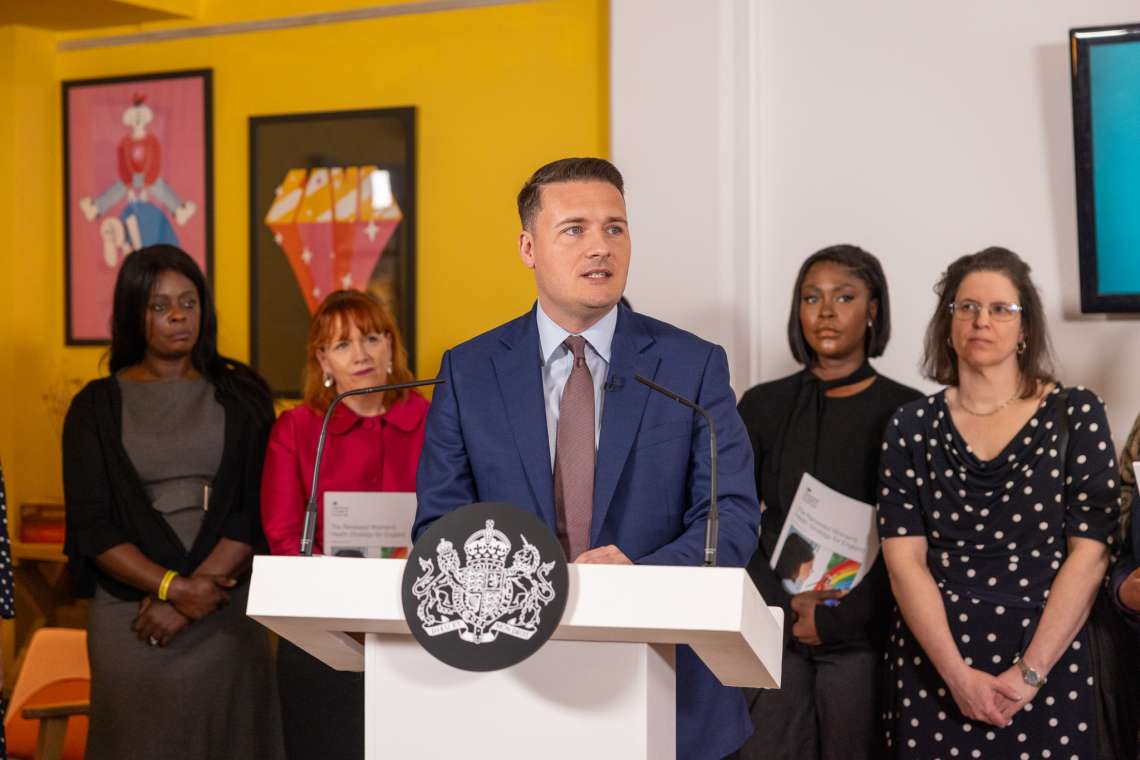
Government renews Women’s Health Strategy to tackle NHS delays, improve pain care, and put women’s voices at the centre of healthcare decision-making and reform, reports Asian Lite Newsdesk
Health Secretary Wes Streeting has launched a major renewal of England’s Women’s Health Strategy, pledging to confront what he described as entrenched “medical misogyny” within the NHS and improve how women’s pain, symptoms and long-term conditions are treated across the system.
The updated strategy, published on 15 April 2026, places women’s voices at the centre of healthcare delivery, with ministers arguing that too many patients have historically felt ignored, dismissed or left to navigate complex conditions without timely diagnosis or effective treatment.
A key element of the plan is a new trial exploring whether women’s feedback on their care could be directly linked to provider funding, a move designed to strengthen accountability and ensure hospitals and clinics respond more effectively to patient experience. Officials say the intention is to end long-standing concerns that women’s symptoms are frequently downplayed or misinterpreted, particularly in areas such as reproductive health and chronic pain.
The reforms also promise to simplify access to specialist care by introducing a single referral route, supported by greater integration between local services and online support tools. The government says this approach is aimed at reducing delays in diagnosis and treatment for conditions such as endometriosis and fibroids, which in some cases currently take years to properly identify.
Waiting times within gynaecology services remain a central concern. Ministers argue that streamlining clinical pathways and expanding community-based diagnostics will help reduce pressure on hospitals and shorten delays between appointments. The strategy also builds on existing commitments to bring down waiting lists, which have already seen reductions in recent months.
Pain management is another focal point of the overhaul. New standards are set to be developed to ensure women undergoing procedures such as coil fittings, hysteroscopies and other invasive gynaecological treatments are offered appropriate and effective pain relief. The government says this is part of a wider effort to challenge outdated practices that have left many women feeling their discomfort has been underestimated or ignored.
Streeting said the NHS has for too long failed women, arguing that too many have been “passed from appointment to appointment” or left without proper diagnosis. He said the renewed strategy is intended to ensure women are listened to, treated with respect, and no longer forced to struggle through years of unmanaged symptoms.
Senior NHS England leaders echoed the focus on cultural change alongside service reform, acknowledging that while progress has been made in recent years, outdated attitudes still persist in parts of the system. They said the new approach will prioritise faster care, improved access to specialists, and greater choice for patients.
The strategy is backed by wider investment and research commitments, including funding through the National Institute for Health and Care Research to address gaps in women’s health evidence and improve representation in clinical studies. Officials say this is essential to ensuring treatments are based on data that properly reflects women’s experiences across different life stages.
Further measures include redesigning care pathways for heavy menstrual bleeding, menopause and urogynaecology, as well as establishing regional specialist centres to support group-based care and patient education. A new programme to improve menstrual health education in schools and a dedicated fund to support femtech innovation are also included in the package.
Health organisations broadly welcomed the reforms, while cautioning that delivery will be key. Medical leaders and charities stressed that long-standing challenges, including gynaecology waiting lists affecting hundreds of thousands of women, will require sustained investment and clear implementation plans if the strategy is to deliver meaningful change.
Government ministers say the package reflects record investment in the NHS and forms part of a wider ambition to modernise services, reduce waiting times and ensure women are no longer disadvantaged by gaps in research, treatment or clinical awareness.