Sunak hailed India’s digital public infrastructure including Aadhaar, UPI and Ayushman Bharat Health Accounts as strong foundations to deliver AI services to 1.4 billion people….reports Asian Lite News
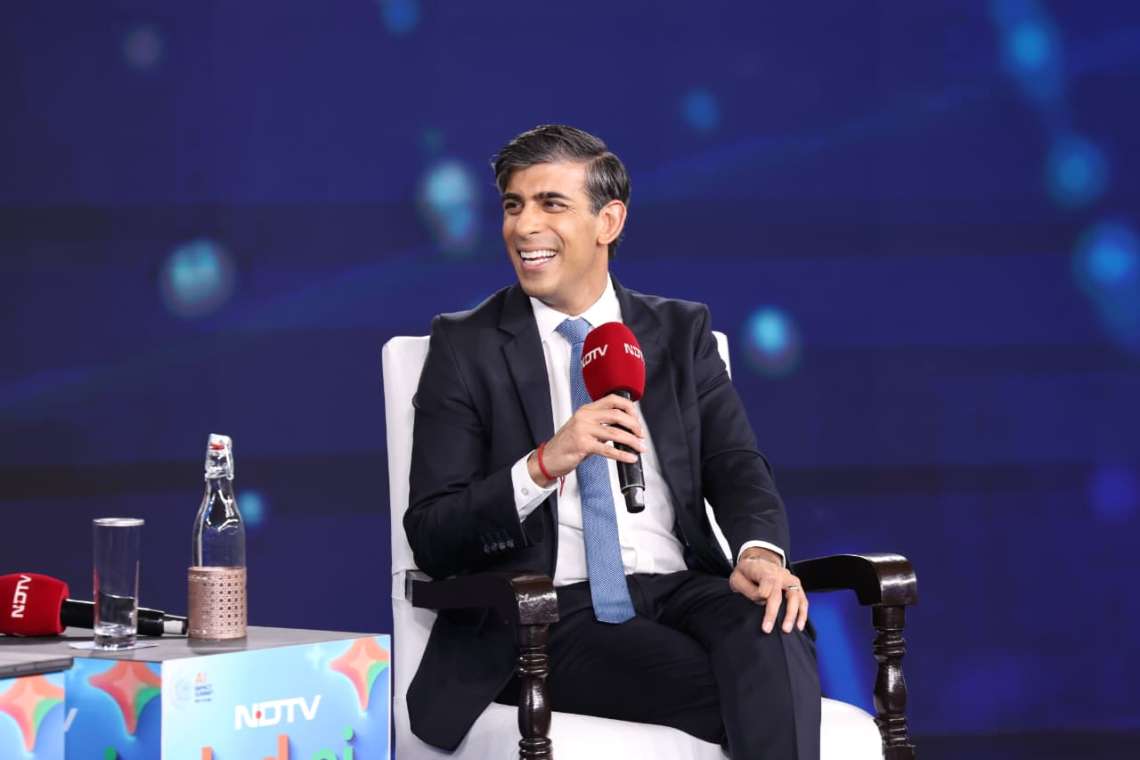
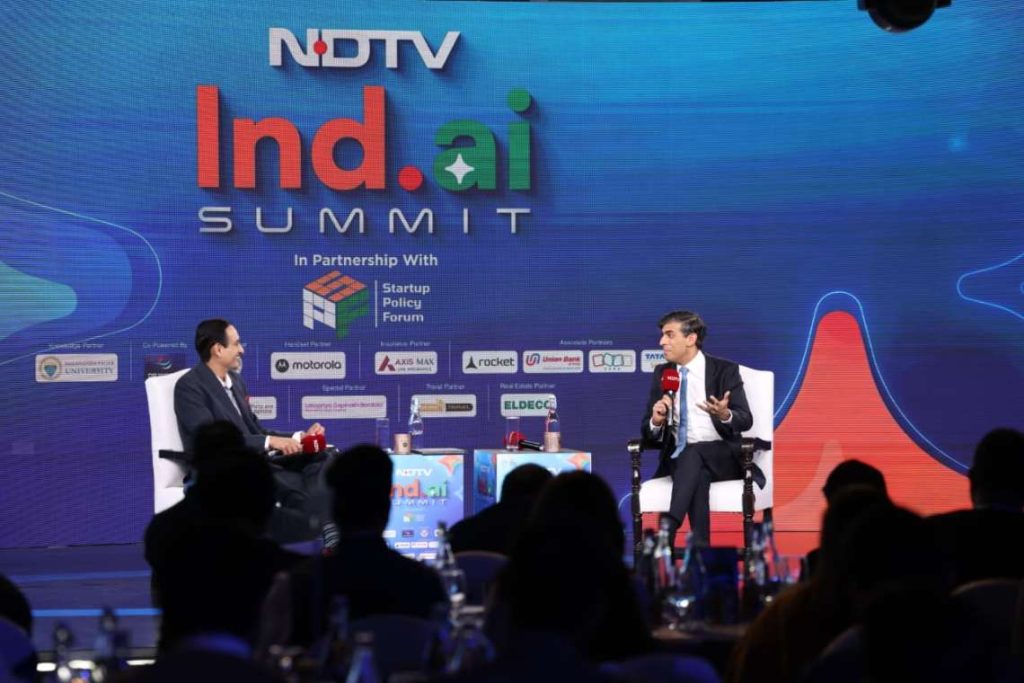
Former UK Prime Minister Rishi Sunak on Thursday called India the ideal venue for shaping the future of artificial intelligence (AI), and said there was “no better place” to deliberate on the global AI transformation, highlighting the country’s digital public infrastructure, innovation ecosystem and public optimism around the technology.
While addressing the AI Impact Summit as a keynote Speaker here, he said India was uniquely positioned to drive the next phase of AI’s global journey, not just for developed nations, but for the developing world as well.
“We do need a regular forum, where we can all meet and discuss this technology, and that is what this Summit provides under Prime Modi’s leadership. This summit will deliver impact; it will show us how we can make AI work, not just for the developed world but for the developing world too,” Sunak said.
“There is no better place to discuss this AI transformation than India,” Sunak said, adding that the summit would show how AI can improve health and education “in every corner of the globe” and enhance human dignity.
Recalling that he launched the first AI Leaders’ Summit in 2023 at Bletchley Park, Sunak said the idea was to create a global forum bringing together Presidents, Prime Ministers, CEOs, CTOs and developers to ensure that artificial intelligence evolves in favour of humanity.
“We committed ourselves to an AI future that worked for humanity,” he said, noting that safety was placed at the forefront from the beginning. He added that frontier labs are now working with the UK’s AI Security Institute to test models before deployment to ensure safety standards.
However, Sunak emphasised that AI safety and AI progress go hand in hand. According to him, public trust will ultimately determine AI’s success, particularly in the public sector, where citizens can directly experience faster services, better healthcare and simpler government interactions.
“The debate about AI becomes real rather than abstract when people see tangible improvements in their lives,” he said.
Highlighting the unprecedented speed of AI adoption, Sunak pointed out that while the telephone took 75 years to reach 100 million users, the internet took seven years, and ‘ChatGPT’ reached that milestone in just two months.
“From the invention of the telephone, it took around 75 years to get to 100 million users; it took the PC 15 years, the internet 7 years, so how long did it take ChatGPT, two months,” he said, adding, “We do need a regular forum where we can meet and discuss this technology.”
Placing India at the centre of the global AI narrative, Sunak praised the country’s digital public infrastructure, including Aadhaar, UPI and Ayushman Bharat Health Accounts, as foundational systems capable of delivering AI-powered services to 1.4 billion people.
“The India Stack has shown people how technology can benefit them in their everyday lives,” he said, adding that Indians are among the world’s most prolific users of mobile data and AI tools and are the second-largest contributors to AI projects globally.
He also lauded India’s vibrant startup ecosystem, noting that the country has produced over 125 unicorns, with companies such as ‘Sarvam AI’ emerging as leaders in the space.
Referring to India’s culture of frugal innovation, Sunak said it enables ambitious achievements at lower costs, citing the country’s space missions as an example. He stressed that public confidence is critical for AI adoption and observed that, unlike growing pessimism in parts of the West, nearly nine out of ten Indians remain optimistic about AI.
“All of this is why, in the latest Stanford University ranking of global AI powers, India has overtaken the UK into the medal places,” Sunak said, underscoring India’s rising stature in the global AI landscape.
The summit, hosted under India’s expanding digital policy framework, comes at a time when AI governance is a major global issue. With India currently holding the BRICS presidency under Narendra Modi, the French leader highlighted what he described as a unique opportunity for Paris and New Delhi to align their global platforms to promote responsible AI development.
The India AI Impact Summit has brought together government policymakers, industry AI experts, academicians, technology innovators and civil society from across the world at New Delhi to advance global discussions on artificial intelligence.
The India AI Impact Summit, the first global AI summit to be hosted in the Global South, reflects on the transformative potential of AI, aligning with the national vision of “Sarvajana Hitaya, Sarvajana Sukhaya” (welfare for all, happiness for all) and the global principle of AI for Humanity. This summit is part of an evolving international process aimed at strengthening global cooperation on the governance, safety, and societal impact of AI.
The India AI Impact Summit 2026 is guided by three Sutras or foundational pillars – People, Planet, and Progress. These sutras articulate the core principles for global cooperation on artificial intelligence. They aim to promote human-centric AI that safeguards rights and ensures equitable benefits across societies, environmentally sustainable advancement of AI, and inclusive economic and technological advancement.
The Summit saw participation of more than 110 countries, 30 International organizations, including about 20 HoS/HoG level participation, and about 45 Ministers.