UK and Japan deepen development finance ties, launching joint push to unlock private investment across Africa and emerging Asia with focus on sustainable growth and infrastructure, reports Asian Lite News Desk
The United Kingdom and Japan have launched a new joint initiative aimed at expanding investment flows into developing economies across Africa and emerging Asia, signalling a deeper alignment between the two countries on global development finance and strategic economic outreach.
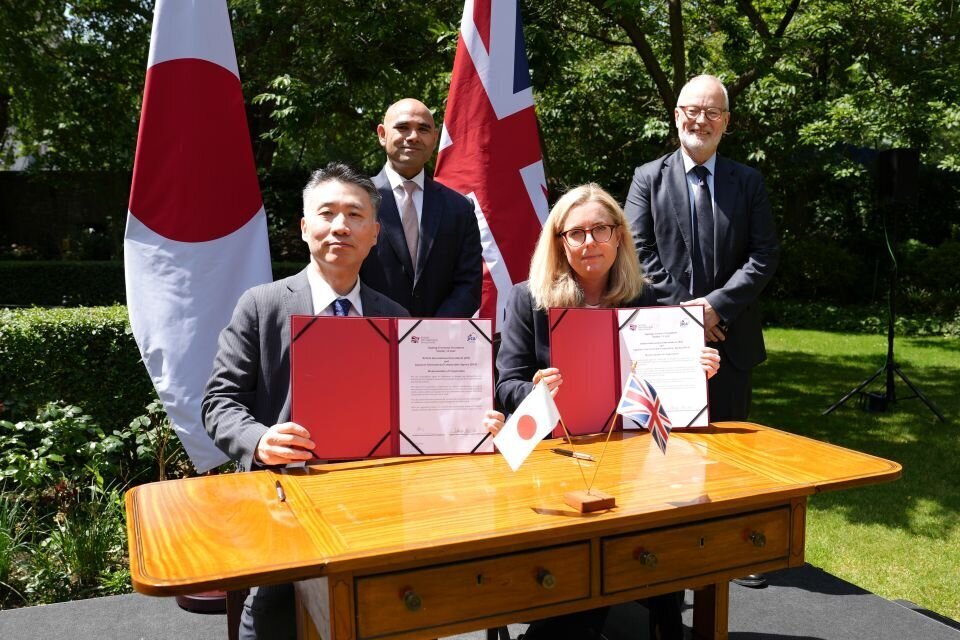
The partnership brings together British International Investment and Japan International Cooperation Agency, the respective development finance institutions of the UK and Japan. The agreement, formalised through a Memorandum of Cooperation, was signed during the visit of Japanese Prime Minister Sanae Takaichi to Downing Street on 14 June.
Under the arrangement, both institutions will coordinate more closely to mobilise private and institutional capital into projects across key growth regions, particularly in Africa and parts of Asia where infrastructure, energy, and climate-linked investments remain underfunded. The partnership is designed to provide a structured framework for collaboration, including co-investment, knowledge sharing, and joint engagement with investors.
Officials involved in the initiative say the agreement reflects a broader effort by both governments to leverage public finance institutions to unlock significantly larger pools of private capital. The focus is on scaling up investment in sectors that support long-term economic development, including sustainable infrastructure, clean energy, and financial inclusion.
The collaboration builds on an existing track record of joint activity between the two institutions. In recent years, BII and JICA have worked together on co-financing projects in markets such as Vietnam and several African economies, while also engaging through international forums including the Tokyo International Conference on African Development. These engagements have laid the groundwork for a more formalised and strategic partnership.
The move also aligns with wider diplomatic and economic coordination between London and Tokyo. Both countries have sought to position themselves as key players in shaping development finance flows, particularly as global competition for influence in emerging markets intensifies. Their cooperation has extended beyond investment to include joint positions on multilateral reform, energy resilience, and reconstruction efforts in conflict-affected regions.
Within the UK government, the initiative is being seen as part of a broader push to strengthen economic diplomacy through targeted partnerships. The Foreign, Commonwealth & Development Office has backed closer ties between BII and JICA, viewing the collaboration as a means to amplify development impact while reducing reliance on traditional aid models.
British International Investment, the UK’s development finance arm, plays a central role in this strategy. The institution invests in businesses and projects across developing markets with a dual focus on economic growth and climate outcomes. It has committed to directing a substantial share of its future investments towards climate finance, reflecting the increasing importance of sustainability in development agendas.
JICA, one of the world’s largest bilateral aid agencies, brings a complementary approach through its integrated model of technical cooperation, grants, and loans. Its Private Sector Investment Finance operations are expected to play a key role in supporting joint ventures under the new framework, particularly in sectors where private investment has traditionally been limited.
The partnership is also expected to strengthen engagement with Japanese corporations and investors seeking opportunities in high-growth markets. For BII, this represents a strategic opportunity to deepen ties with Japan’s private sector while expanding its footprint in regions where demand for capital remains strong.
While the agreement does not set out specific funding commitments at this stage, it establishes a platform for future deals and coordinated investments. Analysts note that such partnerships are increasingly important as development finance institutions look to maximise impact in a more constrained global funding environment.
The UK and Japan have both emphasised the importance of moving beyond traditional aid models towards approaches that can catalyse sustainable, market-driven growth. By combining their financial tools and institutional expertise, the two countries aim to position themselves at the forefront of this shift.