UK unveils major military package for Ukraine, delivering drones and air defence systems to counter Russian attacks while expanding its leadership role in international support efforts, reports Asian Lite News Desk
The UK government has announced a major expansion of its military support to Ukraine, unveiling a £752 million package that will deliver large quantities of drones and air defence systems as Kyiv continues to confront Russia’s sustained aerial campaign.
The package, confirmed by the UK Ministry of Defence, will provide 150,000 drones to Ukraine by the end of the year, alongside more than 350 air defence missiles and radar systems to be delivered through 2026. The equipment is intended to strengthen Ukraine’s ability to counter persistent drone and missile strikes targeting civilian infrastructure.
Funding for the initiative will come from the United Kingdom’s £2.26 billion Extraordinary Revenue Acceleration loan to Ukraine, a mechanism backed by proceeds generated from immobilised Russian sovereign assets. The arrangement reflects a broader effort by Western allies to channel financial pressure on Moscow into direct support for Ukraine’s defence capabilities.
The latest announcement builds on commitments made earlier in the week by Prime Minister Keir Starmer at the G7 summit, where he outlined a wider package of support measures. These included financial backing for Ukraine’s energy infrastructure and a fresh round of sanctions targeting Russian logistics networks, procurement chains and what officials describe as a shadow fleet used to circumvent international restrictions.
The drones being supplied are expected to include Ukrainian-produced systems, underscoring a growing emphasis on strengthening domestic defence manufacturing within Ukraine. Officials say this approach is designed not only to meet immediate battlefield needs but also to support the longer-term resilience of Ukraine’s defence industry.
Air defence remains a critical priority as Russian forces continue to deploy drones and missiles against urban centres and energy facilities. The package includes Lightweight Multirole Missiles and ground-based radar systems aimed at improving detection and interception capabilities. Western governments have increasingly focused on bolstering Ukraine’s layered air defence network as attacks intensify.
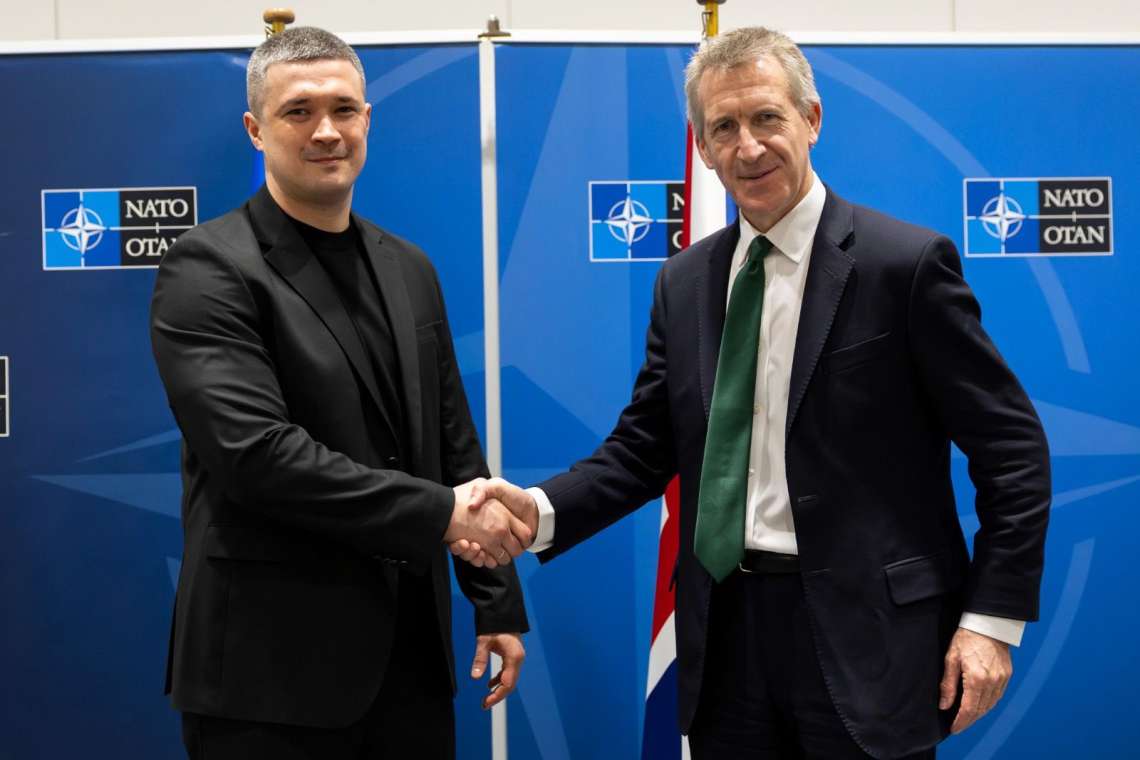
The announcement was made by Defence Secretary Dan Jarvis during meetings in Brussels, where NATO defence ministers and allied partners gathered to coordinate military assistance. The discussions took place within the framework of the Ukraine Defence Contact Group, a coalition of nearly 50 countries that has met repeatedly to align support for Kyiv.
Jarvis also held talks with Ukrainian President Volodymyr Zelenskyy, reaffirming the UK’s continued backing for Ukraine’s war effort. The Contact Group, now in its 35th meeting, remains a central forum for assessing Ukraine’s immediate battlefield requirements while planning longer-term military support.
Alongside the new equipment package, the United Kingdom confirmed it will assume command of the Multinational Force for Ukraine headquarters. Major General Tom Bateman is set to take over leadership of the operation next month, with responsibility for coordinating international assistance and supporting planning for the future structure of Ukraine’s armed forces in the event of a negotiated settlement.
The move signals an expanded British role in shaping both current military support and longer-term defence planning for Ukraine. The multinational headquarters is tasked with aligning contributions from partner nations and ensuring continuity in assistance as the conflict evolves.
Beyond Ukraine, the Brussels meetings also highlighted wider defence cooperation among NATO allies. The UK held discussions with partners including the United States, France and Germany, as well as Nordic and Baltic countries, focusing on strengthening collective security and enhancing capabilities in areas such as anti-submarine warfare.
In particular, the UK, Germany and Norway agreed to deepen collaboration in the High North and the Atlantic, where concerns about maritime security and strategic competition have intensified. The three countries operate advanced platforms including frigates and P-8 Poseidon maritime patrol aircraft, forming a key part of NATO’s deterrence posture.
The UK government has framed the latest support package as part of its broader NATO-first defence strategy, which prioritises alliance commitments while responding to evolving threats. Officials say lessons drawn from the conflict in Ukraine, particularly the rapid evolution of drone warfare and air defence requirements, will inform future defence planning and investment decisions.
A forthcoming Defence Investment Plan is expected to outline how these insights will shape the UK’s military capabilities, with a focus on ensuring readiness for both current and future conflicts. The plan is due to be published ahead of the next NATO summit.
For Ukraine, the additional support comes at a critical juncture, as it seeks to maintain momentum on the battlefield while protecting key infrastructure from continued attacks. For the UK and its allies, the package underscores a sustained commitment to Kyiv’s defence and a determination to maintain pressure on Russia through coordinated military and economic measures.