February 20, 2022
4 mins read

RAK Ruler attends opening of 13th International Workshop on Advanced Materials

IWAM 2022 is a hybrid event that sees the majority of international speakers participating in person, with attendees watching online…reports Asian Lite News

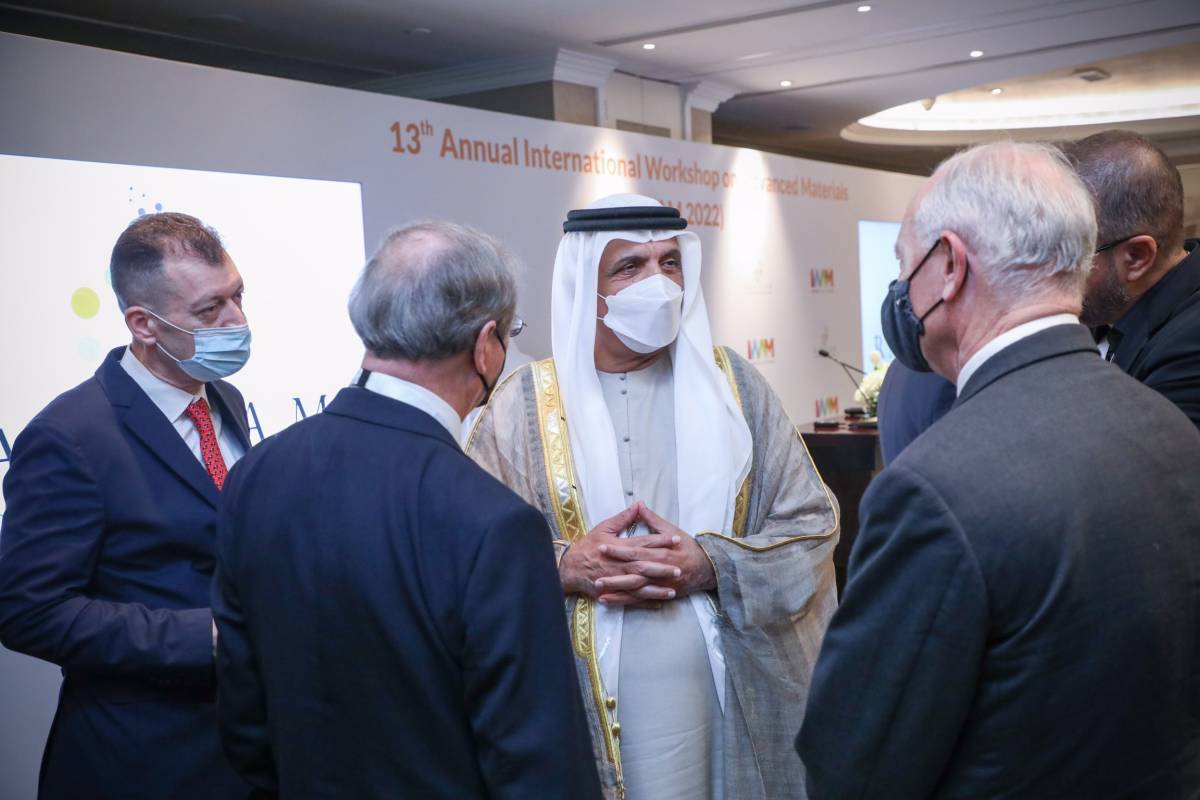
H.H. Sheikh Saud bin Saqr Al Qasimi, Supreme Council Member and Ruler of Ras Al Khaimah, has attended the opening of the 13th RAK CAM International Workshop on Advanced Materials (IWAM 2022) at the Waldorf Astoria Ras Al Khaimah, during which he spoke of the importance of further progress in the fields of science and sustainable development.

“Scientific discovery is the backbone to humanity’s progress. It is the gateway to advancement and holistic development and something that affects all our lives. With this in mind, it is incumbent upon us to continuously seek ways to enable the scientific community in its pursuit of new discoveries and to encourage younger generations to take up sciences as a means to help solve some of the world’s most pressing challenges,” said H.H. Sheikh Saud on launching this year’s event.
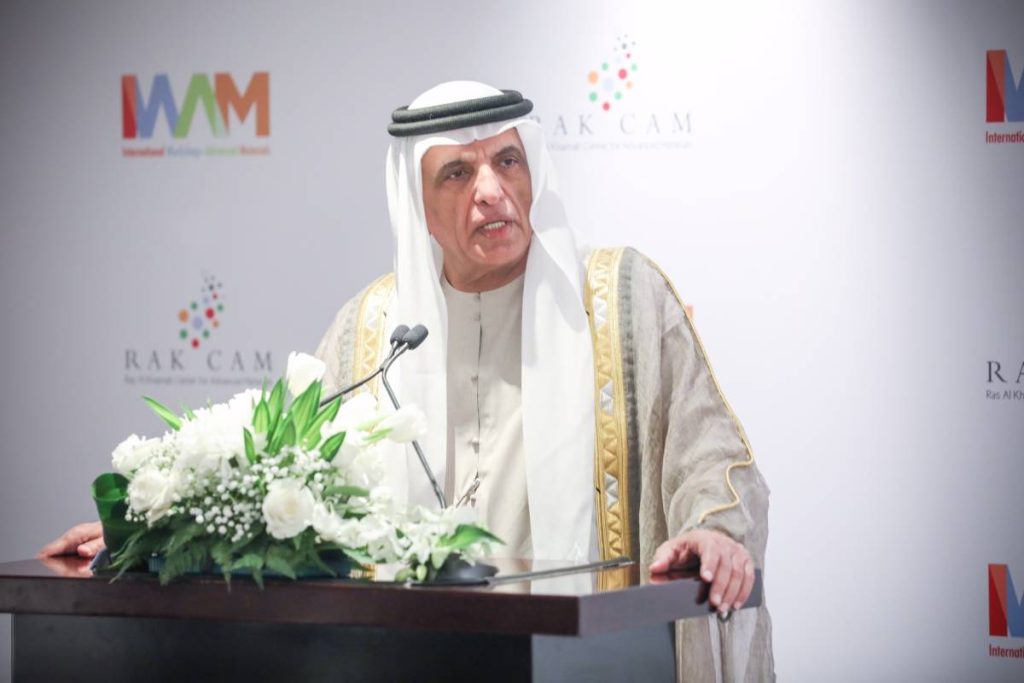
RAK Ruler attends opening of 13th International Workshop on Advanced Materials (WAM)

“IWAM is a forum for some of the most highly regarded materials scientists and an influential platform where exchanges of ideas and information can lead to breakthroughs that have the potential to improve our world. I am delighted to have been able to attend and support such an event for so many years. Science must remain at the forefront of our vision if we are to achieve the bright future we all aspire to,” H.H. Sheikh Saud added.

The opening day of IWAM witnessed a speech on ‘Youthful Orientations’ by Omar Saif Ghobash, Assistant Minister for Culture and Public Diplomacy at the UAE Ministry of Foreign Affairs.

In honour of H.H. Sheikh Saud’s support for the international conference, the 2022 IWAM programme, which runs from February 20-22, includes the Sheikh Saud International Prize for Materials Science, a prestigious award that recognises the efforts of someone who has made a significant contribution to the field of materials science. It has been named after H.H. Sheikh Saud as a mark of respect for his dedication and support for RAK CAM’s mission to enhance the field of Materials Science in the UAE and the region as a whole.

This year’s Sheikh Saud Prize will be presented to Sir Anthony Cheetham, Research Professor at the University of California, Santa Barbara, and Distinguished Visiting Professor at the National University of Singapore. Prof. Cheetham is one of the world’s most distinguished materials chemists and has been the Chairman of the RAK CAM Board since its creation in 2007.

Michael Klein, the Dean of Science & Technology at Temple University, Philadelphia, and Member of the RAKCAM Board, said: “We congratulate Sir Anthony on this important award and express our heartfelt thanks to His Highness Sheikh Saud for his inspiration, kindness and generosity. Sir Anthony is a brilliant chemist and a world-leading expert in the field of framework materials. He has published more than 700 papers that have attracted nearly 60,000 citations and is especially noted for creating entirely new advanced materials – specifically for synthesising and characterising an array of entirely new so-called ‘framework’ materials. The Sheikh Saud Award to Sir Anthony is for his broad-ranging contributions to the field of inorganic materials.”

RAK Ruler attends opening of 13th International Workshop on Advanced Materials (WAM)

H.H. Sheikh Saud has long been a supporter of IWAM, a scientific conference that focuses on developments in the field of Advanced Materials – materials that are either new or significantly improved to provide a distinct advantage in (physical or functional) performance when compared to conventional materials.

IWAM 2022 is a hybrid event that sees the majority of international speakers participating in person, with attendees watching online.

ALSO READ: RAK Ruler receives Ambassador of Japan

It has 22 invited speakers, including two Nobel Prize winners, who will discuss research that has the potential to make a great impact on developing clean and renewable forms of energy, nanomedicine, for improved diagnostics and therapy, and a clean, healthy environment.
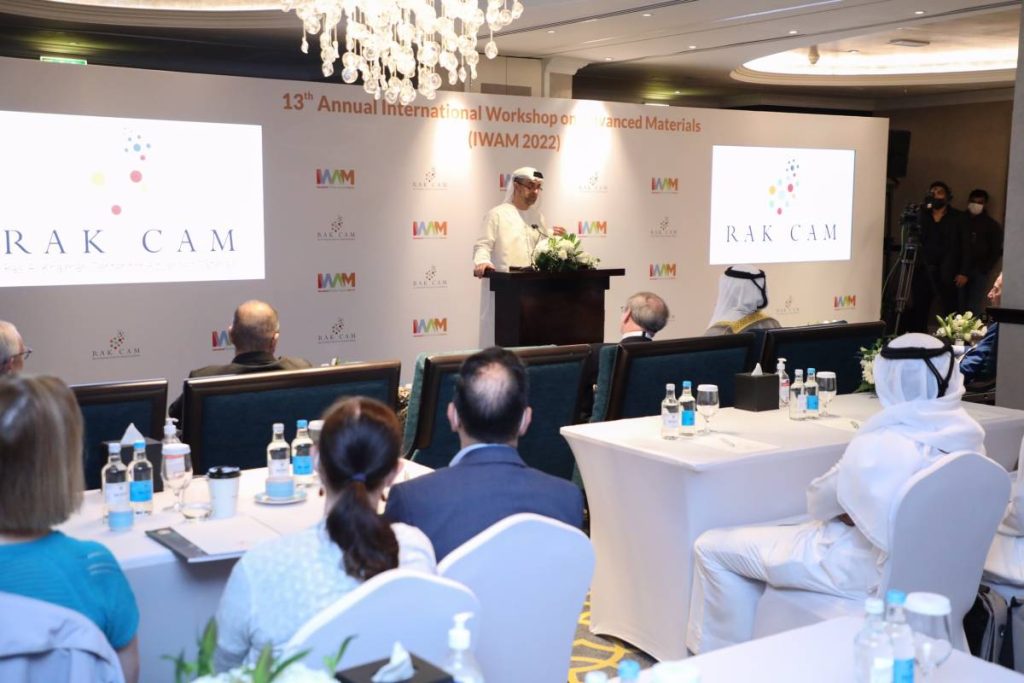
RAK Ruler attends opening of 13th International Workshop on Advanced Materials (WAM)

This year IWAM features the 4th Dresselhaus Memorial Lecture, which will be given by Professor Ben Feringa, who received the Nobel Prize in Chemistry in 2016 “for the design and synthesis of molecular machines”. Millie Dresselhaus was a founding Board Member of the Ras Al Khamiah Center for Advanced Materials (RAK CAM) who passed away in February 2017.
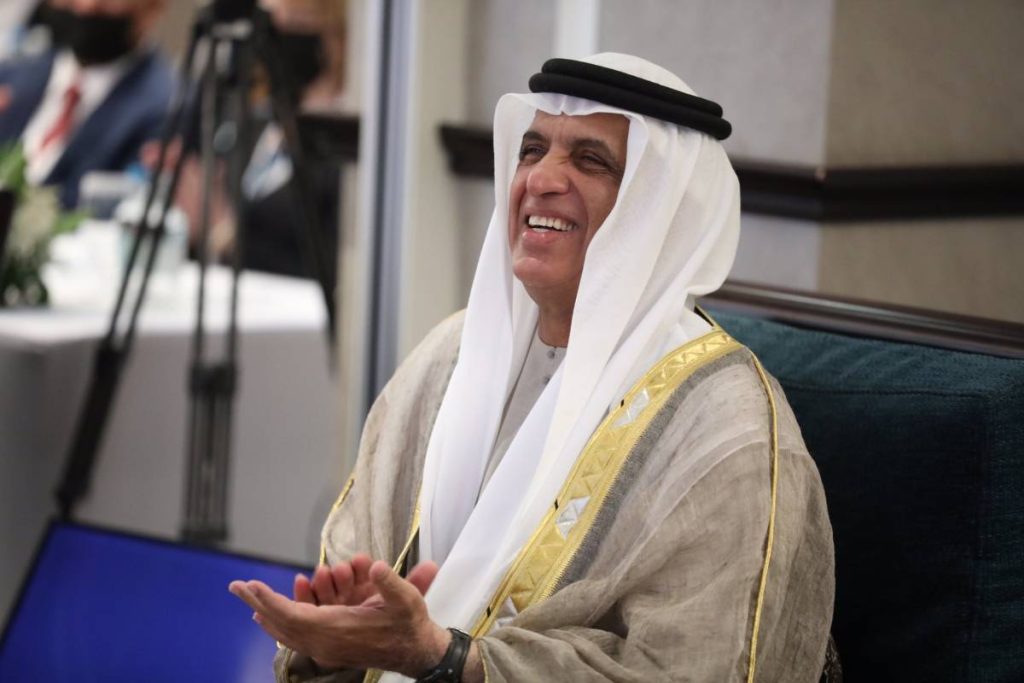
Another speaker will be Professor Andre Geim, Nobel Laureate in Physics 2010, who delivered the 3rd Dresselhaus Memorial Lecture, in 2020.

Since its inception, IWAM has grown to become the ‘must-attend’ conference for the world’s leading materials scientists. It has developed into an established incubator for scientists of the future, with more than 100 young scientists from the UAE and the broader MENA region invited to participate each year.

Special lectures on materials science for local high-school students are also included as part of the event’s extensive programme. (WAM)
Previous Story

Mohammed bin Zayed receives President of Uruguay

Next Story

South Sudan celebrates National Day at Expo 2020

Previous Story

Mohammed bin Zayed receives President of Uruguay

Next Story

South Sudan celebrates National Day at Expo 2020

Latest from Arab News

Pakistan Risks Overstretching Itself in Yemen War

Pakistan’s expanding military role in Saudi Arabia amid the Yemen conflict could strain its defence resources and fragile finances…reports Asian Lite News Desk Pakistan’s military involvement in the war in Yemen may prove unsustainable because of mounting financial pressures and competing security demands, according to a new report. Islamabad’s growing military presence in Saudi Arabia risks stretching its defence resources while exposing the country to greater strategic and economic challenges. An article by Andrew Wilson in One World Outlook describes Pakistan’s involvement as a case of “fiscal and strategic overreach”, arguing that the country lacks the financial flexibility to sustain an expanded military commitment. Pakistan’s external finances depend heavily on an International Monetary Fund (IMF) programme, financial support from Gulf countries and remittances from Pakistani workers in the region. The report argues that deeper military involvement in the conflict could place additional pressure on these sources of financial stability. It also warns that deploying troops and military equipment abroad could weaken Pakistan’s capacity to address security challenges along its eastern border and deal with two domestic insurgencies. The move could also draw Islamabad into a conflict it has sought to approach cautiously. A Reuters report in May, citing Pakistani security and government sources, said Islamabad had deployed around 8,000 troops, a squadron of approximately 16 aircraft, mostly JF-17 fighter jets, two drone squadrons and a Chinese HQ-9 air-defence battery to Saudi Arabia. According to those sources, Riyadh was financing the deployment, with Pakistani personnel operating the equipment. The sources also said a confidential agreement contemplated the possibility of deploying up to 80,000 troops. Islamabad has not confirmed those figures, although it has acknowledged its military presence in Saudi Arabia, including the deployment of fighter jets at King Abdulaziz Air Base from April. The One World Outlook article argues that Saudi financial support can cover allowances and operating expenses but cannot easily replace military equipment needed elsewhere or resolve the political and strategic challenges of participating in the Yemen conflict. Pakistan’s defence budget is another concern. For the 2026-27 financial year, the federal government allocated PKR 3 trillion, or approximately $10.8 billion, to defence services. The allocation represents an 18 per cent increase from the original PKR 2.55 trillion provision and amounts to around 2.1 per cent of projected gross domestic product (GDP). Defence spending accounts for approximately 16 per cent of the federal government’s PKR 18.8 trillion expenditure. Military pensions are budgeted separately at PKR 822 billion, while debt servicing costs stand at approximately PKR 8 trillion, more than two-and-a-half times the defence allocation. The report argues that these competing financial obligations leave little room for additional military expenditure without placing further pressure on public finances. Pakistan’s reliance on IMF assistance also limits its fiscal flexibility. The country must meet the conditions attached to the programme, including a primary budget surplus target of 2 per cent of GDP and continued restraint on development spending. According to the article, these requirements make it difficult for Islamabad to finance an additional military commitment without compromising other budgetary priorities. Pakistan’s economic indicators offer limited reassurance. Economic growth for the 2025-26 financial year is estimated at between 3.6 and 3.7 per cent, while inflation reached approximately 10.3 per cent in September following an energy price shock. Foreign exchange reserves stood at around $21.5 billion at the end of September. Although this marks an improvement from the low levels recorded in 2023, the report notes that the reserves cover only a few months of imports. Financial assistance from Gulf partners remains central to Pakistan’s external stability. The article says Islamabad holds approximately $8 billion in Saudi deposits at its central bank. In July, the State Bank of Pakistan said Riyadh had extended the maturity of $5 billion in deposits to December 2028, easing the country’s immediate external financing requirements. A further $3 billion deposit was also extended in the spring. However, the article argues that these arrangements provide temporary relief rather than long-term financial independence, particularly as regional conflict threatens the stability of the Gulf economies on which Pakistan relies. The report concludes that Pakistan faces a difficult balance between supporting Saudi Arabia militarily and preserving the financial and military resources needed to address its domestic and regional challenges.

Houthis Claim Missile Strike on Riyadh Airport

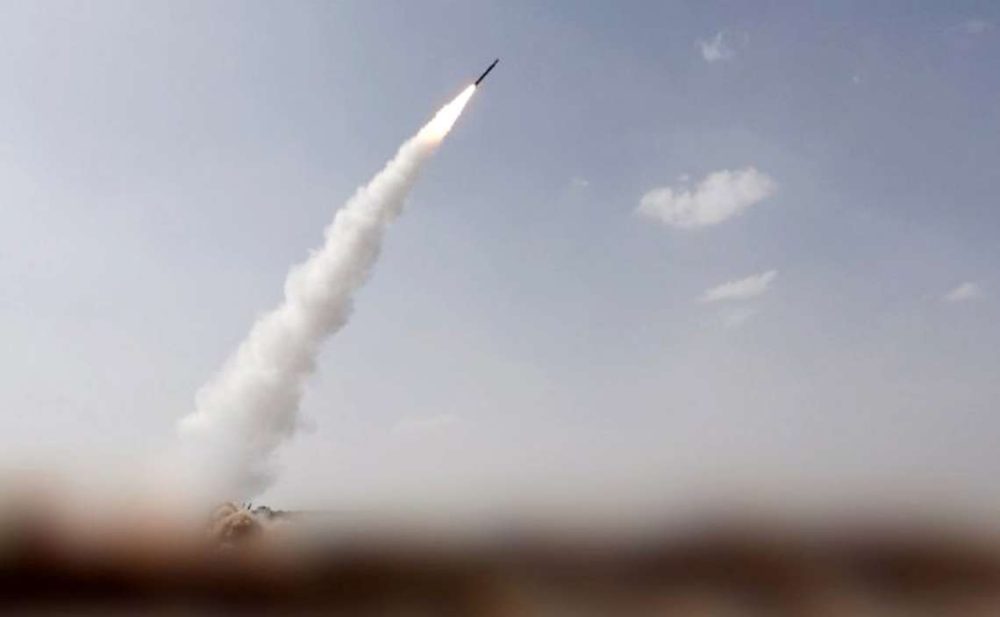
Yemen’s Houthi group claims a ballistic missile struck Riyadh’s King Khalid International Airport, with Saudi authorities yet to confirm the latest attack…reports Asian Lite News Desk Yemen’s Houthi group has claimed responsibility

Saudi Arabia to receive forces under Mecca Defence Alliance

Saudi Arabia, Pakistan and Turkiye have activated collective-defence commitments, agreeing to deploy military capabilities as regional tensions and threats against the Kingdom persist…reports Asian Lite News Desk Saudi Arabia, Pakistan and Turkiye

India-UAE Trade Ties in Focus

India and the UAE have discussed expanding bilateral trade, investment and business partnerships amid broader economic cooperation…reports Asian Lite News Desk India and the United Arab Emirates (UAE) discussed ways to further
Go toTop

Don't Miss

UAE, US cement business ties

UAE and US have agreed to strengthen cooperation in areas

GMC unveils 30th anniversary edition Yukon

To celebrate the 30 years of the iconic Yukon, GMC