More than 3,50,000 students will benefit annually from the project’s assistance of 275 government-run technical institutes over the course of the next five years…reports Asian Lite News
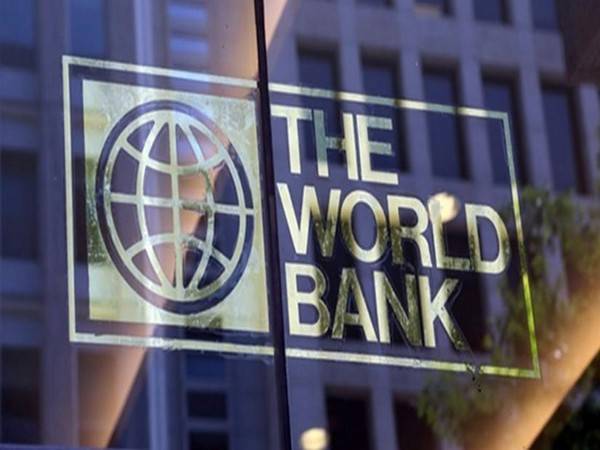
The World Bank has approved a USD 255.5 million loan to assist India in raising the standard of its technical education and expanding the number of jobs prospects available to students.
More than 3,50,000 students will benefit annually from the project’s assistance of 275 government-run technical institutes over the course of the next five years, the US-based multilateral institution said in a statement.
India’s tertiary education has been expanding gradually, from 29 million students enrolled in 40,000 colleges in 2011-12 to 39 million students enrolled in 40,000 universities in 2019-20. Despite being one of the largest in the world, India’s tertiary education system has recently been found to have growing gaps in both technical and non-technical abilities like reasoning, interpersonal communication, and conflict resolution.
Through a stronger emphasis on research, entrepreneurship, and innovation as well as improved governance in technical institutions, the Multidisciplinary Education and Research Improvement in Technical Education Project will assist in increasing student employability and skills.
“As part of the project, students will get access to upgraded curricula including emerging technologies in communication and climate resilience. They will also benefit from better internship and placement services, including opportunities to network with professional associations,” the statement said.
“India has one of the largest and fastest-growing tertiary education systems in the world. The project will support the Government of India’s National Education Policy 2020, which calls for modernizing this critical sector to better prepare students for emerging jobs and business opportunities,” said Auguste Tano Kouame, the World Bank’s Country Director for India. “Improving female participation in technical education will receive special attention,” it said.
The project will support participating institutions to organize outreach programs providing prospective female students, parents, and guardians with more and better information on technical education program options, building sensitivity to gender issues, and addressing misconceptions about women’s capabilities in the science, technology, engineering and math (STEM) fields.
In order to encourage them to finish their courses and have an early introduction to the workforce, female students will also be urged to engage with mentors and alumni. Undergraduate engineering students currently make up less than 30 per cent of the student body, and women from scheduled castes and scheduled tribes are doubly disadvantaged, the World Bank said.
According to the official statement, studies also highlight the need to strengthen India’s links with business and society in terms of innovation and research. Only 504 of the 9,581 technical education institutions have founded at least one company, and 525 have founded between two and four in the previous two years. Research and innovation in high-priority fields including climate change and sustainable energy will be supported through the initiative.
“The project will also help participating institutions strengthen their governance and internal quality assurance mechanisms by building their capacity for self-assessment, developing institutional quality policies, and preparing for accreditation,” said Nina Arnhold and Namrata Tognatta, Task Team Leaders for the project, according to the press release of the World Bank.
“At the state level, the project will help set up quality assurance cells to support the country’s goal of providing greater empowerment and autonomy to educational institutions while also holding them accountable for delivering on learning and employability outcomes,” they said.
The USD 255.5 million loan from the International Bank for Reconstruction and Development (IBRD) has a final maturity of 14 years including a grace period of five years. (ANI)