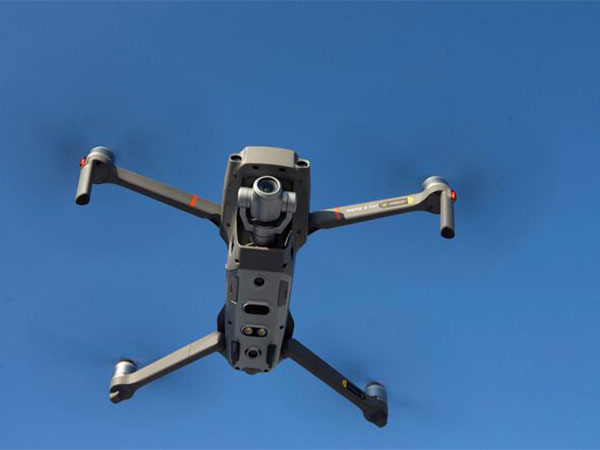
Officials have expressed private worries that drones manufactured in China are being utilised to capture high-resolution imagery of essential national infrastructure locations in the UK
British officials are increasingly alarmed by the use of Chinese-made drones to survey critical national infrastructure sites, despite warnings from the UK’s security services. The National Grid Plc, which manages the country’s electricity and gas distribution networks, has been using drones produced by Shenzhen-based SZ DJI Technology Co. to capture high-resolution imagery of its electricity substations. This practice has raised significant concerns among security experts.
Drones have become an essential tool for various industries due to their ability to access hard-to-reach areas and provide detailed imagery. National Grid Plc has been utilising DJI drones to record videos, take photographs, and capture thermal images of its electricity substations, as detailed on its website as recently as September. Similarly, DJI drones have been employed for surveying the construction of Electricite de France SA’s Hinkley Point C nuclear power plant and inspecting solar energy facilities. Thames Water has also used these drones to oversee reservoirs and water supplies.
Despite the practical benefits of using drones, security concerns have been mounting. In 2023, the UK’s National Protective Security Authority (NPSA), a division of the domestic security service MI5, issued a warning to British organisations responsible for sensitive sites. The advisory cautioned against employing drones “produced in countries with coercive data sharing practices,” specifically referencing China. This warning came in the wake of the US Department of Defense placing DJI on a blacklist of Chinese companies with alleged military connections in 2022.
The US Federal Bureau of Investigation (FBI) has also expressed concerns, stating that drones manufactured in China “present a considerable risk to critical infrastructure.” The FBI warned that these drones “may exhibit vulnerabilities that could allow data theft or enable network breaches.” This has led to a growing unease among security experts about the potential risks associated with the use of Chinese-made drones.
The NPSA’s advisory to British firms highlighted that “the foremost defense for organisations intending to utilise unmanned aerial systems (UAS) might be to limit UAS and their corresponding component procurement from nations that pose a security threat.” This stance is rooted in the potential risks posed by Chinese national security legislation, which can obligate Chinese companies to share information with the government. A UK government official, speaking anonymously due to the sensitive nature of the matter, confirmed that employing Chinese-made drones at vital locations carries significant risks.
The use of Chinese-made drones in critical infrastructure sites raises several questions about data security and national sovereignty. As the continues to rely on advanced technology for infrastructure management, it must balance the benefits of these tools with the potential risks they pose. Security experts are urging organisations to reassess their reliance on drones from countries with coercive data sharing practices and to explore alternative solutions that do not compromise national security.
In light of these concerns, the government may need to take further steps to ensure the security of its critical infrastructure. This could include stricter regulations on the use of drones, increased investment in domestic drone technology, and enhanced cybersecurity measures to protect against potential data breaches.
As the debate over the use of Chinese-made drones continues, it is clear that the UK must navigate a complex landscape of technological advancement and national security. The future of drone usage in critical infrastructure will likely depend on the ability to mitigate risks while harnessing the benefits of this innovative technology.