New execution model paves way for private sector involvement in India’s ambitious stealth aircraft programme; Army showcases next-gen drone warfare systems.
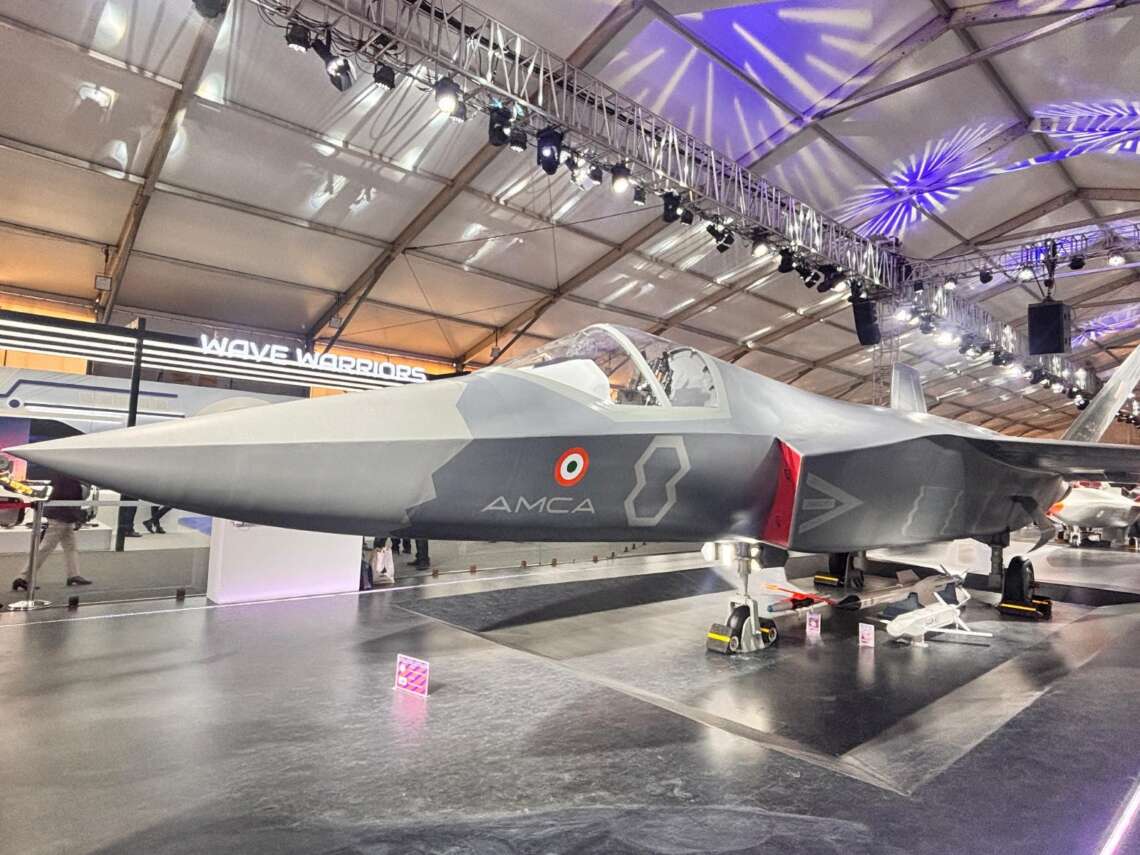
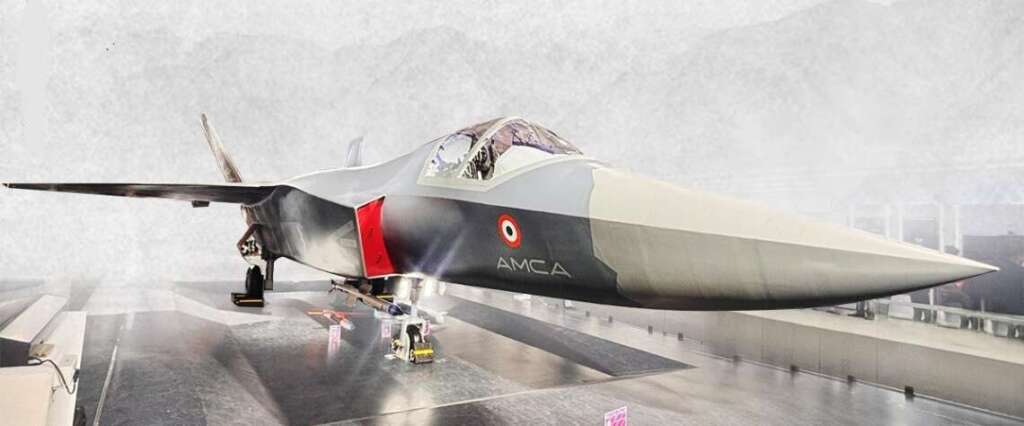
In a landmark decision bolstering India’s defence self-reliance, Defence Minister Rajnath Singh has approved the Execution Model for the country’s fifth-generation stealth fighter jet programme—the Advanced Medium Combat Aircraft (AMCA). The project will be spearheaded by the Aeronautical Development Agency (ADA), a specialised arm of the Defence Research and Development Organisation (DRDO), and will now be executed in partnership with the private sector, signalling a strategic shift in India’s defence production model.
The AMCA programme, long considered a cornerstone of India’s aerospace ambitions, aims to deliver an indigenously designed fifth-generation multirole fighter jet featuring stealth capabilities, supercruise performance, and cutting-edge avionics. Defence analysts have welcomed the decision, calling it a game-changer for both India’s air power and its burgeoning defence industrial base.
According to the Ministry of Defence, the Execution Model approved by Singh will offer equal opportunities to both private and public sector players through a competitive bidding process. Interested companies—either individually or as part of joint ventures or consortia—must be Indian-registered entities compliant with national laws.
“The ADA is set to execute the programme through industry partnership,” said the Ministry in a statement. “This approach is aimed at harnessing indigenous expertise, capacity and capability to develop the AMCA prototype, marking a vital step towards Atmanirbharta in the aerospace sector.”
An Expression of Interest (EoI) for the AMCA Development Phase is expected shortly, potentially attracting major defence players, including private sector firms who previously had limited access to frontline aviation programmes traditionally led by state-owned Hindustan Aeronautics Limited (HAL).
The AMCA will eventually replace ageing fleets such as the Sukhoi Su-30MKI, bolstering India’s air superiority with indigenous technology. Designed with a low radar cross-section and advanced manoeuvrability, the aircraft is expected to enter mass production by 2035, though timelines remain contingent on prototype development and testing.
Experts hail decision as transformative
Defence analysts and former military officials have lauded the announcement, describing it as a strong vote of confidence in indigenous capability and a critical move in line with evolving global defence trends.
“The government’s decision to give its manufacturing to the private players is a game-changing step,” said defence expert Shiwalee Deshpande. “It shows faith in indigenisation and Make in India defence technology. Private-public collaboration will ensure faster delivery and scalable production.”
Retired Air Vice Marshal Suryakant Chintaman Chafekar echoed her views, noting that reliance on foreign aircraft compromises intelligence and sovereignty. “In today’s world, intelligence gathering and creating new systems are a race. When we buy from abroad, we risk exposure of critical systems like communication and radar,” he said.
Calling the AMCA a bold step for the Indian Armed Forces, Chafekar urged the government to stick to timelines, citing delays in the Tejas Light Combat Aircraft programme as a cautionary tale.
Following the announcement, stocks of Indian defence companies surged. The Nifty India Defence index hit a 52-week high of 8,674.05, with firms like HAL, Bharat Dynamics, Mazagon Dock, and Paras Defence gaining between 1 and 6 per cent.
Indigenous drone warfare systems
Complementing the AMCA announcement, the Indian Army demonstrated state-of-the-art indigenous Unmanned Aerial Systems (UAS), Counter-UAS technologies, and loitering munitions at the Babina Field Firing Ranges in Uttar Pradesh.
Army Chief General Upendra Dwivedi witnessed the high-tech demonstrations, which included surveillance drones and precision-guided loitering munitions capable of autonomously neutralising targets.
“These capabilities will significantly enhance operational efficiency, force protection, and precision engagement across varied terrains,” the Army said in a statement on X.
Particularly notable was the deployment of loitering munitions—drones capable of hovering over targets before striking with high precision. These systems had previously been used during Operation Sindoor, where Indian forces neutralised multiple high-value terror targets in Pakistan and Pakistan-occupied Kashmir following the Pahalgam terror attack.
The demonstration aligns with India’s broader shift towards network-centric warfare and battlefield transparency, further supported by indigenous technological advancements.
The growing synergy between military readiness and indigenous innovation reflects a strategic evolution in India’s defence policy, underscored by a clear intent to reduce reliance on imports and strengthen domestic production capacity.