July 20, 2025
3 mins read

Over 100 held at protests over Palestine Action ban

The Met Police said 55 people were arrested on suspicion of terrorism offences for displaying placards in support of Palestine Action, at the largest of the demonstrations in Westminster

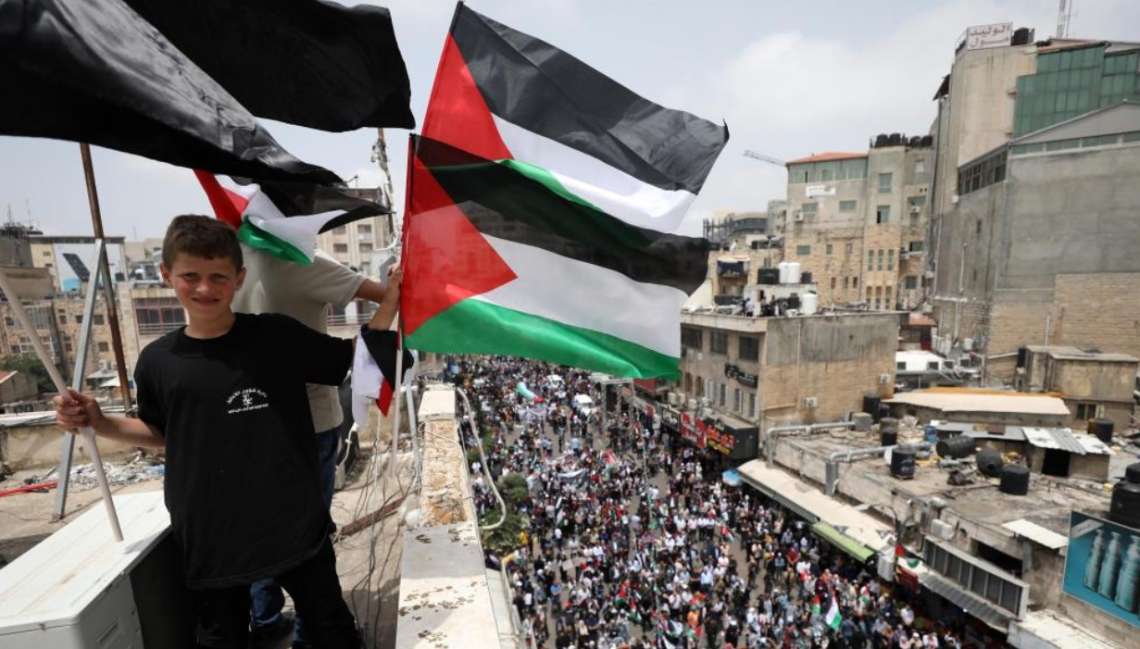
More than 100 people protesting the decision to proscribe Palestine Action as a terror group have been arrested across the UK. Demonstrations in support of the pro-Palestine activist group took place in London, Edinburgh, Manchester, Bristol and Truro on Saturday.

The Met Police said 55 people were arrested on suspicion of terrorism offences for displaying placards in support of Palestine Action, at the largest of the demonstrations in Westminster. The government proscribed the group earlier this month under the Terrorism Act of 2000, making membership of or support for the group a criminal offence, following a break-in at an RAF base.

Across the country, protesters held placards with the words: “I oppose genocide. I support Palestine Action.” In London, arrests were made near the Mahatma Gandhi statue in Parliament Square, where as many as 20 police vans attended.

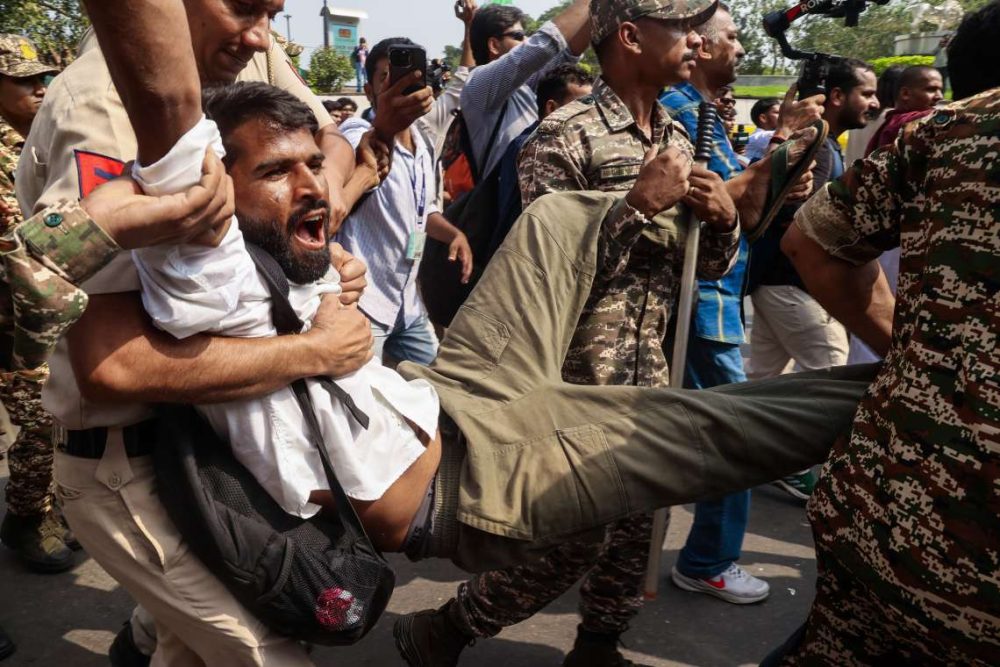
Officers moved in swiftly to arrest those holding the placards, many of whom appeared to be over the age of 60. One woman claimed to be in her 80s and was walking with a stick. Some were led away while others had to be carried.

Avon and Somerset Police said 17 people were arrested under the Terrorism Act after a demonstration on College Green in Bristol. It said a further three people would be invited to attend a voluntary interview at a future date.

Devon and Cornwall Police said two men and six women were arrested on suspicion of terrorism offences after protesters gathered near Truro Cathedral. The force said around 30 people were involved in the peaceful demonstration, organised by campaign group Defend Our Juries.

Earlier, the campaign group said that one of those arrested near the cathedral was an 81-year-old former magistrate. Greater Manchester Police said it arrested 16 people on suspicion of supporting a proscribed organisation, and that they remained in custody for questioning.

Police Scotland said officers in Edinburgh attended after the force was made aware of images online showing people holding placards in support of Palestine Action in Edinburgh’s Parliament Square area. However, a spokesperson said no arrests were made as the protesters had gone by the time officers arrived. Enquiries are ongoing.

There were also no arrests at a separate pro-Palestinian protest in the city, the force added. Separately, a march organised by the Palestine Coalition took place in London on Saturday.

The Met said 10 people had been arrested so far at that demonstration, including nine suspected of supporting Palestine Action. Saturday’s protests came ahead of a High Court hearing on Monday at which the co-founder of Palestine Action, Huda Ammori, will ask for permission to challenge the decision to ban the group.

Last Saturday, 71 arrests were made across the UK at similar protests against the decision. Palestine Action has engaged in activities that have predominantly targeted arms companies since the start of the current war in Gaza.

MPs voted to proscribe the group after activists broke into RAF Brize Norton in June, spraying two Voyager aircraft with red paint and causing £7m worth of damage. Palestine Action took responsibility for the incident at the time. Four people have since been remanded in custody, charged with conspiracy to commit criminal damage and conspiracy to enter a prohibited place knowingly for a purpose prejudicial to the safety or interests of the UK. The incident also prompted a security review across all UK military bases.
Previous Story

Khan announces £1.4m investment in sport

Next Story

Govt Axes Asylum Hotel Spend

Previous Story

Khan announces £1.4m investment in sport

Next Story

Govt Axes Asylum Hotel Spend

Latest from -Top News

Pakistan Risks Overstretching Itself in Yemen War

Pakistan’s expanding military role in Saudi Arabia amid the Yemen conflict could strain its defence resources and fragile finances…reports Asian Lite News Desk Pakistan’s military involvement in the war in Yemen may prove unsustainable because of mounting financial pressures and competing security demands, according to a new report. Islamabad’s growing military presence in Saudi Arabia risks stretching its defence resources while exposing the country to greater strategic and economic challenges. An article by Andrew Wilson in One World Outlook describes Pakistan’s involvement as a case of “fiscal and strategic overreach”, arguing that the country lacks the financial flexibility to sustain an expanded military commitment. Pakistan’s external finances depend heavily on an International Monetary Fund (IMF) programme, financial support from Gulf countries and remittances from Pakistani workers in the region. The report argues that deeper military involvement in the conflict could place additional pressure on these sources of financial stability. It also warns that deploying troops and military equipment abroad could weaken Pakistan’s capacity to address security challenges along its eastern border and deal with two domestic insurgencies. The move could also draw Islamabad into a conflict it has sought to approach cautiously. A Reuters report in May, citing Pakistani security and government sources, said Islamabad had deployed around 8,000 troops, a squadron of approximately 16 aircraft, mostly JF-17 fighter jets, two drone squadrons and a Chinese HQ-9 air-defence battery to Saudi Arabia. According to those sources, Riyadh was financing the deployment, with Pakistani personnel operating the equipment. The sources also said a confidential agreement contemplated the possibility of deploying up to 80,000 troops. Islamabad has not confirmed those figures, although it has acknowledged its military presence in Saudi Arabia, including the deployment of fighter jets at King Abdulaziz Air Base from April. The One World Outlook article argues that Saudi financial support can cover allowances and operating expenses but cannot easily replace military equipment needed elsewhere or resolve the political and strategic challenges of participating in the Yemen conflict. Pakistan’s defence budget is another concern. For the 2026-27 financial year, the federal government allocated PKR 3 trillion, or approximately $10.8 billion, to defence services. The allocation represents an 18 per cent increase from the original PKR 2.55 trillion provision and amounts to around 2.1 per cent of projected gross domestic product (GDP). Defence spending accounts for approximately 16 per cent of the federal government’s PKR 18.8 trillion expenditure. Military pensions are budgeted separately at PKR 822 billion, while debt servicing costs stand at approximately PKR 8 trillion, more than two-and-a-half times the defence allocation. The report argues that these competing financial obligations leave little room for additional military expenditure without placing further pressure on public finances. Pakistan’s reliance on IMF assistance also limits its fiscal flexibility. The country must meet the conditions attached to the programme, including a primary budget surplus target of 2 per cent of GDP and continued restraint on development spending. According to the article, these requirements make it difficult for Islamabad to finance an additional military commitment without compromising other budgetary priorities. Pakistan’s economic indicators offer limited reassurance. Economic growth for the 2025-26 financial year is estimated at between 3.6 and 3.7 per cent, while inflation reached approximately 10.3 per cent in September following an energy price shock. Foreign exchange reserves stood at around $21.5 billion at the end of September. Although this marks an improvement from the low levels recorded in 2023, the report notes that the reserves cover only a few months of imports. Financial assistance from Gulf partners remains central to Pakistan’s external stability. The article says Islamabad holds approximately $8 billion in Saudi deposits at its central bank. In July, the State Bank of Pakistan said Riyadh had extended the maturity of $5 billion in deposits to December 2028, easing the country’s immediate external financing requirements. A further $3 billion deposit was also extended in the spring. However, the article argues that these arrangements provide temporary relief rather than long-term financial independence, particularly as regional conflict threatens the stability of the Gulf economies on which Pakistan relies. The report concludes that Pakistan faces a difficult balance between supporting Saudi Arabia militarily and preserving the financial and military resources needed to address its domestic and regional challenges.
Go toTop

Don't Miss

Biden says Palestinian state should come via talks

President believes that what is happening in Gaza is not

Palestine Urges World For Immediate Intervention

Palestine has called on the world to stop the war