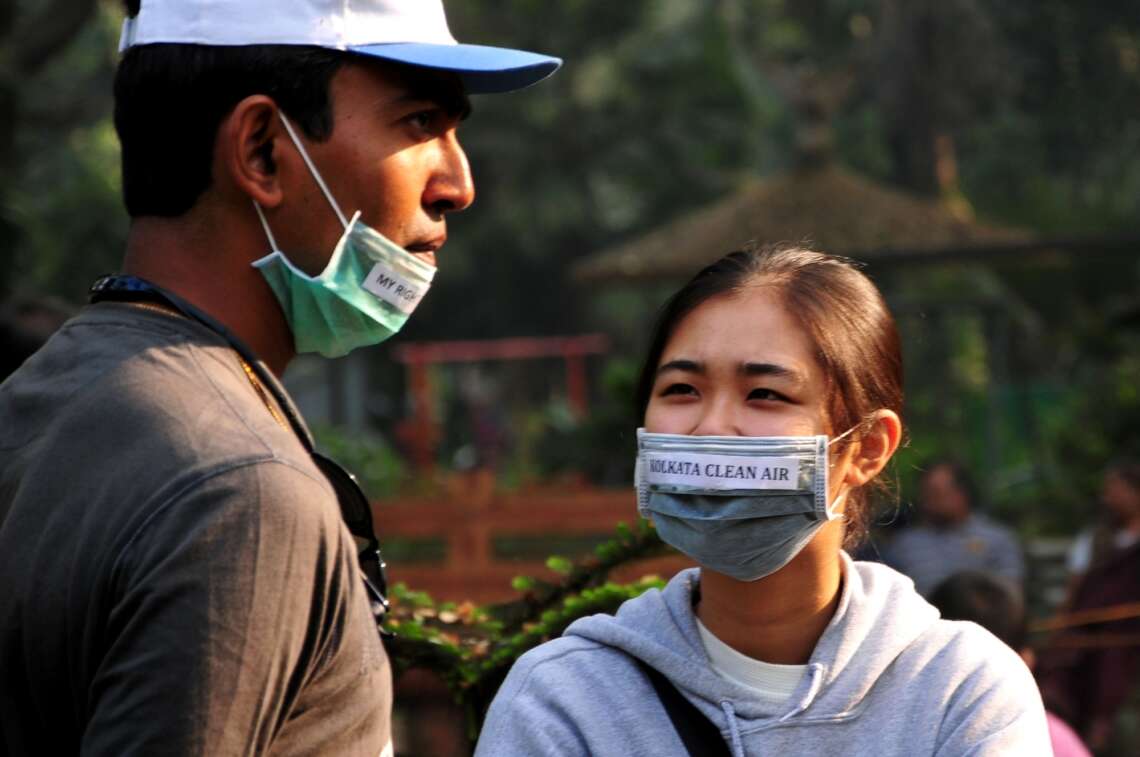
The transition from winter to summer, especially during hazy days or winter rains, creates high-risk windows when airborne diseases are more likely to spread
Airborne pathogens—bacteria that can trigger infections in the lungs, gut, mouth, and skin—are found in twice the concentration in densely populated regions compared to less crowded areas, according to a new study led by the Bose Institute, an autonomous institute under the Department of Science and Technology (DST).
The research, conducted in Delhi, underscores how crowded megacities face not only the visible burden of smog and toxic particles but also an invisible microbial threat riding on polluted air. The study, published in the international journal Atmospheric Environment: X, revealed that pathogenic bacteria responsible for respiratory infections, gastrointestinal problems, oral diseases, and skin conditions are two times higher over densely populated urban regions. The key driver, researchers said, is the fine particulate matter known as PM2.5.
“PM2.5—the microscopic dust specks—help bacteria to hitch a ride through the city air,” explained lead author Dr. Sanat Kumar Das. “Since the particles are small enough to sneak deep into the lungs, they act as carriers of the pathogenic bacteria, thus spreading infection to different parts of the body.”
Delhi, located in the Indo-Gangetic Plain (IGP), is one of the most densely populated regions in the world and consistently records some of the highest levels of air pollution. This made it an ideal focus area for the study. The team found that winter weather conditions in Delhi amplify the microbial risk. Western disturbances during the season trigger sudden drops in atmospheric temperature, raising relative humidity. This combination, along with stagnant winds and a lowered boundary layer height, causes pollutants to accumulate in the lower atmosphere, providing ideal conditions for bacteria to thrive.
The transition from winter to summer, especially during hazy days or winter rains, creates high-risk windows when airborne diseases are more likely to spread. During these periods, the cocktail of pollution and weather patterns creates the perfect storm for microbes to linger in the air longer than usual.
Although past studies had already reported a surge in airborne microbial populations during winters over the IGP, there was limited understanding of how meteorology, air pollution, and population density together shape bacterial communities in the air. This research, therefore, fills an important gap, linking environmental and urban factors directly to public health.
The findings, experts say, should serve as a warning for policymakers and health professionals. “This study could be a wake-up call for urban health planning,” the researchers stressed. In megacities like Delhi, where millions breathe polluted air every day, residents may also be unknowingly inhaling bacterial communities enriched with disease-causing microbes. The combined effect of high population density, air pollution, and seasonal weather patterns creates a hidden but powerful risk factor for disease transmission.
“Understanding how weather, pollution, environmental factors, and population density affect airborne bacteria and resultant disease transmission could help governments and health experts better predict outbreaks, improve urban design, and protect citizens,” the team added.
The researchers emphasised the need for a multi-pronged approach. Beyond controlling emissions, urban planners and health authorities must consider microbial monitoring as part of air-quality management. Early warning systems based on microbial and pollution data could help mitigate seasonal outbreaks of respiratory or gastrointestinal infections in cities like Delhi. With the population of urban centres continuing to rise and climate conditions becoming more unpredictable, experts warn that the risks associated with airborne pathogens are likely to intensify.