WHO chief praises India’s growing contribution to global health initiatives…reports Asian Lite News Desk
WHO Director-General Tedros Adhanom Ghebreyesus has praised India’s progress in healthcare, particularly in expanding primary healthcare, improving maternal and child health and strengthening efforts to prevent and control non-communicable diseases.
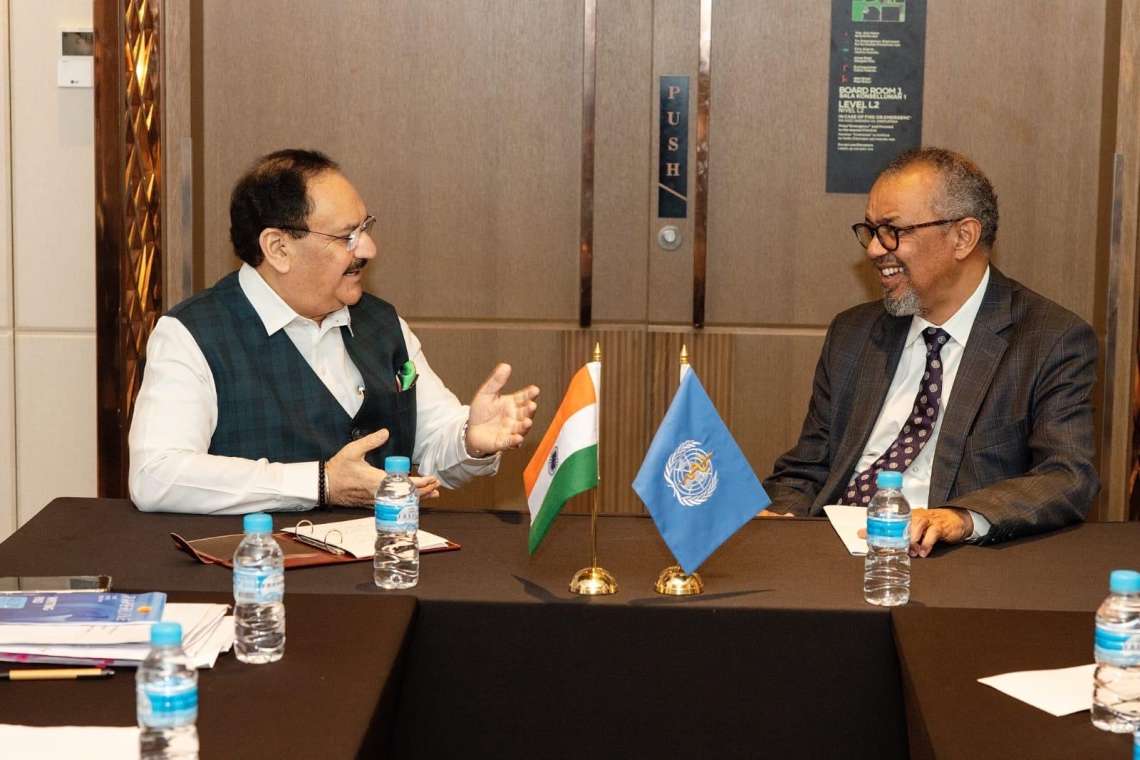
Tedros met Union Health Minister J.P. Nadda on the sidelines of the 79th Session of the WHO Regional Committee for South-East Asia in Dili, where the two discussed India’s healthcare achievements and its ongoing cooperation with the WHO.
In a post on X on Thursday, Tedros said he had congratulated Nadda on India’s “impressive health gains”, particularly in maternal and child health and the fight against non-communicable diseases.
The WHO chief also highlighted India’s Ayushman Arogya Mandir initiative, which has expanded access to primary healthcare and screening services at the community level.
He said around 160,000 Ayushman Arogya Mandirs are bringing screening for hypertension, diabetes and common cancers closer to communities, while also providing referral services for patients requiring further treatment.
Tedros also praised India’s network of Accredited Social Health Activists (ASHA), saying the workers play an important role in taking healthcare services directly to communities and supporting women, mothers and children.
“India’s ASHA workers are another powerful example of health care reaching people where they are, supporting mothers and children from conception through adolescence,” he said.
He further cited wider immunisation coverage and the increase in institutional deliveries from 78 per cent to 93 per cent as important contributors to sustained improvements in maternal and child health outcomes.
During the meeting, Tedros and Nadda also discussed India’s efforts to eliminate tuberculosis, including expanded screening, diagnosis, treatment and other public health interventions.
They reviewed measures to strengthen the regulation of medical products and ensure their quality, safety and effectiveness, as well as India’s continued engagement with the WHO on global health priorities.
Tedros acknowledged India’s support for the WHO and its contribution to international health initiatives, including cooperation in traditional medicine.
The discussions also covered ongoing negotiations on the Pathogen Access and Benefit Sharing system under the WHO Pandemic Agreement.
The meeting took place as health ministers and representatives from across the WHO South-East Asia Region gathered in Dili for the 79th Session of the WHO Regional Committee.
India’s progress in healthcare, expansion of primary health infrastructure and contribution to global health cooperation were among the key issues discussed during the interaction.