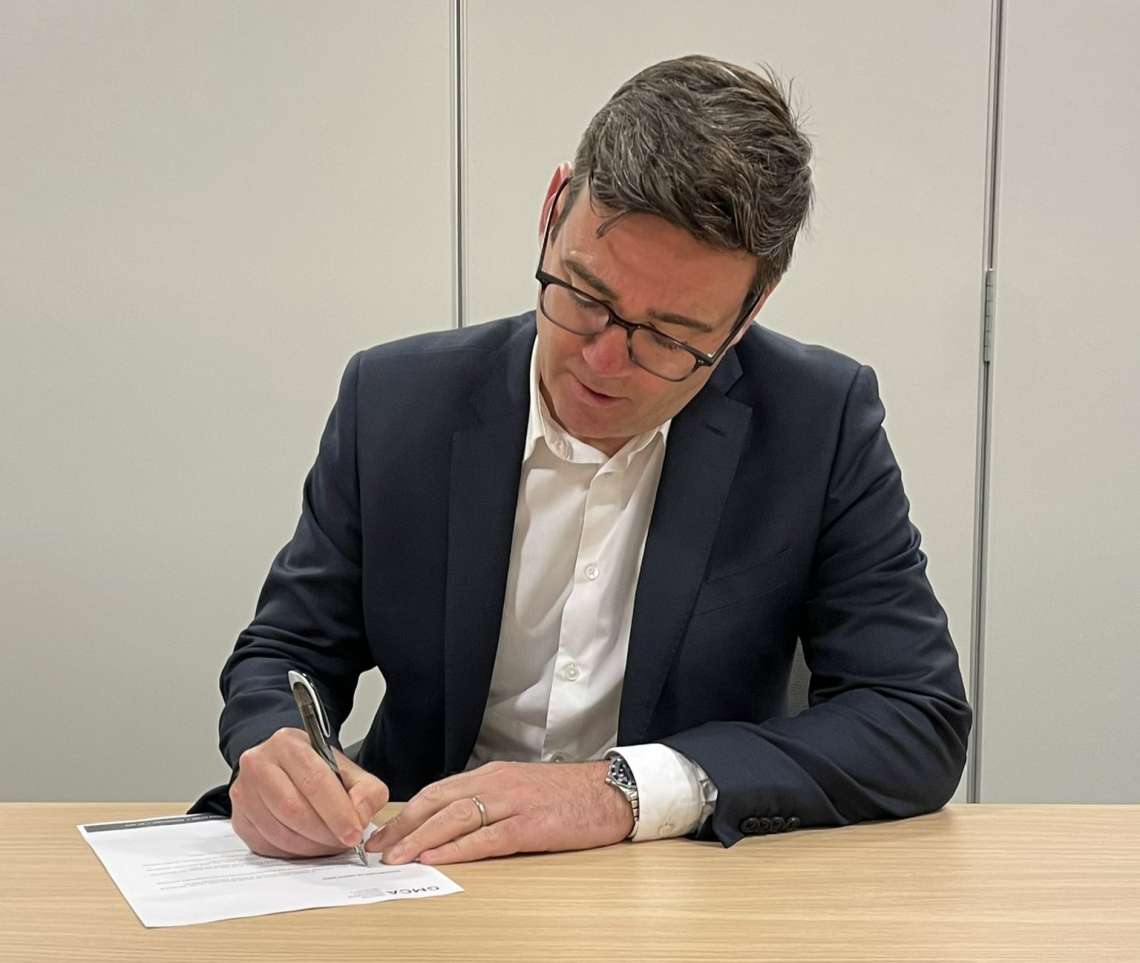
Burnham has pledged to unite the party, pursue a distinctly Labour agenda and spread power and economic growth beyond London, reports Asian Lite News Desk
Former Greater Manchester Mayor Andy Burnham was elected unopposed as leader of the Labour Party, and will replace Keir Starmer as Prime Minister on Monday.
Addressing a specially convened conference of Labour MPs after his election, Burnham paid tribute to his predecessor before setting out his vision for both the party and the country. He described the leadership transition as the most significant “change moment” in British politics in 40 years.
Burnham outlined five priorities for his incoming government, beginning with a pledge to end divisions within Labour, which he said had contributed to Starmer’s downfall and his own rise to the leadership. He also vowed to end what he called the “insidious briefing culture” at Downing Street and said Labour MPs would not be punished for holding different views.
His remarks were seen as a reference to the practice of withdrawing the party whip from MPs who declined to vote along party lines, a step taken by Starmer during his premiership.
“I will work to build a new politics,” Burnham said. He added that he wanted to bring an end to the political instability Britain had experienced since 2016 and build consensus where possible.
At the same time, he stressed that Labour would pursue its own political course. “Under me, we will not try to out-Green the Greens, or out-Reform the Reform or doing what we’ve done in the past of wearing too many Tory clothes,” he said.

The new Labour leader also made light of comments previously made about his clothing. “Let me tell you, I’m quite happy that [Conservatives Leader] Kemi [Badenoch] doesn’t approve of my wardrobe,” Burnham said. “I don’t approve of Tory clothes either.”
Burnham has often been noted for wearing more casual clothing than is traditionally associated with British prime ministers, frequently appearing in a T-shirt and blazer. Last month, Badenoch told the House of Commons that Mr. Starmer had been abandoned by colleagues for “a pair of eyelashes and a black T-shirt”.
In his speech, Burnham promised a government that would be “distinctively” Labour. He argued that Britain had taken a wrong turn during the 1980s and said the country had surrendered control over essential services, including water and housing.
The former Manchester mayor has long supported greater public control of utilities and has recently announced plans to launch what he described as the largest public housing programme since the post-war period. He also argued that large parts of Britain had been “de-industrialised”, adding: “And that is why this change today is the most significant change moment in our politics for 40 years.”
Burnham said his focus would now extend beyond Manchester to the whole of the United Kingdom. He reiterated his commitment to reducing the concentration of decision-making in London and to distributing power and economic growth more evenly across the country.
Despite replacing Starmer, Burnham praised the outgoing Prime Minister for rebuilding Labour after its “worst defeat” and leading it to a landslide general election victory in 2024. He credited Starmer’s government with introducing new rights for workers and renters, reducing NHS waiting lists, ending the automatic right of hereditary peers to sit and vote in the House of Lords, and restoring Britain’s international standing.
Burnham also praised Starmer’s record on justice, referring to the passage of the Hillsborough law earlier this week. The legislation requires public officials to act transparently and makes it an offence to mislead the public deliberately. With Labour preparing for a change of leadership at the top of government, Burnham has signalled that his administration will seek to combine party unity with a programme focused on public services, regional economic growth, and constitutional reform, while maintaining Labour’s distinct political identity.