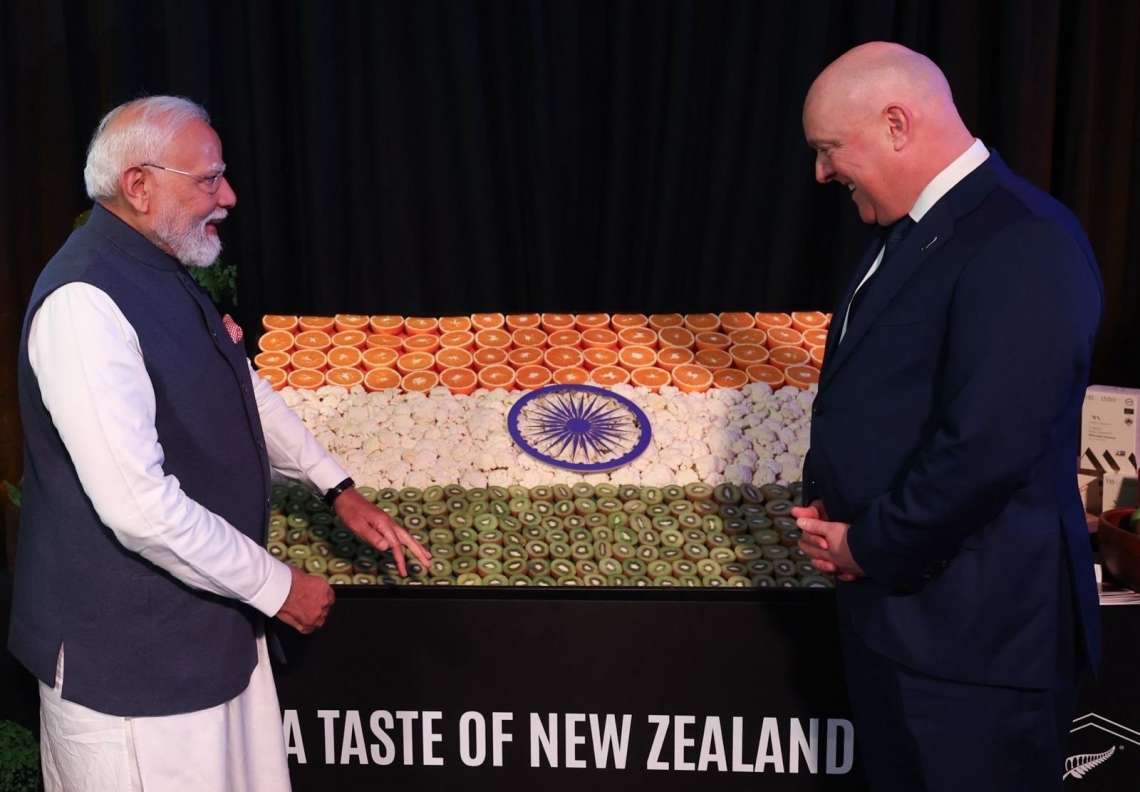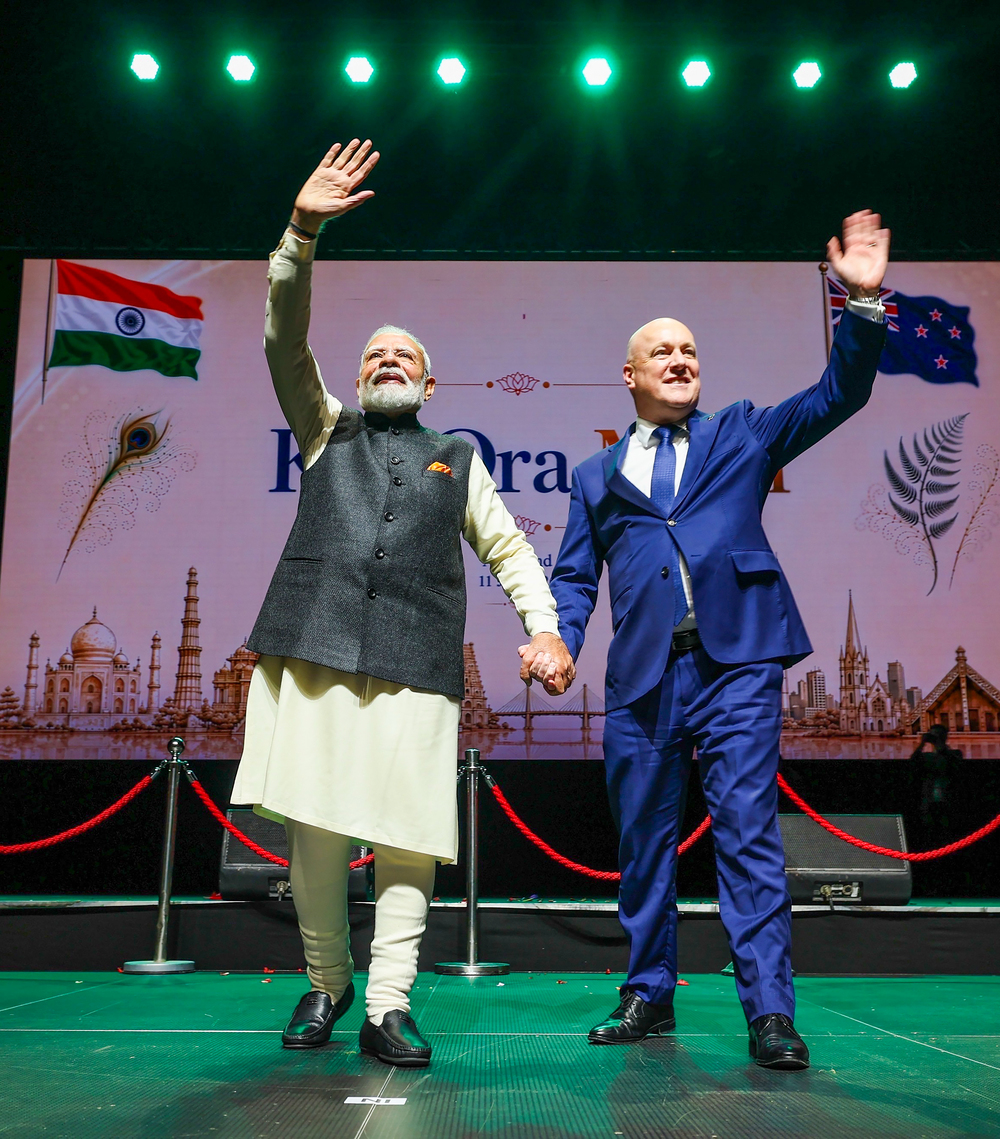
Prime Minister Modi and his New Zealand counterpart, Christopher Luxon, announced the Strategic Partnership alongside a four-year roadmap that outlines cooperation in defence, trade, maritime security, agriculture, tourism, sports, culture, science and people-to-people exchanges…reports Asian Lite News Desk
Prime Minister Narendra Modi’s landmark visit to New Zealand has ushered in a new phase in bilateral relations, with the two nations elevating their partnership to a full Strategic Partnership and unveiling an ambitious Roadmap to 2030 aimed at expanding cooperation across key sectors.
According to an article published by the New Zealand Institute of International Affairs (NZIIA), Modi’s two-day visit — the first by an Indian Prime Minister to New Zealand in two decades — marks a significant milestone in the relationship between the two countries. The visit reflects New Zealand’s growing recognition of India’s economic and strategic importance in the Indo-Pacific region.
Prime Minister Modi and his New Zealand counterpart, Christopher Luxon, announced the Strategic Partnership alongside a four-year roadmap that outlines cooperation in defence, trade, maritime security, agriculture, tourism, sports, culture, science and people-to-people exchanges.
The article notes that India has emerged as an increasingly important partner in New Zealand’s long-term strategy. India is among the world’s fastest-growing major economies and is projected to become the third-largest economy globally by 2030, with an estimated GDP of around $7 trillion. Its middle class is expected to exceed 700 million people, making it one of the world’s largest consumer markets.
Recognising these opportunities, both countries have set an ambitious target of doubling bilateral trade to NZ$7 billion (approximately $4.2 billion) by 2030. The trade goal forms a key pillar of the broader strategic partnership that seeks to deepen economic engagement and unlock new avenues for investment and business collaboration.
The NZIIA article highlights that the visit resulted in 18 major outcomes, including 10 agreements and memorandums of understanding covering diverse sectors. The centrepiece of these agreements is the Roadmap to 2030, which establishes a structured framework for cooperation over the next four years.
Defence and maritime security featured prominently during the visit. India and New Zealand signed a Mutual Logistics Support Arrangement that will enable the Indian Navy and the New Zealand Defence Force to access each other’s military facilities for refuelling, replenishment and maintenance during deployments. The agreement is expected to strengthen operational cooperation and enhance the strategic presence of both countries in the Indo-Pacific.
The two nations also concluded a Memorandum of Arrangement on Maritime Cooperation to improve dialogue, information-sharing and operational coordination. In addition, they agreed to establish a Maritime Security Dialogue, while New Zealand will lead the maritime security pillar of India’s Indo-Pacific Oceans Initiative, with a particular focus on combating illegal, unreported and unregulated fishing.
A new Joint Working Group on Counter-Terrorism will further strengthen intelligence-sharing and security coordination between the two countries.
With a comprehensive strategic roadmap now in place, Prime Minister Modi’s visit is being viewed as a transformative moment that has laid the foundation for stronger political, economic and strategic ties between India and New Zealand in the years ahead.