The rights group is calling on the Indian government to halt all arms exports to Israel and strengthen its export controls…reports Asian Lite News Desk
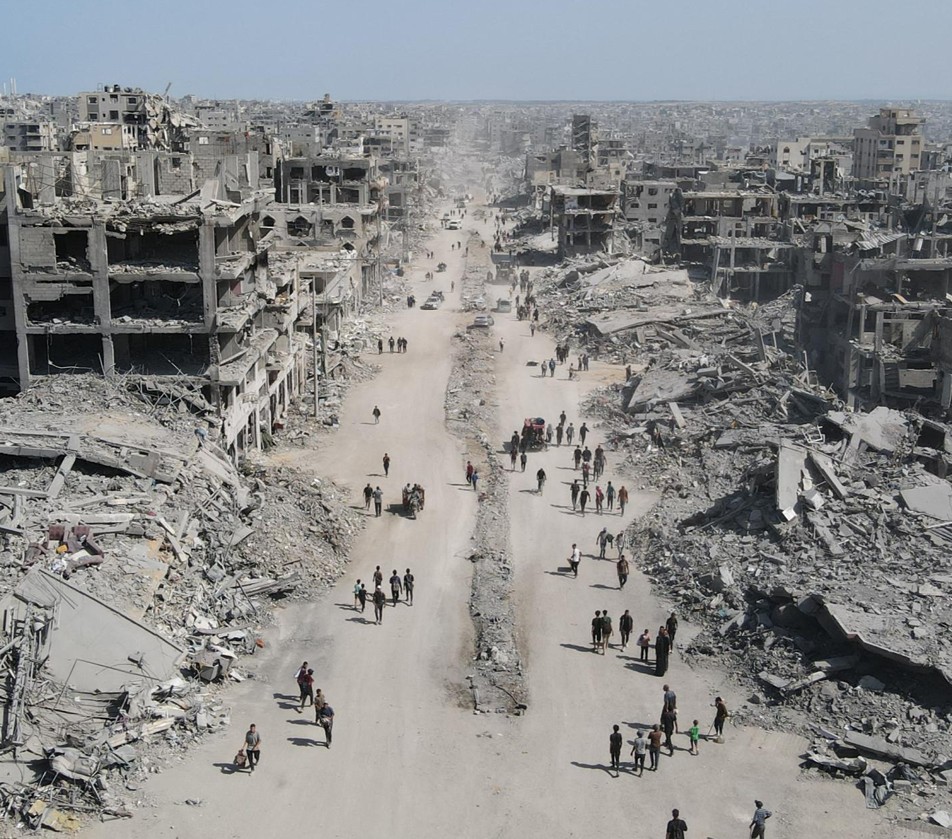
Amnesty International has accused India of continuing to supply arms, ammunition and military components to Israel despite what it describes as a substantial risk that they could be used in Israel’s military operations in Gaza.
The allegation is contained in a 42-page report titled Made in India: The Supply of Weapons and Ammunition to Israel, which examines India’s defence trade with Israel following the Hamas-led attacks on 7 October 2023 and the subsequent conflict in Gaza.
According to Amnesty, India has developed a close defence partnership with Israel and has become an important contributor to supply chains supporting the Israeli military. The organisation said its investigation relied on shipment-level trade data covering exports from India to Israel.

Amnesty said it analysed 2,596 shipments of weapons, ammunition, military parts and components sent from India to Israel between 7 October 2023 and 30 November 2025. It said the shipments included at least 390,516 small arms parts for military-grade weapons, 564,970 parts of explosive ordnance, including drone warheads and artillery shell casings, and 298 components for military vehicles.
The organisation said it excluded shipments that may have been intended for civilian use, as well as items likely to have been used for anti-missile defence systems.
Amnesty Secretary General Agnès Callamard said: “Our research reveals India’s continuing support to the Israeli military and defence sector despite the genocide in Gaza, which has been broadcast worldwide on an almost daily basis for years.”
She added: “India manufactures and supplies arms transferred to Israel through its ownership and control over key supplier companies. Not only has India failed to regulate arms exports to Israel by private companies in line with international law and standards; it has also deepened its defence partnership with Israel.”
Calling for an immediate halt to exports, Callamard said: “The Indian government must immediately stop authorising exports of weapons, ammunition and parts to Israel. It must also ensure that companies operating under its jurisdiction do not contribute to crimes under international law.”
The report argues that India’s export control framework lacks an explicit requirement for human rights due diligence and says there is insufficient transparency in the arms export process.
Amnesty also notes that India abstained during the 2013 vote on the Arms Trade Treaty and has neither signed nor acceded to the agreement. It said joining the treaty would be a first step towards aligning India’s export controls with international legal standards governing arms transfers.
The report identifies exports under internationally recognised Harmonized System categories covering arms, ammunition, military accessories, armoured fighting vehicles and related parts.
Among the equipment identified were machine gun components, 155mm high explosive artillery shells supplied to Elbit Systems, explosive warheads for Skystriker loitering munitions and armoured vehicle components supplied to companies that Amnesty said are key contractors for the Israeli military.
Amnesty named several Indian companies that it said exported military products or components, including PLR Systems Private Limited, Indo MIM Private Limited, Kalyani Systems Private Limited, the state-owned Munitions India Limited and Alpha Elsec Defence & Aerospace Systems Private Limited.