A report claims decades of Chinese rule have failed to win the trust of Tibetans, citing restrictions on culture, language and religious practices…reports Asian Lite News Desk
Tibetans have little trust in the Chinese Communist Party (CCP) after decades of Chinese rule, with a report alleging that broken promises, restrictions on Tibetan culture and increased state surveillance have deepened alienation in the region.
According to a report in The Tibet Express, the CCP has failed to win the confidence of Tibetans since Chinese forces entered Tibet in 1950 under what Beijing described as a campaign of “liberation”. The report said promises of autonomy and respect for Tibetan traditions were not sustained, contributing to continued opposition to Chinese rule.
It alleged that Tibet is governed through extensive security and surveillance measures, including checkpoints, cameras and digital monitoring. The report also claimed that Tibetan language and cultural practices have faced increasing restrictions, while children are required to attend boarding schools where Mandarin is the primary language of instruction.
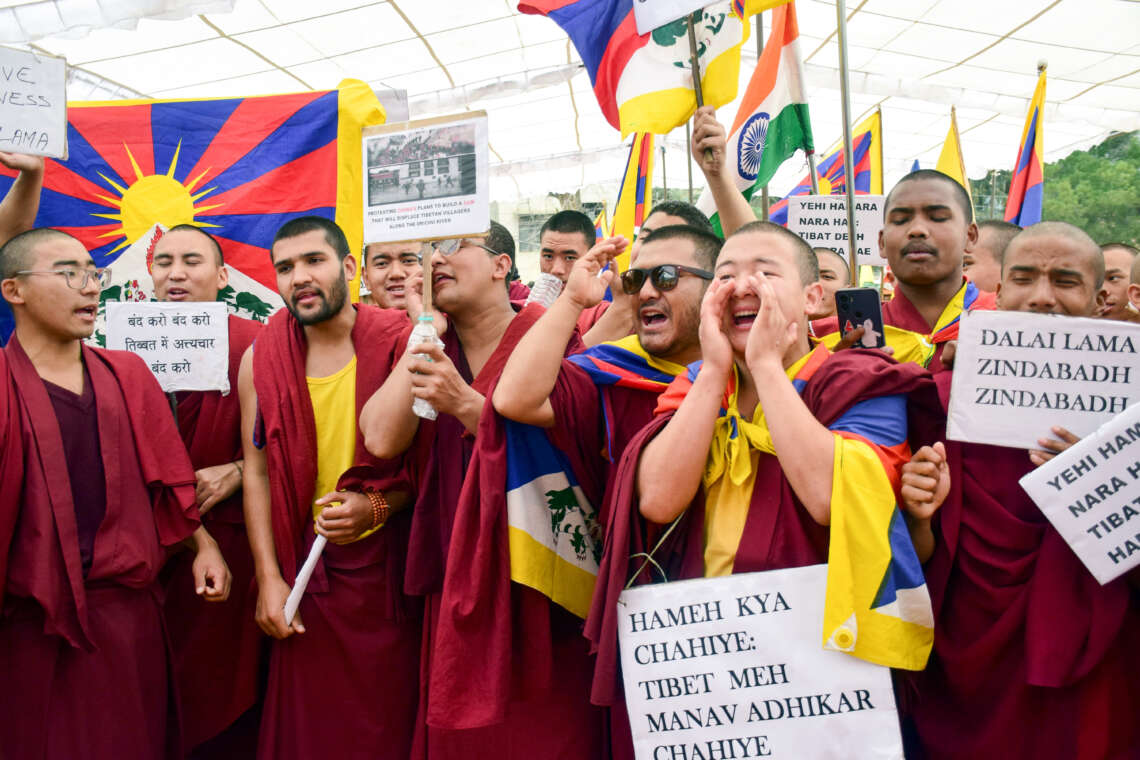
The report further alleged that authorities have conducted raids at monasteries, detained monks and restricted the display of images of the Dalai Lama.
Khedroob Thondup, the nephew of the 14th Dalai Lama, wrote in The Tibet Express that decades of Chinese rule had strengthened calls for Tibetan independence.
“After sixty-seven years, Tibetans have no trust in the CCP. The occupation has failed to win hearts or minds; it has only hardened the conviction that Tibet must be free. Should a referendum ever take place, Tibetans would choose secession—not out of ideology, but out of lived experience. China’s track record leaves them no other path,” Thondup wrote.
The report’s assessment comes amid renewed criticism over restrictions on independent reporting from Tibetan areas following devastating floods in the region.
Reporters Without Borders (RSF) has condemned restrictions imposed by Chinese authorities on media professionals seeking information about the disaster, saying that no independent Tibetan media outlet or international news organisation was granted access to the affected areas.
RSF said the restrictions reflected what it described as a long-standing pattern of strict controls over journalists working in Tibet.
According to the organisation, Chinese authorities authorised only state media to report on the floods in Tibetan areas. RSF said coverage focused largely on the government’s relief efforts and achievements, limiting independent reporting on the scale and impact of the disaster.
Aleksandra Bielakowska, Head of Advocacy at RSF Asia-Pacific, described Tibet under Chinese President Xi Jinping’s leadership as a “de facto information black hole”.
“No independent Tibetan media, nor any international media, are permitted to freely cover news from this autonomous region. The only outlets allowed to operate are those controlled by the state and its propaganda organs, which report on events in according to the guidelines approved by the Chinese Communist Party’s Propaganda Department. Under these circumstances, it is virtually impossible to gauge the true scale of the tragedy, as the regime seeks to whitewash its international image and stifle any information that might cast it in an unfavourable light,” Bielakowska stated.
The restrictions have also drawn attention following the major flooding that struck Nepal’s Rasuwa district. The floods originated in the Tibetan region of China on August 26 and swept through the transboundary Bhote Koshi River, causing widespread destruction and deaths in the Himalayan nation.
The claims in the report and statements by rights and press freedom organisations come against the backdrop of Beijing’s long-standing position that Tibet is an integral part of China and that its policies in the region are aimed at promoting development, stability and economic growth.