Canada and India aim to raise annual bilateral trade from about $30 billion to $70 billion by 2030….reports Asian Lite News Desk
Canada and India are aiming to increase bilateral trade from about $30 billion to nearly $70 billion within five years, as the two countries continue negotiations on a comprehensive trade agreement.
Canadian International Trade Minister Maninder Sidhu said the fifth round of negotiations would begin in Ottawa on Monday, with both sides working towards concluding the talks in the coming months.
“The vision that the leaders have set out for us is, you know, to go from 30 billion dollars of trade to close to 70 billion dollars of trade within the next five years,” Sidhu told reporters on the sidelines of the G20 Trade Ministers’ Meeting in Milwaukee.
He said greater trade facilitation would be an important part of achieving the target, adding that negotiations were focused on measures that could support economic growth in both countries.
Sidhu described the Canadian and Indian economies as complementary rather than competing, highlighting energy, critical minerals and aerospace as sectors with potential for expanded cooperation.
“It’s about building up our economies in complementary styles. It’s not about competing with one another,” he said.
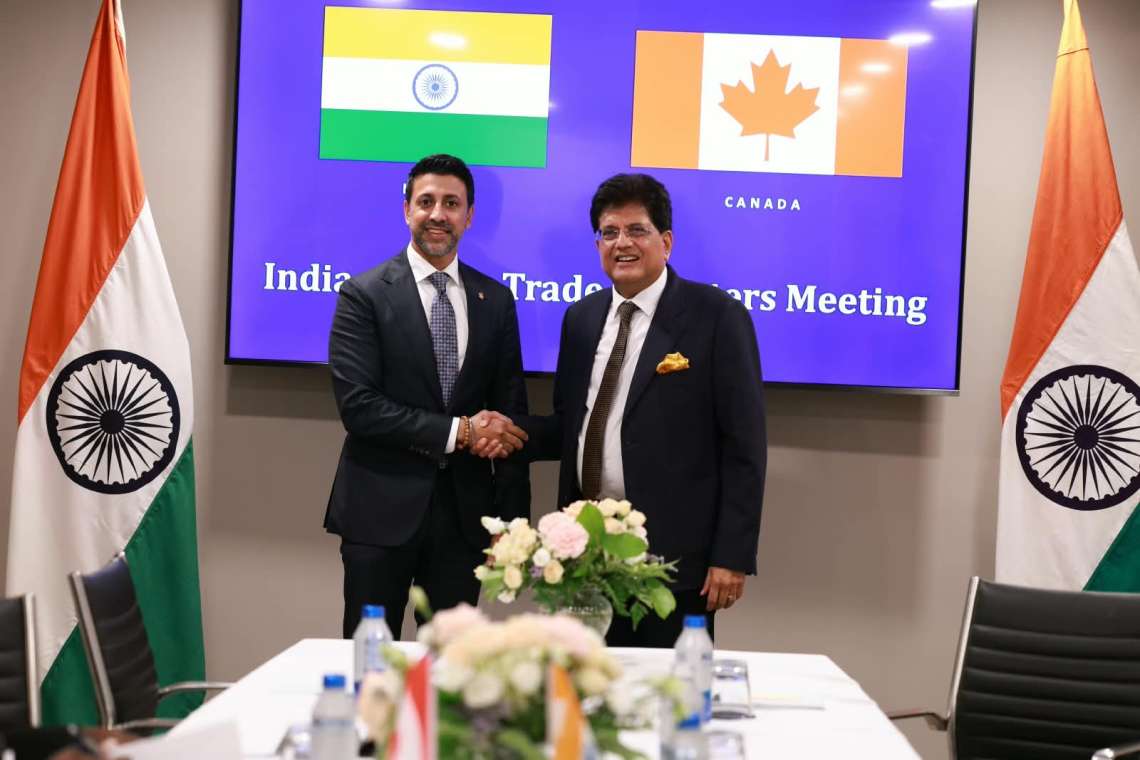
The minister recently visited India and met Commerce and Industry Minister Piyush Goyal in Mumbai, where the two sides discussed the progress of negotiations.
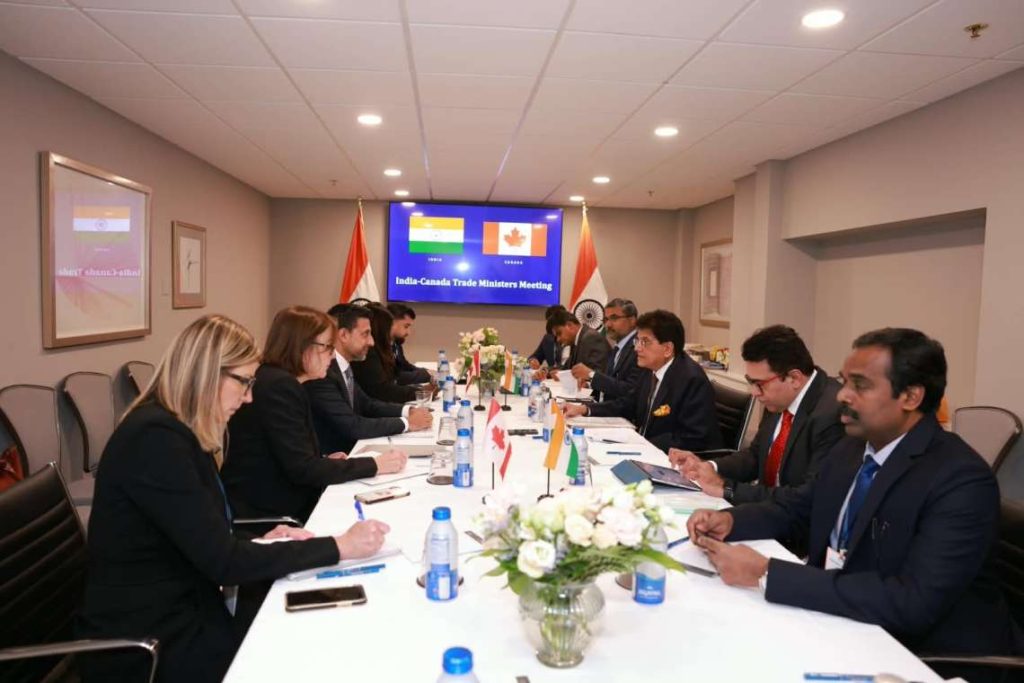
“Round five will happen in Ottawa on Monday,” Sidhu said. “Of course, negotiations are always tough, but we look forward to concluding in the coming months.”
Sidhu also pointed to discussions between Canadian Prime Minister Mark Carney and Prime Minister Narendra Modi on strengthening economic ties.
He highlighted India’s growing energy requirements as a major opportunity for Canadian exporters. According to Sidhu, India is growing at about 7 per cent annually and is expected to require significantly more energy by 2035.
“We have that energy in Canada,” he said, referring to Canada’s LNG projects and its ambition to become one of the world’s five largest LNG exporters within five years.
Beyond energy, Sidhu identified critical minerals and aerospace as other areas where the countries could deepen cooperation.
He said India’s expanding automobile, electric vehicle and battery industries could create greater demand for Canadian critical minerals and help diversify supply chains.
“India is looking to diversify some of the supply chains if you look at critical minerals,” Sidhu said. “India has a growing auto sector, and for EVs and batteries, Canada is the only country in the Western hemisphere that has every single element to make an electric battery.”
Investment is also expected to form a key part of the broader economic relationship. Sidhu said Canadian companies were involved in infrastructure projects in India and that Canada wanted to attract greater Indian investment in its mining and energy sectors.
“We also welcome Indian investors in Canada to invest in our mining projects, to invest in our energy projects, so we can grow together,” he said.
Canada and India launched negotiations for a Comprehensive Economic Partnership Agreement after Carney and Modi agreed in November 2025 to restart talks. Four rounds have been completed, with both governments working towards concluding negotiations by the end of 2026.
According to the Canadian government, two-way trade in goods and services stood at $30.4 billion in 2025. The two countries have set a target of increasing annual bilateral trade to $70 billion by 2030.
Canada’s latest push comes as both sides seek to expand commercial ties across trade, investment, energy, critical minerals, aerospace, research and other sectors.