October 9, 2026
3 mins read

Houthis Claim Missile Strike on Riyadh Airport

Yemen’s Houthi group claims a ballistic missile struck Riyadh’s King Khalid International Airport, with Saudi authorities yet to confirm the latest attack…reports Asian Lite News Desk

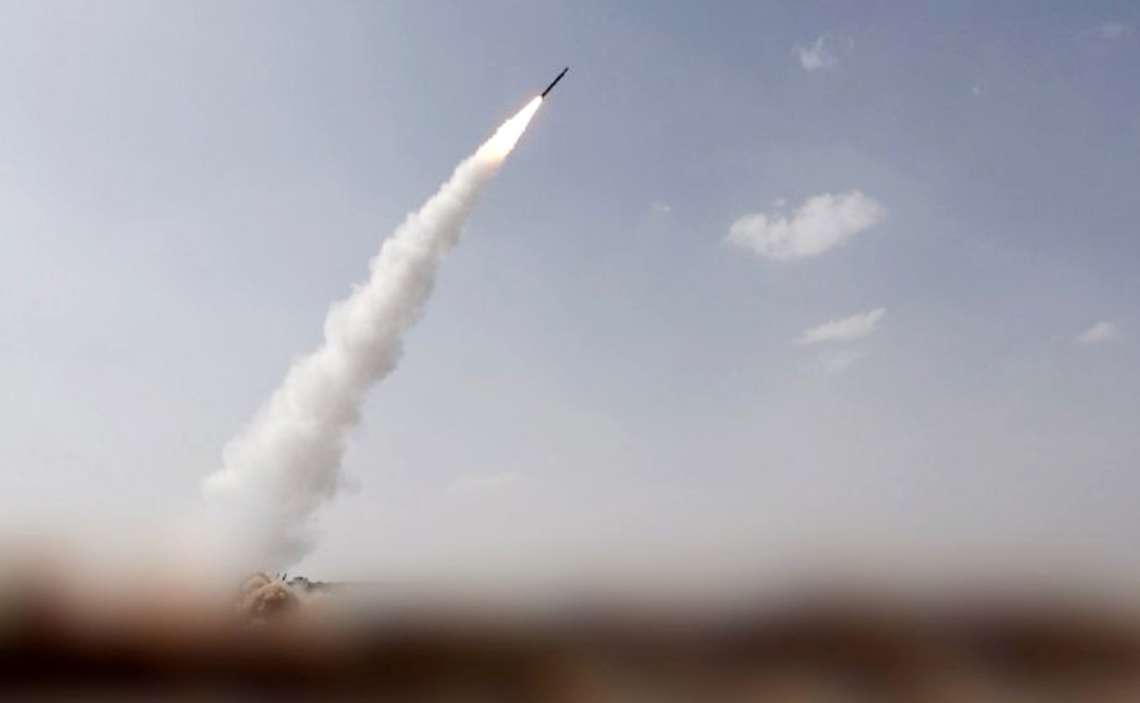
Yemen’s Houthi group has claimed responsibility for a fresh ballistic missile attack on King Khalid International Airport in Riyadh, as tensions between the movement and Saudi Arabia intensify following a series of strikes and retaliatory military operations.

The Houthi military spokesperson, Yahya Sarea, said on Thursday that a ballistic missile had targeted the airport in the Saudi capital. In a statement posted on social media platform X, he said the missile had “accurately hit its target” and disrupted air traffic.

There was no immediate confirmation from Saudi authorities regarding the latest attack claim.

Sarea also issued what he described as a “final warning” to international airlines against continuing to operate flights through Saudi airspace, claiming it had become an area of Houthi military operations. He said the warning did not apply to airspace over the Muslim holy cities of Mecca and Medina, according to Xinhua News Agency.

The latest claim comes after attacks on two Saudi airports on Tuesday and Wednesday, which left three people dead and 36 injured, according to the Saudi General Authority of Civil Aviation.

The Houthis claimed responsibility for both incidents. Sarea said on Wednesday that several drones had targeted King Khalid International Airport, while ballistic missiles and drones had struck Abha International Airport and King Khalid Air Base near Khamis Mushait in the southwestern Asir region.

The attacks have raised concerns over the security of civilian aviation and the potential for further escalation in the region. However, details of the latest alleged missile strike, including its impact and any casualties or damage, had not been independently confirmed at the time of reporting.

Saudi-led coalition launches retaliatory operation

The developments followed a military response by the Saudi-led coalition operating in Yemen.

On Wednesday, the coalition said it had launched a comprehensive operation, destroying 82 Houthi military targets across several provinces. It described the operation as a response to attacks on civilians and civilian sites in Saudi Arabia.

The latest exchanges mark the sharpest escalation since a United Nations-brokered truce in 2022 largely brought major hostilities in Yemen to a halt.

Although the truce reduced large-scale fighting, the conflict has remained unresolved, with competing forces continuing to contest territory and political authority. The latest attacks and military response have raised questions about the durability of the relative calm established in recent years.

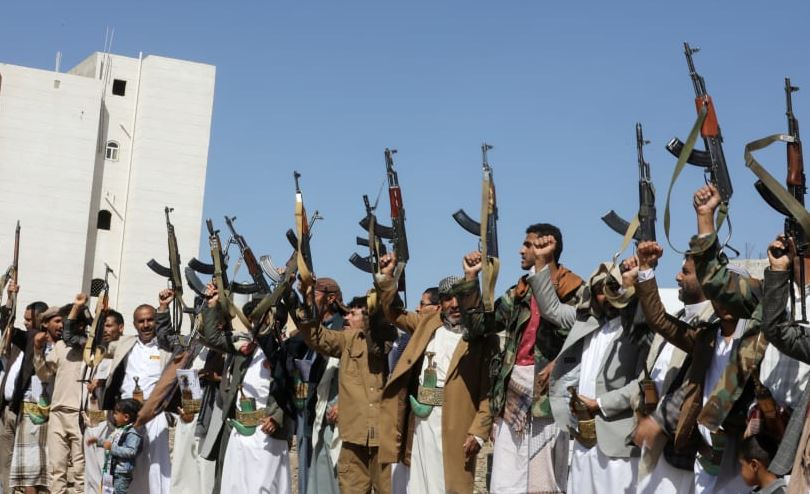
The Houthi movement, also known as Ansar Allah, controls Sanaa and large parts of northern Yemen. It has fought the internationally recognised Yemeni government and forces supporting it for more than a decade.

Conflict continues despite years of negotiations

Yemen’s conflict began in late 2014, when Houthi forces seized the capital, Sanaa, and much of the country’s north. The takeover prompted the internationally recognised government to seek military assistance from Saudi Arabia and its regional allies.

A Saudi-led coalition intervened in 2015 in support of the government, which is now based in Aden. The intervention widened the conflict, contributing to years of fighting and a prolonged humanitarian crisis.

Efforts led by the United Nations and regional parties have sought to reduce hostilities and establish a lasting political settlement. The 2022 truce represented a significant reduction in major fighting, although it did not resolve the underlying political and territorial disputes.

The latest developments indicate a renewed risk of confrontation between the Houthis and Saudi Arabia, particularly as the movement claims to be targeting strategic aviation facilities and warns international airlines against using Saudi airspace.

Saudi authorities had not immediately confirmed Thursday’s reported attack on King Khalid International Airport. The extent of any disruption to airport operations remained unclear.

Previous Story

US Green Card Freeze Hits Indian IT Giants

Next Story

India Funds Hindi News Service at UN

Previous Story

US Green Card Freeze Hits Indian IT Giants

Next Story

India Funds Hindi News Service at UN

Latest from -Top News

India and Liberia Condemn Shipping Attacks

India and Liberia have strongly condemned attacks on commercial vessels and seafarers in the Gulf region and the Black Sea. The two countries have called for an immediate end to the attacks

India, Ethiopia Set to Deepen Strategic Partnership

External Affairs Minister S Jaishankar has arrived in Ethiopia as India seeks to strengthen its strategic partnership with the African nation through discussions on bilateral cooperation and regional and global issues…reports Asian

Nadella Thanks Trump for Top US Tech Honour

Microsoft chief Satya Nadella has thanked US President Donald Trump after receiving the National Medal of Technology and Innovation…reports Asian Lite News Desk Microsoft chief executive Satya Nadella has thanked US President

India Funds Hindi News Service at UN

Hindi continues to retain its non-official language status at the United Nations, with India voluntarily funding initiatives to share UN news and information in the language…reports Asian Lite News Desk Hindi continues

US Green Card Freeze Hits Indian IT Giants

The Trump administration has suspended employment-based green card processing for eight major technology companies, including Infosys, TCS, Wipro and HCL, citing ongoing investigations…reports Asian Lite News Desk The Trump administration has suspended a key employment-based green card process for eight major technology and outsourcing companies, including Indian IT giants Infosys, Tata Consultancy Services, Wipro and HCL, as Vice President JD Vance announced a crackdown on alleged visa fraud. The suspension, announced on Thursday by US Labour Secretary Keith Sonderling at a press conference led by Vance, also covers Cognizant, Capgemini, Microsoft and Adobe. It bars the companies from filing new permanent labour certification applications and halts the processing of pending applications under the programme. Sonderling said the decision followed ongoing criminal and federal investigations into the companies. “Due to ongoing criminal investigations led by the Department of Labour’s Inspector General Anthony DiEsposito, who will get into this shortly, I am hereby suspending from the Permanent Labour Certification Program some of the largest IT outsourcing firms in the world, Cognizant, Infosys, Tata, Wipro, HCL, and Capgemini,” Sonderling said. He added that Microsoft and Adobe were also being suspended because of multiple active federal investigations. “We will not accept or process any pending permanent labour certification applications involving these companies,” he said. The Permanent Labour Certification programme, commonly known as PERM, is a key step in the process through which employers sponsor foreign workers for employment-based permanent residence in the United States. According to figures presented by Sonderling, the eight companies had collectively requested nearly three million foreign workers since 2009. They had received more than 230,000 H-1B visa approvals and over 100,000 permanent labour certifications. The administration did not disclose company-specific findings or provide details of the alleged violations during the press conference. Vance accused employers of using the H-1B visa programme to replace American workers with lower-paid foreign employees. He said the programme was intended to help companies recruit highly skilled workers for positions that could not be filled by American employees. “The H-1B visa program is meant to allow companies to bring in really the best of the best from outside the United States of America for positions that are completely impossible to fill with American workers,” he said. Vance singled out Microsoft, alleging that the company had laid off 6,000 American workers while benefiting from 6,300 H-1B visas and nearly 3,000 green cards. He said the administration wanted companies to change their hiring practices rather than withdraw from the American market. Asked whether the suspension would be temporary or permanent, Vance said, “The suspension of PERM is gonna last as long as it needs to.” He added that the administration had the tools to continue the suspension indefinitely but wanted the companies to improve their conduct. The US Justice Department also announced that it was actively investigating companies suspected of favouring foreign workers over American employees. Attorney General Todd Blanche said the authorities could pursue criminal prosecutions and civil lawsuits as part of the enforcement measures. The decision could have significant implications for Indian technology professionals and outsourcing companies operating in the United States, where Indian firms have long relied on employment-based immigration programmes to deploy skilled workers to American clients. The H-1B visa programme allows US employers to hire foreign workers in qualifying specialised occupations on a temporary basis. PERM, meanwhile, is part of a separate process through which employers seek to sponsor eligible foreign workers for permanent residence. The suspension announced on Thursday specifically concerns permanent labour certification applications involving the eight named companies. It does not, by itself, establish the cancellation of existing H-1B visas or green cards. The impact on individual employees will depend on their immigration status and the stage of their applications. The administration did not provide a detailed timeline for the suspension or specify when processing might resume.
Go toTop

Don't Miss

US Warship Intercepts Missiles from Yemen

The USS Carney, a guided-missile destroyer, was operating in the

GCC secretary-general appeals for ceasefire in Yemen

Gulf Cooperation Council (GCC) Secretary-General Nayef Falah Al-Hajraf appealed for