Assam Chief Minister Himanta Biswa Sarma has accused Rahul Gandhi of undermining democratic institutions through protests against judicial decisions. He has also expressed confidence that a fast-track court will deliver justice in the death case of singer Zubeen Garg…reports Asian Lite News Desk
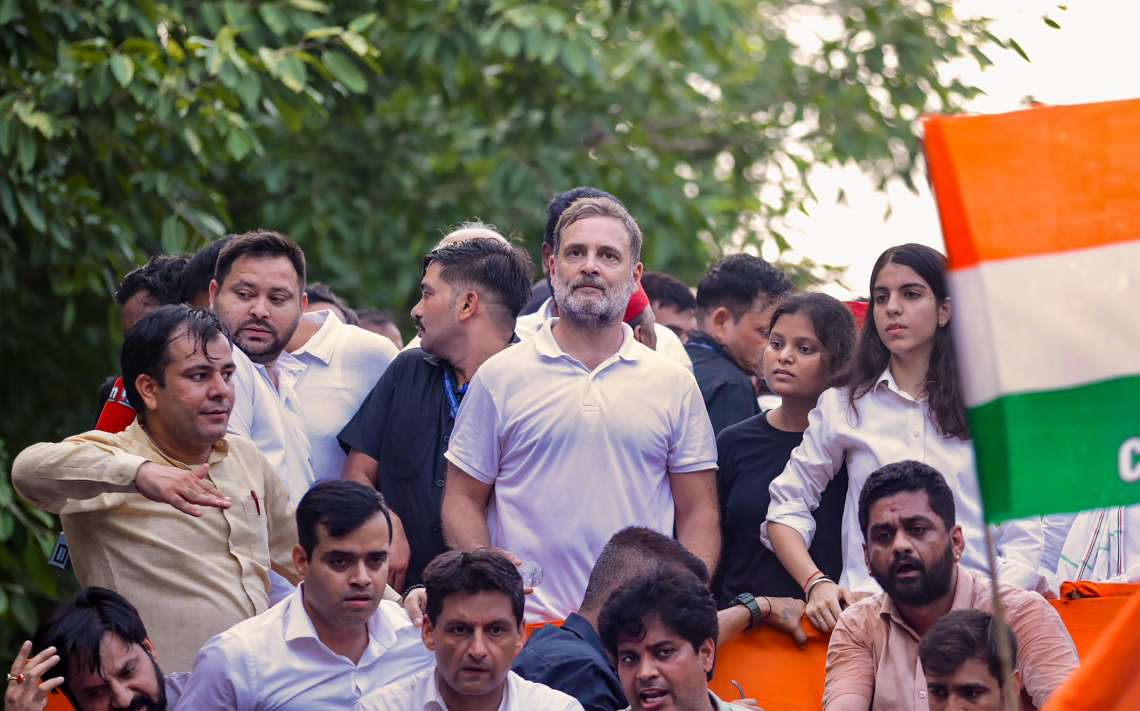
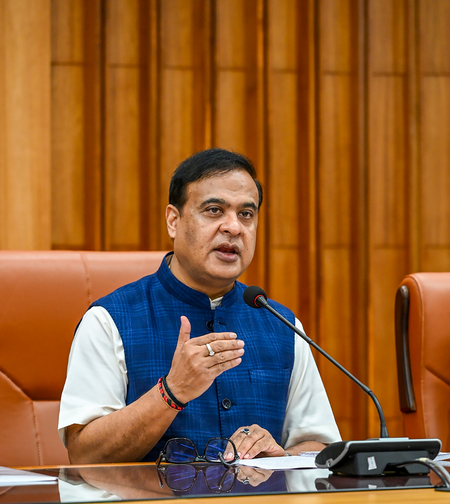
Assam Chief Minister Himanta Biswa Sarma has accused Congress leader Rahul Gandhi of pushing India towards “anarchy”, criticising the opposition party’s march towards the Supreme Court in New Delhi.
Sarma said on Monday that protests against judicial institutions could set a dangerous precedent and undermine public confidence in the country’s democratic system. He argued that political leaders must respect the judiciary, even when its decisions go against their interests.
Reacting to the Congress protest, the Chief Minister questioned the decision to mobilise people against institutions responsible for upholding the Constitution and administering justice.
“I have never seen anyone threaten the Supreme Court,” Sarma said.
He warned that allowing such demonstrations to become an accepted form of political protest could encourage people dissatisfied with court verdicts to gather outside the Supreme Court or high courts.
“He is exposing our democratic institutions to anarchy,” Sarma said, referring to Gandhi.
The Assam Chief Minister said the rule of law required both political leaders and ordinary citizens to respect judicial proceedings. He also compared protests against judicial institutions with political reactions to electoral defeats.
Sarma alleged that Congress leaders were encouraging a tendency to blame institutions whenever political outcomes went against them. He said political parties should instead examine their shortcomings and work to secure public support in subsequent elections.
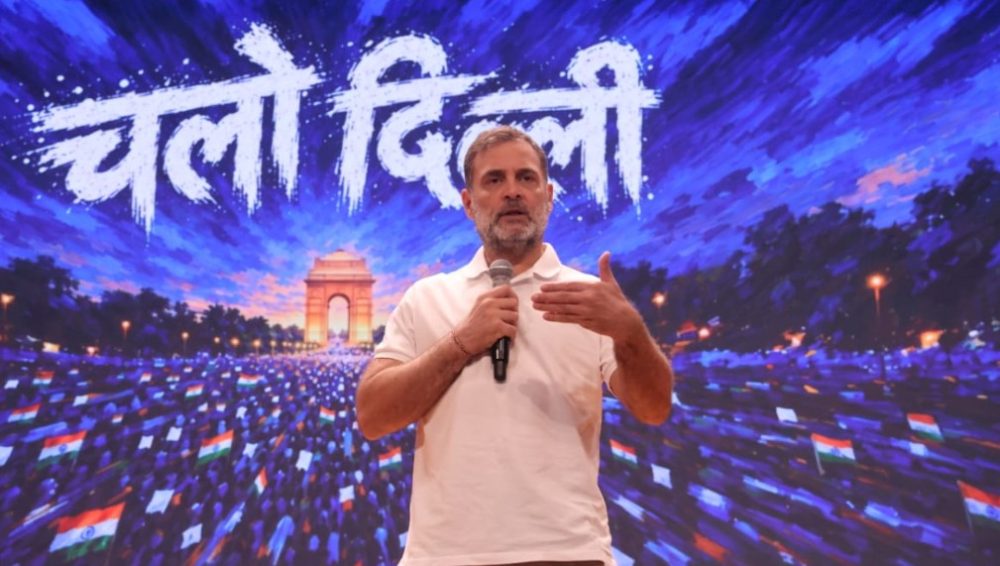
The Congress has questioned aspects of the functioning of the Election Commission of India and raised concerns about the electoral process. Its march towards the Supreme Court formed part of a broader campaign against what the party describes as institutional failures.
Sarma maintained that criticism of constitutional bodies should not undermine their authority or public confidence in the democratic system.
The remarks come amid escalating political tensions between the BJP and Congress over the functioning and independence of democratic institutions, including the Election Commission.
In a separate statement on Monday, Sarma expressed hope that a fast-track court would deliver justice in the death case of Assamese singer Zubeen Garg.
The Chief Minister’s comments came amid continuing public demands for accountability and protests involving the late singer’s wife, Garima Saikia Garg, and his fan club.
Responding to questions about the protests, Sarma said the government could not comment on matters pending before the High Court or the Supreme Court. However, he expressed confidence in the fast-track court proceedings.
“We are hopeful that we will get good justice from the fast-track court,” he said.
Garg died in Singapore on 19 September 2025 while swimming off Lazarus Island during a visit to attend the North East India Festival. His death triggered widespread grief across Assam and demands for a thorough investigation.
The Assam government subsequently formed a Special Investigation Team (SIT), which arrested several people connected with the singer and the festival.
The SIT’s chargesheet accused festival organiser Shyamkanu Mahanta, the singer’s manager Siddhartha Sharma, co-singer Amritprava Mahanta and musician Shekharjyoti Goswami of murder. Sandipan Garg was charged with culpable homicide, while security personnel Nandeswar Bora and Paresh Baishya faced charges relating to conspiracy and criminal breach of trust.
A fast-track court has framed murder charges against four accused. The Gauhati High Court recently granted bail to Amritprava Mahanta on a bond of Rs 50,000, making her the first accused in the case to secure bail.
Legal proceedings involving the other accused, including Shyamkanu Mahanta, are continuing. Garg’s death remains a deeply sensitive issue in Assam, with fans and civil society groups calling for a transparent trial and justice for the singer.