Dr. Girish S. Pathy, Dr. Aswin Prasanth, and Dr. Kannan Balakrishnan
In Kochi, a new public transport system is prompting the city to reconsider an old piece of its geography: the water.
Every morning, Kochi’s roads begin to fill long before the city has properly woken up. Buses compete for space with cars, two-wheelers and delivery vehicles. As the city expands, moving people efficiently across it becomes increasingly difficult.
But Kochi has always had another transport network.
It runs through the water.
The city’s geography is unusual for a major Indian urban centre. Its mainland is broken up by islands, canals, lagoons and backwaters. For generations, ferries connected communities separated by water. Yet as road-based transport became dominant, the waterways increasingly came to be seen as something to cross rather than something to travel on.
The Kochi Water Metro is changing that relationship.
Launched in 2023, it is an attempt to make water-based public transport part of the city’s contemporary mobility system. Its significance, however, goes beyond the introduction of a new class of boats.
The larger question it raises is whether a city can make better use of the geography it already has.
Making water part of the city
Urban transportation is usually discussed in terms of roads, railways, buses and metro systems. Water rarely appears in the same conversation, even in cities where it occupies a substantial part of the landscape.
Kochi offers a different possibility.
Instead of continually expanding infrastructure on land, the Water Metro uses existing waterways to connect communities. In principle, this gives the city another transport corridor without requiring every new connection to be built as a road.
That is particularly relevant as cities confront congestion, pollution, rising infrastructure costs and the need to reduce dependence on private vehicles.
But the value of water-based transport cannot be measured only by the kilometres of road it might replace.
Water is not an empty corridor.
In Kochi, it is part of the city’s social and economic landscape. Fishing communities depend on it. Island residents organise daily routines around it. Traditional ferry operators have long worked on it. The waterways also form part of a fragile ecological system.
This makes the Water Metro an unusual kind of urban infrastructure: it operates within an environment that already has users, histories and competing demands.
A different way of seeing water
This is close to what scholars working in the Blue Humanities have been examining: the idea that water should be understood not simply as a physical resource, but as a space where culture, work, memory and human relationships are formed.
The concept is particularly relevant to Kochi because its waterways cannot be separated from the communities around them.
A new transport network therefore raises questions that are not purely technical.
How should new routes coexist with existing livelihoods? What happens to traditional forms of water transport? How much infrastructure can the backwaters absorb? And how can the city improve connectivity without turning a living ecosystem into another piece of transport infrastructure?
These questions become more important as the network grows.
The success of a water metro cannot be judged only by how efficiently it moves passengers. It also has to be judged by what happens to the environment and communities through which it operates.
The climate dimension
There is another reason Kochi’s experiment matters.
The city is particularly exposed to flooding, intense rainfall and the effects of a changing climate. Its relationship with water is therefore complicated: the same geography that provides a transport opportunity can also create serious urban risks.
For decades, much of urban development has attempted to separate cities from water through drainage systems, reclamation and hard infrastructure.
Climate change is making that approach harder to sustain.
The Water Metro does not solve Kochi’s flooding or climate vulnerability. But it demonstrates a different principle: infrastructure can sometimes be designed around a city’s natural geography instead of attempting to overcome it.
That distinction could become increasingly important as cities confront more unpredictable weather and growing pressure on land.
The question is no longer simply how to keep water out of the city.
It is also how to live and move with it.
Sustainability beyond the boat
It is tempting to define sustainable transport by the technology of the vehicle: electric rather than diesel, low-emission rather than high-emission.
But the environmental impact of a transport system extends beyond the vehicle itself.
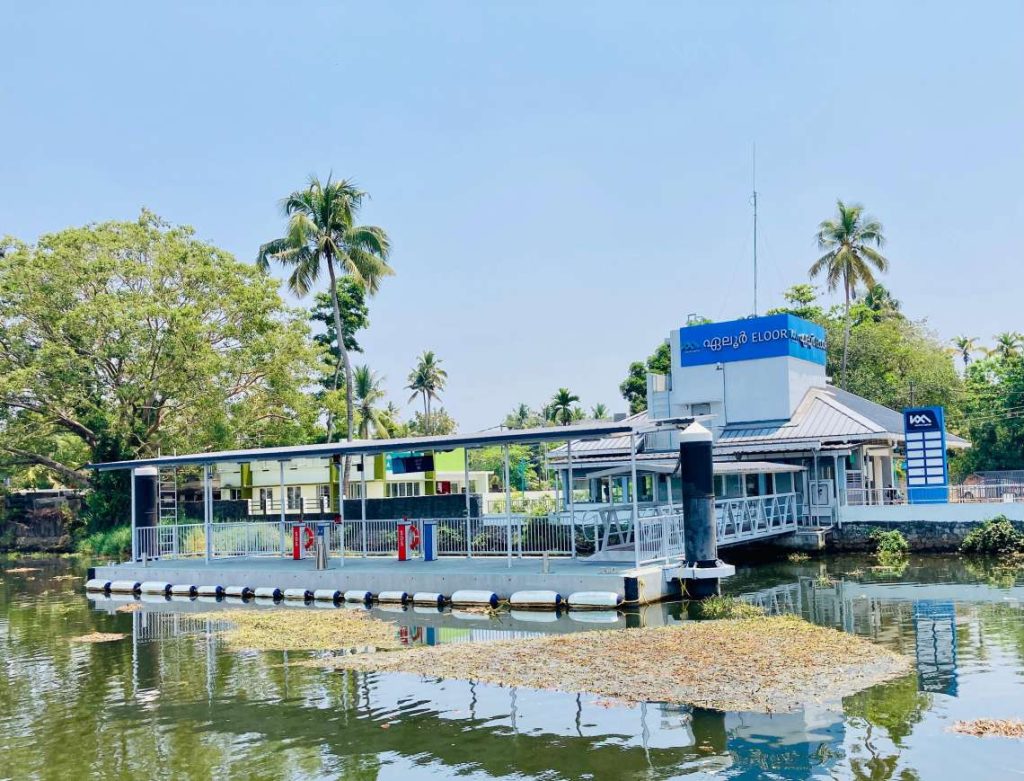
There are terminals to build, waterways to maintain and ecosystems to protect. Increased activity on the water can affect shorelines, habitats and existing livelihoods.
This is why the sustainability of the Water Metro ultimately depends on how the wider system is managed.
The question is not simply whether the boats are cleaner.
It is whether the transport network can remain compatible with the waterways that make it possible.
That also brings environmental justice into the discussion. If development creates benefits for commuters and the wider city but imposes costs on communities living along the waterways, the definition of sustainability becomes incomplete.
A genuinely sustainable transport system has to consider both.
Mobility is also about opportunity
There is an equally important social dimension.
For a visitor, travelling on the Water Metro may be an attractive way to experience Kochi. For an island resident, reliable transport can be much more consequential.
The ability to reach a workplace, school, hospital or market is part of what makes a city accessible.
Transport can therefore change the geography of opportunity. A reliable connection can influence where people work, study, seek healthcare or conduct everyday business.
That makes affordability, frequency and connectivity part of the sustainability question.
A cleaner transport system that excludes the people who need it most cannot fully claim the future.
Can the idea travel?
Kochi’s experiment is attracting attention beyond Kerala. Cities across India face congestion, pollution, land constraints and the growing costs of expanding road infrastructure.
Water offers another possibility.
But the Water Metro cannot simply become a formula. Kochi’s waterways are different from those of Mumbai, Guwahati or Kolkata. Every water system has its own ecology, communities, weather patterns and history.
The lesson may therefore not be that every city needs a Water Metro.
It may be something more fundamental: before building new infrastructure, understand the landscape; before creating a new transport corridor, understand who already uses it; and before calling a system sustainable, consider its environmental and social consequences as well as its efficiency.
What the Water Metro is testing
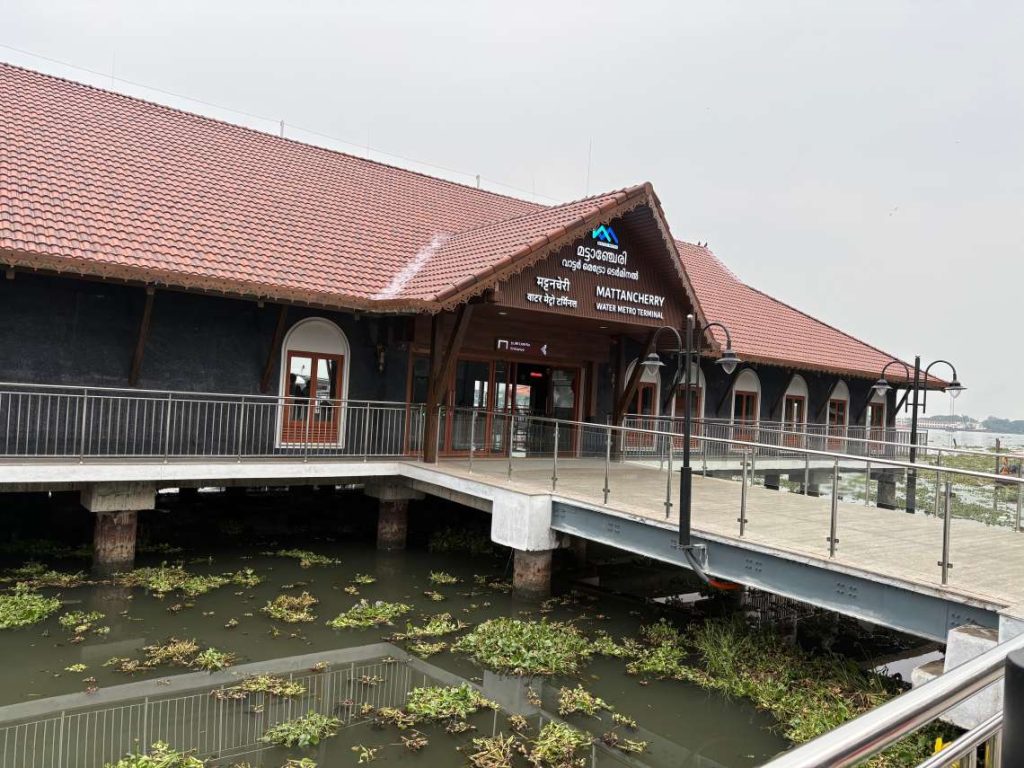
The most interesting aspect of the Kochi Water Metro may be that it is testing an idea urban planning has often overlooked: existing landscapes can be infrastructure too.
Kochi does not have to choose between preserving its waterways and making them useful to a modern city. The challenge is to find a way of doing both.
That will not be easy.
The more successful the network becomes, the greater the pressure on the waterways around it. Expansion will bring questions about ecology, livelihoods, heritage and competing uses of the backwaters.
Those questions should not be treated as obstacles to development. They are part of defining what successful development means.
For Kochi, the Water Metro is therefore more than a new mode of transport. It is an experiment in whether an old geography can support a new urban future—and whether that future can be built without forgetting what was already there.
But turning that possibility into a functioning public transport system involves choices that are less visible from the water: how vessels are designed, how terminals respond to changing water levels, how fares are structured, and how expansion is balanced with the waterways and communities around them.
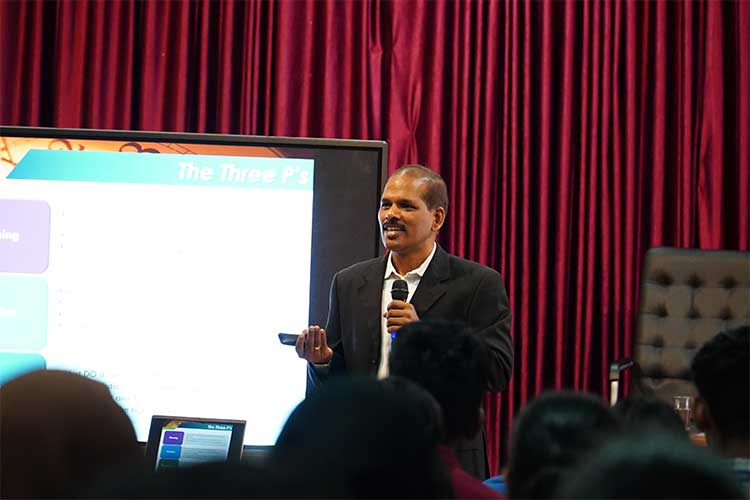
Shaji P Janardhanan, Chief General Manager – Water Transport, Kochi Metro Rail Ltd, who is heading the prestigious Kochi Water Metro Project spoke about how the system is approaching those questions—and what Kochi’s experience could mean for other cities considering water-based public transport.
The View from the Water Metro
Shaji P Janardhanan, Chief General Manager, Kochi Water Metro Project, on the system’s role, environmental approach and lessons for other cities.
Beyond moving commuters, what role do you see the Kochi Water Metro playing in the life of the city? To what extent is it changing how residents relate to Kochi’s waterways and island communities?
The Kochi Water Metro has transformed the water transport sector by demonstrating that waterways can be a safe, reliable, comfortable and organised part of urban public transport system. It has also helped raise standards across Kerala’s water transportation sector through greater emphasis on safety protocols, passenger management, cleaner jetties, passenger amenities, uniforms and overall aesthetics.
The introduction of passenger-control systems has washed away the overcrowding and improved safety, with other operators also adopting similar practices. More importantly, the Water Metro has demonstrated the potential of waterways as a modern public transport network. Kochi Water Metro Project was a transformation to the waterways transportation outlook.
Its experience has attracted interest from several states and Union Territories across India right from Srinagar to Gujarat to Maharashtra to Goa to Karnataka, Odisha, West Bengal, Assam, Andaman, Tripura, Guwahati and Uttarakhand, Bihar, Lakshadweep etc.
What makes the Water Metro’s boats and terminal infrastructure environmentally sustainable? Which measurable outcomes, such as emissions avoided or energy use, have you recorded since operations began?
The Water Metro primarily operates using electricity with an electric-hybrid system. Most journeys are powered by electricity, while diesel is used in specific situations such as high sea conditions, emergency situations, high speed requirements etc. Compared with conventional diesel carriers, electric boats produce significantly lower emissions. When fully established, the Kochi Water Metro will save nearly 45000t of CO2
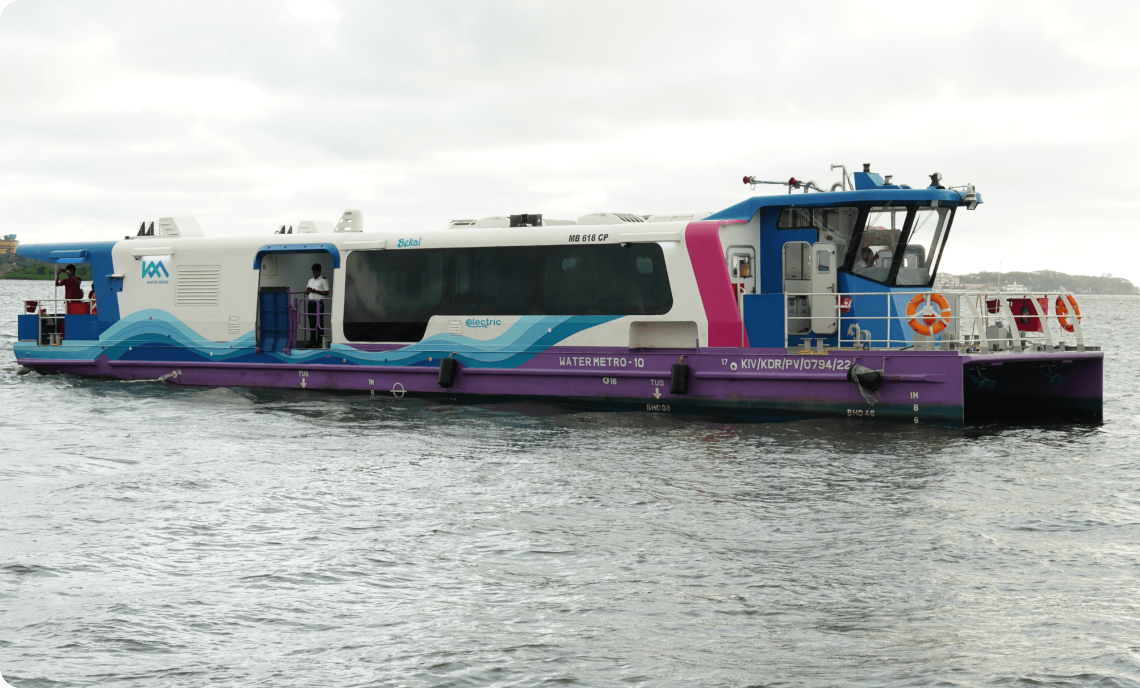
The boats are designed for energy efficiency. The twin-hull configuration has been developed and fine-tuned using technical supports from Marin laboratory in the Netherlands. Fairing the hull has considerably reduced the resistance and thereby lowers power requirements from approximately 68 kW to 38 kW.
The design also produces lower effective wave heights, reducing shoreline disturbance and impacts on livelihoods along the waterways. The boats operate with minimal noise, while lithium titanate oxide (LTO) batteries are used for propulsion. In order to make the ecosystem greener, KMRL is planning to establish its own solar power plants. Discussions are progressing with the authorities. Waterway management is another component, with efforts including water-hyacinth removal and desilting etc.
Kochi is highly exposed to flooding and rising water levels. How has the Water Metro been designed to withstand these conditions, and what role can it play in the city’s wider climate adaptation?
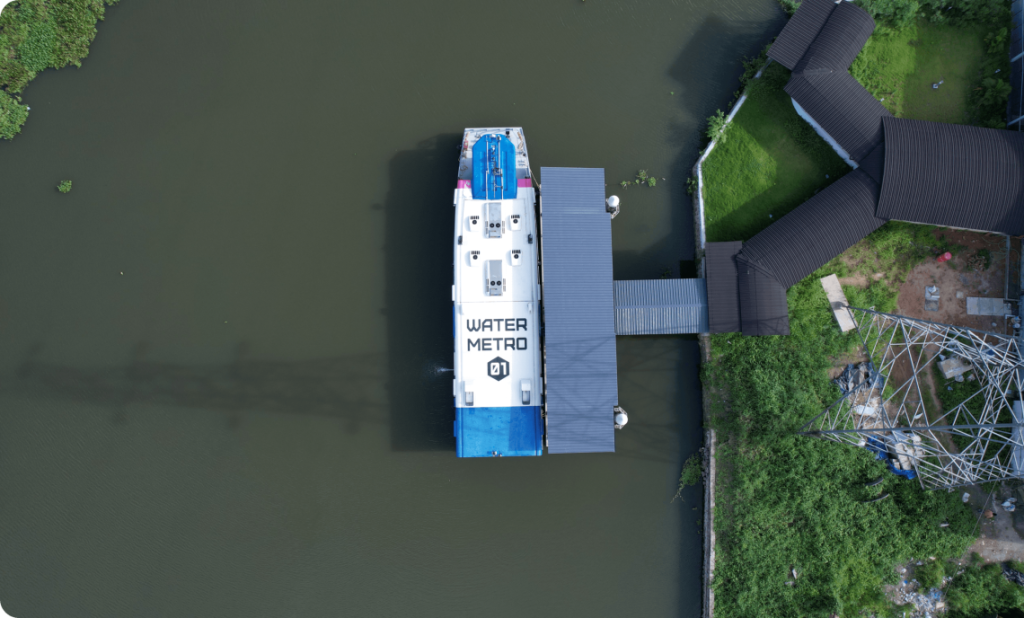
The Water Metro incorporates infrastructure designed for the changing conditions of water bodies. Concrete floating pontoons at terminals are a key innovation, helping maintain passenger accessibility despite variations in water levels.
The boats’ twin-hull design also reduces wave generation and shoreline disturbance. Lower waves can help protect the banks and reduce disruption to communities and livelihoods along the waterways.
These features, together with waterway maintenance such as desilting and removal of water hyacinth, can contribute to a more resilient urban transport system in a city increasingly exposed to flooding and changing water conditions.
How does KWM make the service affordable and useful for island residents?
Affordability is central to making the Water Metro useful for regular commuters. Fares generally range between ₹20 and ₹40, while different rates apply on weekends and holidays, when tourist demand is higher. Regular passengers can also use card-based systems. We are providing weekly. monthly and quarterly passes for the regular passengers, which will cost them much cheaper than the actual ticket charges. This will definitely benefit the island community.
The network improves connectivity between island communities and mainland destinations, providing access to employment, education, healthcare and other essential services. Floating pontoons further support universal accessibility.
The Water Metro also generates supplementary revenue through activities such as branding and chartering, providing additional support for its operations.
As the network expands, how do you weigh new routes and terminals against the protection of the backwaters’ ecology, heritage sites and traditional livelihoods such as fishing and private ferry services?
Environmental considerations are incorporated into both vessel design, terminal design and waterway management. Water-hyacinth removal and desilting help maintain navigable waterways, while the vessels’ low-wave design reduces disturbance to shorelines and communities.
The boats’ minimal noise also helps limit disruption to people living and working along the waterways. As the network expands, these principles will be important in balancing improved connectivity with the ecological and livelihood needs of Kochi’s backwaters.
We also make the surroundings of our terminal people friendly with more lights, parking, space for small shops, and quality access roads for the local public.
Several cities in India and abroad are studying the Kochi model. Which lessons are most transferable, and what would you advise them to do differently?
The most important fact is that, unlike roads and rails, the waterways are a naturally available resource. The key lesson is that waterways can function as a modern, reliable, safe and comfortable component of an integrated urban transport system. Successful water transport requires more than vessels: it needs reliable terminals, safety protocols, passenger management, accessibility, cleanliness and environmental safeguards.
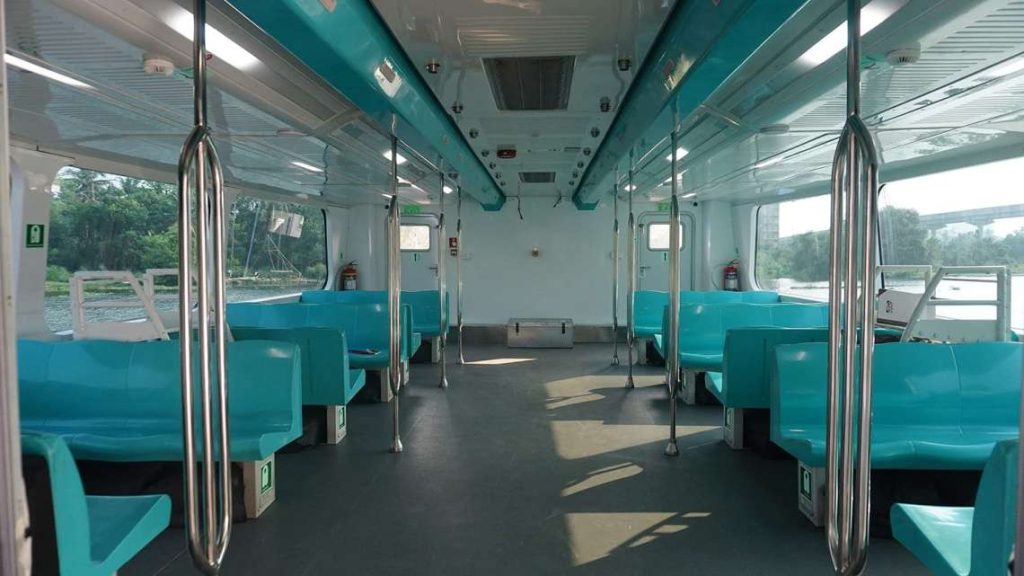
The interest shown by states and Union Territories across India demonstrates the wider relevance of the Kochi experience. Electric hybrid propulsion, energy-efficient vessel design, floating pontoons, passenger control systems, appropriate passenger amenities and central command and control are among the elements that other cities could consider.
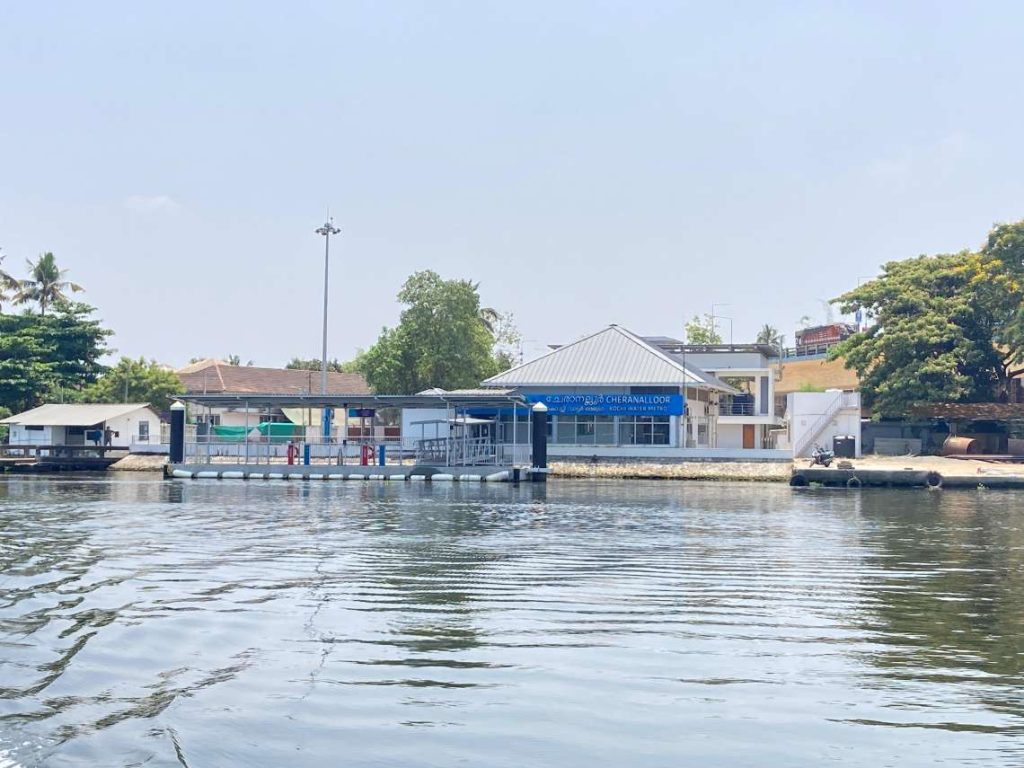
However, the Kochi model cannot simply be replicated everywhere. Each city must adapt the system to its own geography, waterways, passenger demand, environmental conditions and local communities.
The most important lesson is to develop water transport as an integrated public-transport ecosystem rather than a standalone ferry service.
(Dr. Girish S. Pathy is an Associate Professor of CMS Business School at JAIN (Deemed-to-be University), Off-Campus Kochi, Kerala, India.
Dr. Aswin Prasanth is an Assistant Professor in the Department of Languages at JAIN (Deemed-to-be University), Off-Campus Kochi, Kerala, India.
Dr. Kannan Balakrishnan is an Assistant Professor and Head of the Department of Forensic Science at JAIN (Deemed-to-be University), Off-Campus Kochi, Kerala, India.)