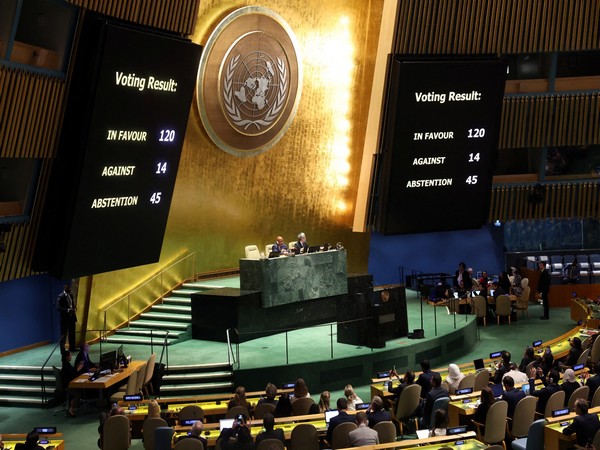
The UN General Assembly has unanimously extended the preparatory period until November 2029, giving both countries more time to address economic vulnerabilities and prepare for graduation…reports Asian Lite News Desk
The United Nations General Assembly has unanimously approved an extension of the preparatory period for Nepal and Bangladesh to graduate from the least developed country (LDC) category until 24 November 2029. The decision gives both countries three additional years to address economic vulnerabilities and strengthen their readiness for graduation.
The resolution was adopted during a meeting of the 81st session of the General Assembly at the UN headquarters in New York, Nepal’s Foreign Minister Shishir Khanal’s secretariat said in a statement on Friday.
According to the secretariat, the Assembly unanimously approved Resolution No. 81/L.8, extending the preparatory period for Nepal and Bangladesh. Both countries, along with Laos, had originally been scheduled to graduate from the LDC category in November 2026.
The extension will allow Nepal to pursue structural and institutional reforms while strengthening its economic and productive capacity. The government plans to use the additional time to improve institutions, accelerate economic and social transformation and prepare for a sustainable transition.
Nepal will also focus on implementing its Smooth Transition Strategy, the 2030 Agenda for Sustainable Development and the Doha Programme of Action, the statement said.
“The additional time is expected to help Nepal achieve its goal of graduating from the LDC category in a smooth, sustainable, and irreversible manner,” the secretariat said.
Nepal’s Permanent Mission to the United Nations expressed gratitude to member states for their cooperation and support in adopting the resolution.
The decision follows Nepal’s formal request in May to the UN Committee for Development Policy (CDP) to postpone its graduation from the LDC category by three years. Bangladesh had made a similar request, citing economic challenges and vulnerabilities that could affect its transition.
Nepal had expressed concerns that graduating from the LDC category could result in the loss of important international trade benefits, including duty-free and quota-free access to several markets. Officials warned that the withdrawal of these preferences could affect export competitiveness and employment in productive sectors by as much as 35 per cent.
The country’s private sector had also urged the government to seek an extension, warning that businesses could face difficulties adjusting to the loss of preferential trade arrangements.
The government cited several factors behind its request, including the economic consequences of conflicts in West Asia, disruptions to global supply chains and the lingering effects of the COVID-19 pandemic.
It also pointed to climate-related challenges and slower-than-expected progress in implementing the Smooth Transition Strategy.
Economic growth has remained another concern. The World Bank projected that Nepal’s economy expanded by just 2.3 per cent in the 2025-26 fiscal year, which ended in mid-July, highlighting the challenges facing the country’s recovery and development.
The extended preparatory period is expected to give Nepal greater flexibility to strengthen its economic foundations and reduce the risks associated with losing LDC-specific trade and development support.
Graduation from the LDC category is based on progress against criteria relating to income, human assets and economic and environmental vulnerability. While the status reflects development gains, countries can face challenges when preferential international support and trade arrangements are gradually withdrawn.
The UN decision therefore gives Nepal and Bangladesh additional time to prepare for the transition, with the aim of ensuring that their eventual graduation does not undermine economic progress or development gains.