As global economic uncertainty mounts, China wants APEC economies to close ranks, strengthen trade ties and push for a more integrated Asia-Pacific…reports Asian Lite News Desk
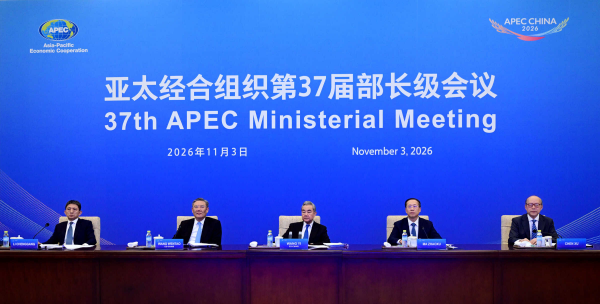
China has called on Asia-Pacific Economic Cooperation (APEC) members to strengthen regional unity, expand free trade and deepen economic cooperation amid growing global uncertainties. The appeal was made at the 37th APEC Ministerial Meeting in Beijing on 3 November 2026, as China prepares to conclude its year-long hosting of the forum with a leaders’ summit.
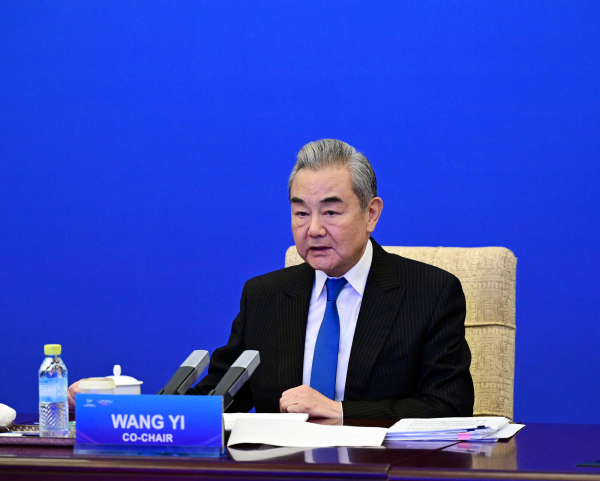
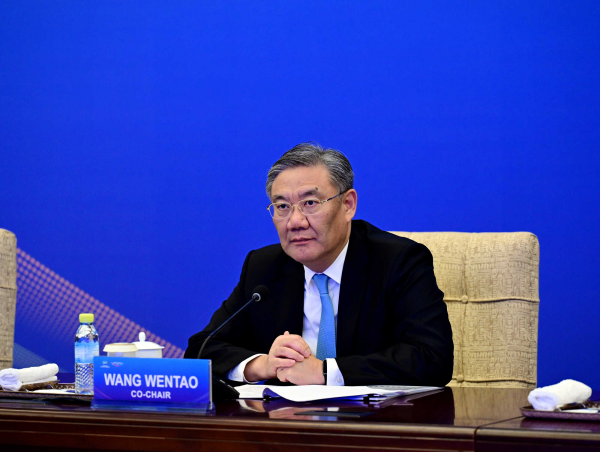
The meeting was jointly chaired by Chinese Foreign Minister Wang Yi and Commerce Minister Wang Wentao. Representatives of APEC member economies, the chair of the 2026 APEC Senior Officials’ Meeting, the executive director of the APEC Secretariat, the chair of the APEC Business Advisory Council and observer representatives also attended the virtual meeting.
Wang Yi said China had successfully hosted more than 300 meetings and activities since assuming the APEC chairmanship, marking its return as the host economy after 12 years.
Under the theme ‘Building an Asia-Pacific Community to Prosper Together’, China’s APEC year has focused on three priority areas: openness, innovation and cooperation. He said the initiatives had delivered a series of outcomes through collective efforts by member economies.
Highlighting the changing international landscape, Wang described the Asia-Pacific region as a source of stability, economic growth and cooperation despite mounting challenges to globalisation.
He said the future direction of regional cooperation was an important question at a time when economic globalisation was facing increasing headwinds.
Referring to Chinese President Xi Jinping’s vision for regional cooperation, Wang said APEC should remain committed to its founding objective of promoting economic growth and improving people’s livelihoods. He stressed the importance of sharing opportunities through openness, advancing inclusive globalisation and building an Asia-Pacific community.
What are China’s priorities for APEC cooperation?
Wang Yi outlined four key areas in which China wants member economies to strengthen cooperation and advance the development of an Asia-Pacific community.
The first priority is to reinforce regional unity through mutual respect and closer collaboration, translating the concept of an Asia-Pacific community into practical action.
The second is to maintain an open regional economic framework and protect the momentum of economic integration. Wang called on members to uphold the multilateral trading system centred on the World Trade Organisation (WTO), strengthen the role of regional trade arrangements and promote an open Asia-Pacific economy.
Innovation and technological development formed the third priority. Wang called for greater cooperation in digital and intelligent transformation, alongside efforts to develop new sources of economic growth.
The fourth area focuses on sustainable development through inclusive cooperation, green and low-carbon initiatives, and stronger energy and food security.
Wang said China was prepared to work with all APEC members to advance these priorities and ensure that the upcoming APEC Economic Leaders’ Meeting delivers substantial outcomes.
Chinese Commerce Minister Wang Wentao also called for stronger regional economic cooperation, warning that the fragmentation of industrial and supply chains, combined with weak global economic growth, posed significant challenges.
He said APEC economies should work towards practical solutions that benefit both the Asia-Pacific region and the wider global economy.
How does China want to strengthen regional trade?
Wang Wentao outlined three areas of action to improve economic cooperation and address challenges facing international trade.
The first involves strengthening free trade and creating an open and mutually beneficial development framework. He called for improvements to the pathways towards a Free Trade Area of the Asia-Pacific (FTAAP), greater coordination of macroeconomic policies and trade rules, and efforts to reduce barriers to trade and investment.
He also encouraged member economies to explore flexible approaches to establishing additional trade and cooperation arrangements.
The second priority is innovation-led growth, particularly through digital technologies. Wang called for greater discussion and coordination on digital trade rules and policies, while proposing the exploration of trusted partnerships in the digital economy.
The third area focuses on building a fairer international economic and trade order through cooperation and mutual support. He urged APEC members to take a leading role in supporting the functioning and reform of the WTO while protecting the legitimate rights and development interests of economies engaged in international trade.
Wang also reiterated China’s commitment to expanding high-level opening-up and improving access to its domestic market for foreign businesses.
He said China would continue expanding voluntary opening-up measures, fully implement equal treatment for foreign-invested enterprises and develop a unified, open and competitive market system.
On technological development, Wang said China would maintain an open approach to innovation, encouraging cooperation and shared access to emerging technologies, including artificial intelligence.
He added that these measures reflected China’s efforts to promote regional economic integration and contribute