Dubai Future Week discussions examine how artificial intelligence, mobility data and urban research can improve road safety, protect biodiversity and put people at the centre of city planning…reports Asian Lite News Desk
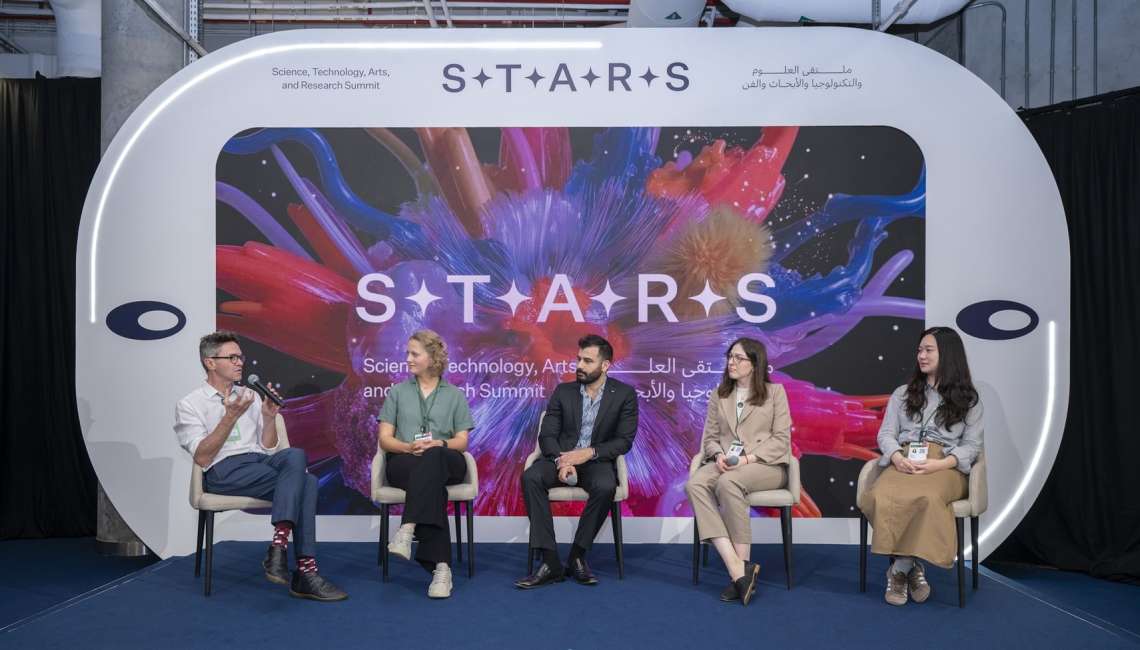
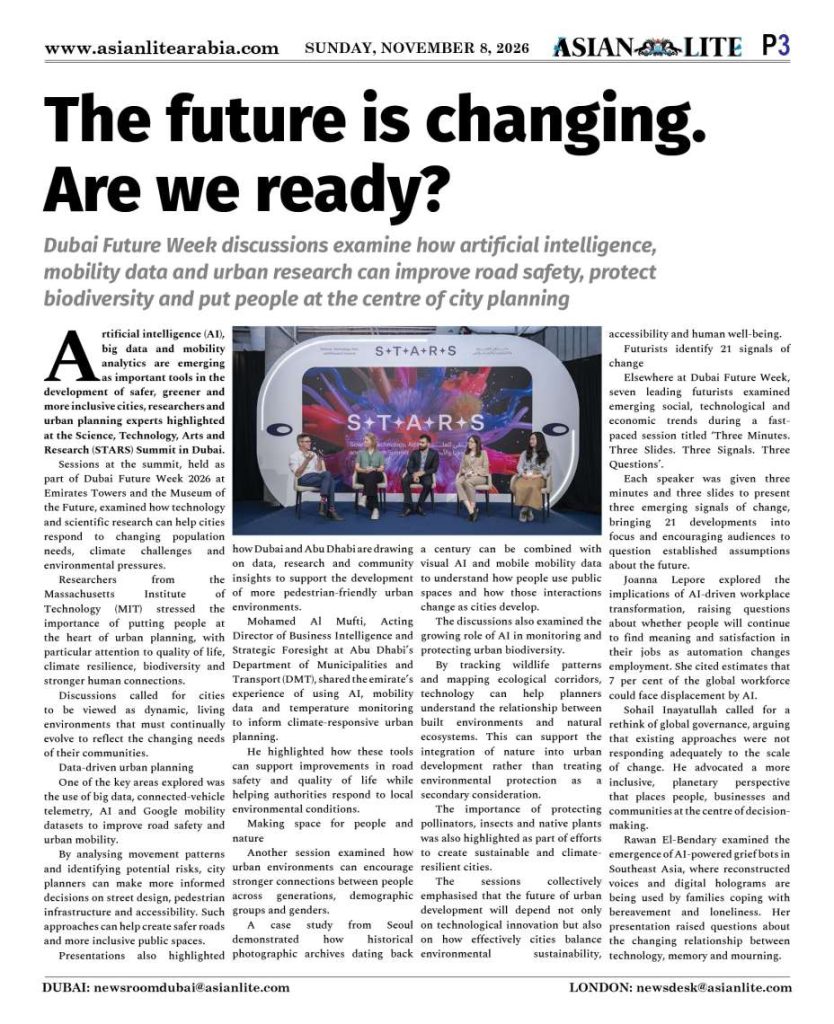
Artificial intelligence (AI), big data and mobility analytics are emerging as important tools in the development of safer, greener and more inclusive cities, researchers and urban planning experts highlighted at the Science, Technology, Arts and Research (STARS) Summit in Dubai.
Sessions at the summit, held as part of Dubai Future Week 2026 at Emirates Towers and the Museum of the Future, examined how technology and scientific research can help cities respond to changing population needs, climate challenges and environmental pressures.
Researchers from the Massachusetts Institute of Technology (MIT) stressed the importance of putting people at the heart of urban planning, with particular attention to quality of life, climate resilience, biodiversity and stronger human connections.
Discussions called for cities to be viewed as dynamic, living environments that must continually evolve to reflect the changing needs of their communities.
Data-driven urban planning
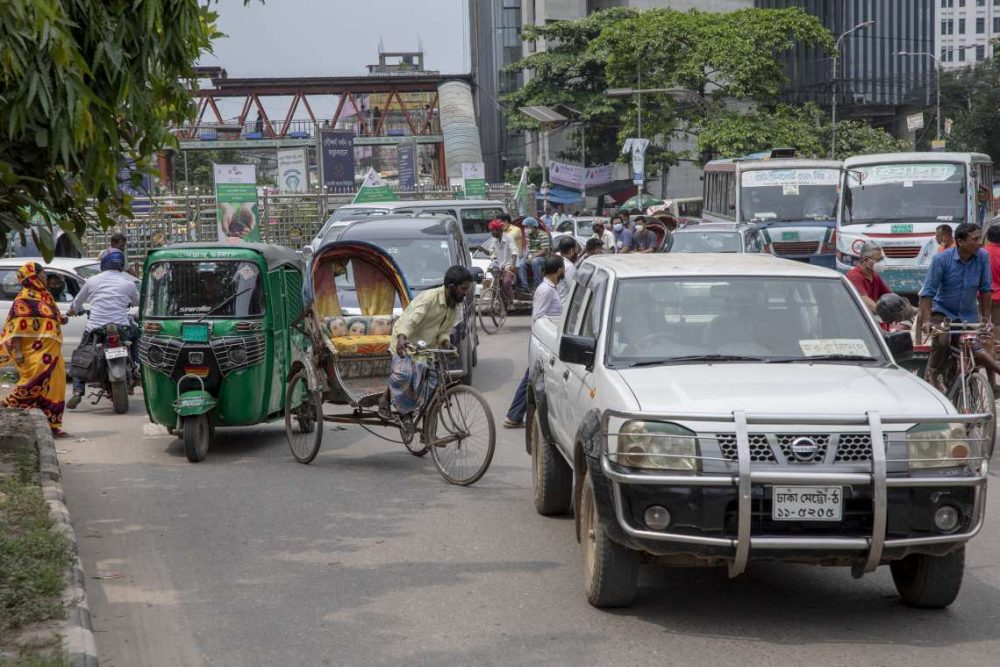
One of the key areas explored was the use of big data, connected-vehicle telemetry, AI and Google mobility datasets to improve road safety and urban mobility.
By analysing movement patterns and identifying potential risks, city planners can make more informed decisions on street design, pedestrian infrastructure and accessibility. Such approaches can help create safer roads and more inclusive public spaces.
Presentations also highlighted how Dubai and Abu Dhabi are drawing on data, research and community insights to support the development of more pedestrian-friendly urban environments.
Mohamed Al Mufti, Acting Director of Business Intelligence and Strategic Foresight at Abu Dhabi’s Department of Municipalities and Transport (DMT), shared the emirate’s experience of using AI, mobility data and temperature monitoring to inform climate-responsive urban planning.
He highlighted how these tools can support improvements in road safety and quality of life while helping authorities respond to local environmental conditions.
Making space for people and nature
Another session examined how urban environments can encourage stronger connections between people across generations, demographic groups and genders.
A case study from Seoul demonstrated how historical photographic archives dating back a century can be combined with visual AI and mobile mobility data to understand how people use public spaces and how those interactions change as cities develop.
The discussions also examined the growing role of AI in monitoring and protecting urban biodiversity.
By tracking wildlife patterns and mapping ecological corridors, technology can help planners understand the relationship between built environments and natural ecosystems. This can support the integration of nature into urban development rather than treating environmental protection as a secondary consideration.
The importance of protecting pollinators, insects and native plants was also highlighted as part of efforts to create sustainable and climate-resilient cities.
The sessions collectively emphasised that the future of urban development will depend not only on technological innovation but also on how effectively cities balance environmental sustainability, accessibility and human well-being.
Futurists identify 21 signals of change
Elsewhere at Dubai Future Week, seven leading futurists examined emerging social, technological and economic trends during a fast-paced session titled ‘Three Minutes. Three Slides. Three Signals. Three Questions’.
Each speaker was given three minutes and three slides to present three emerging signals of change, bringing 21 developments into focus and encouraging audiences to question established assumptions about the future.
Joanna Lepore explored the implications of AI-driven workplace transformation, raising questions about whether people will continue to find meaning and satisfaction in their jobs as automation changes employment. She cited estimates that 7 per cent of the global workforce could face displacement by AI.
Sohail Inayatullah called for a rethink of global governance, arguing that existing approaches were not responding adequately to the scale of change. He advocated a more inclusive, planetary perspective that places people, businesses and communities at the centre of decision-making.
Rawan El-Bendary examined the emergence of AI-powered grief bots in Southeast Asia, where reconstructed voices and digital holograms are being used by families coping with bereavement and loneliness. Her presentation raised questions about the changing relationship between technology, memory and mourning.
Steven Kenney focused on longevity research and the growing emphasis on extending healthy and active years rather than simply increasing life expectancy. He also questioned economic systems that continue to associate ageing with decline and risk excluding older people.
Olga Tarasov highlighted what she described as a growing ‘knowledge famine’, citing estimates that half of newly published online articles are written by AI. She warned that the growing volume of available information does not necessarily translate into deeper understanding.
Thays Prado examined the importance of intuitive intelligence, arguing that human abilities to read situations and recognise patterns beyond what data can capture will remain valuable as AI becomes more sophisticated.
Cheryl Doig explored the value of stillness and reflection in an increasingly data-driven world, questioning whether the ability to disconnect from constant information could become an increasingly important measure of well-being.