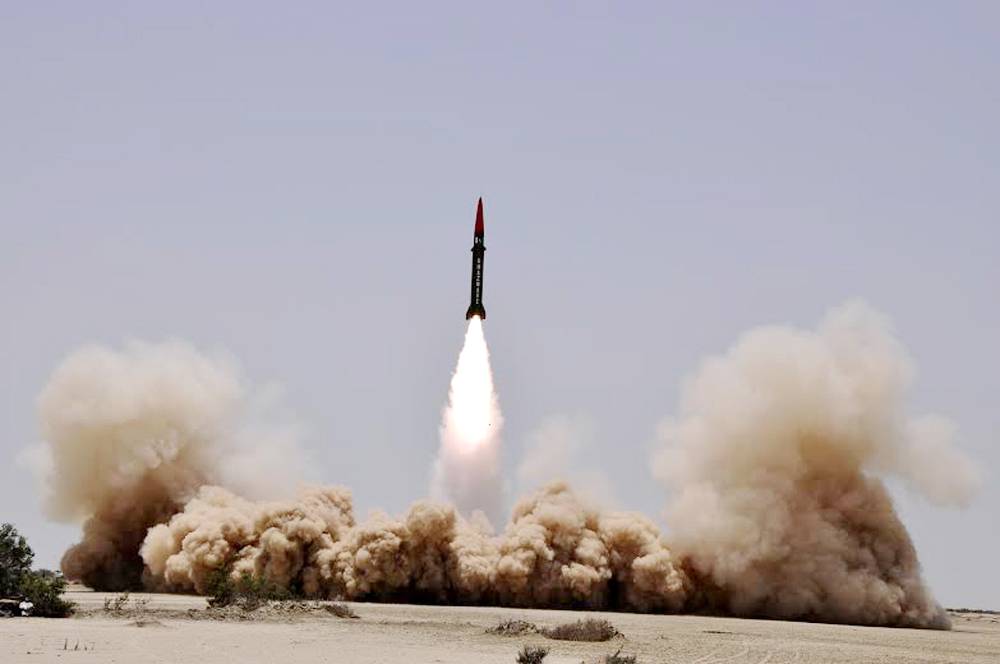
In a sensational observation which will have far reaching ramifications particularly in the highly volatile nuclear armed South Asian neighbourhood, Pakistan has said that it does not consider itself bound to any obligation preserved under the Treaty on the Prohibition of Nuclear Weapons as it was not part of its negotiations.
During a weekly press briefing, the Foreign Office spokesperson said that “none of the nuclear-armed states, including Pakistan took part in the negotiations of the Treaty which failed to take on board the legitimate interests of all the stakeholders”.
“Many non-nuclear armed states have also refrained from becoming parties to the treaty,” he said.

Pakistan has maintained that the UN General Assembly had agreed by consensus, during its first special session focused on nuclear disarmament in 1978, that disarmament measures will be adopted, keeping in mind the right of each state to security.
“The UNGA, at its first special session devoted to nuclear disarmament in 1978, had agreed by consensus that the adoption of disarmament measures, the right of each state to security should be kept in mind, and at each stage of the disarmament process, the objective would be undiminished security for all states at the lowest possible level of armament and military forces,” the Foreign Office said in a statement.
“Pakistan believes that this cardinal objective can only be achieved as a cooperative and universally agreed undertaking, through a consensus-based process involving all the relevant stakeholders, which results in equal and diminished security for all states.”

Pakistan has highlighted and urged that “it is indispensable for any initiative on nuclear disarmament to take into account the vital security considerations of each and every state”, adding that the current treaty does not contribute to progress or development of customary international law.
“Pakistan stresses that this Treaty neither forms a part of, nor contributes to the development of customary international law in any manner,” the Foreign Office statement added.