September 6, 2021
4 mins read

Kia K8 all set for the Middle East

A modern and innovative sedan, the K8 combines sportiness and performance with a progressive and sleek exterior design…reports Asian Lite News

Kia Corporation has today announced the arrival of the K8 to the Middle East region, the first model to arrive following the rebirth of the Kia brand and one that exemplifies the automaker’s new purpose and ambitions for the future.

The K8 represents a new model name for Kia and is the first to show the brand’s new design identity as well as the contemporary new Kia logo. The official launch of the K8 in the Middle East region will take place on September 15, 2021. Aside from Korea, the car will be mainly sold in the GCC with KSA being the focus market.
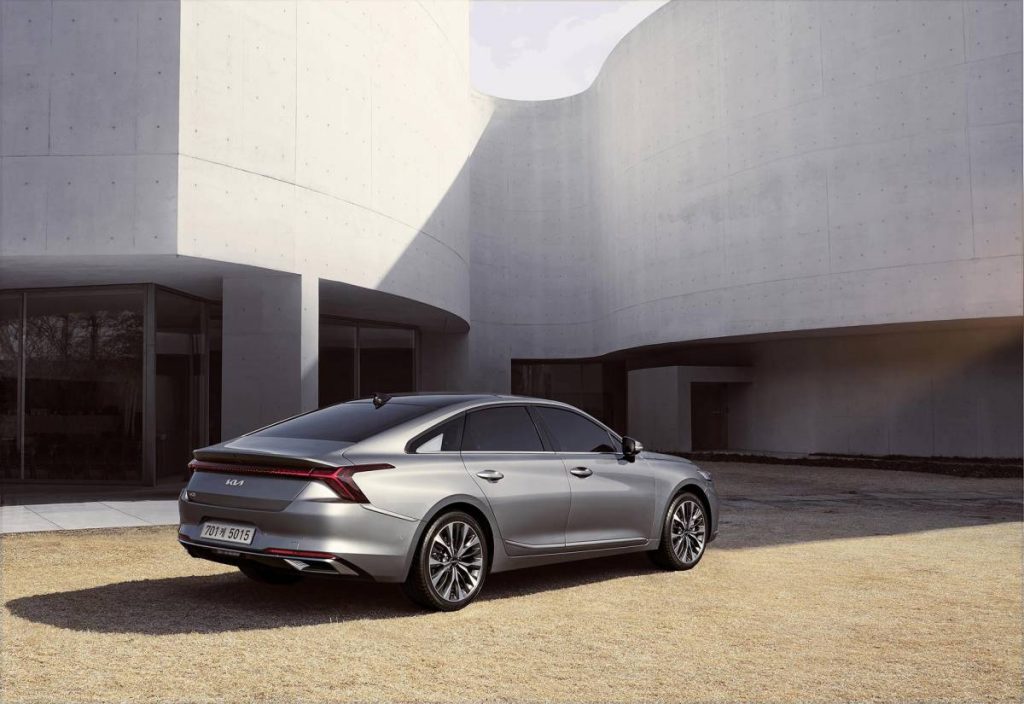
Kia K8 Exterior

With a focus on modern, premium quality and dynamic performance, the K8 moves forward in the sports sedan space and will build on the success of the K7(known as Cadenza in some markets), continuing Kia’s rise towards excellence in the segment later this year.

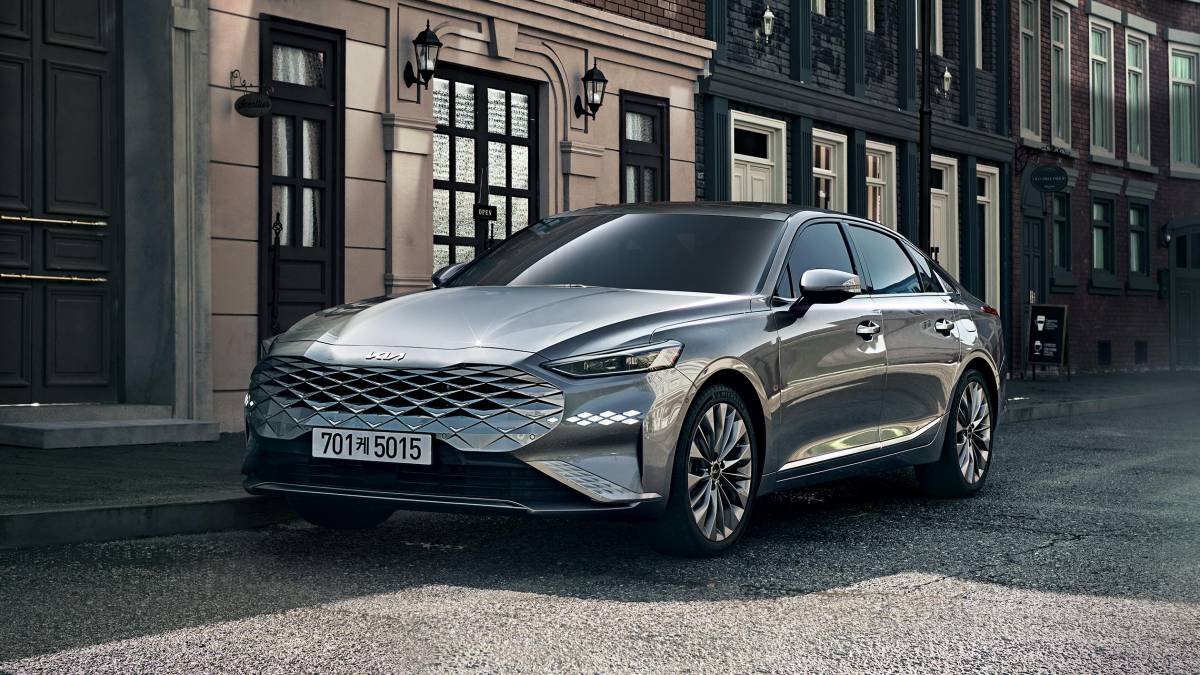
A modern and innovative sedan, the K8 combines sportiness and performance with a progressive and sleek exterior design.

ALSO READ: Kia Motors reinvents itself as Kia India

“Being Kia’s flagship sedan in the MEA region and a representation of our new brand direction, the K8’s launch is a hugely significant moment,” commented Yaser Shabsogh, Chief Operating Officer at Kia Middle East and Africa. “This is the first model to showcase Kia’s latest design identity and new logo, but this is only scratching the surface of what this model is capable of. Every inch of the K8 has been designed to excite, from the striking design to the sophisticated technology and sublime performance.”

Exterior design: embodying an exciting new future

Taking on an all-new name and the first model to be launched following Kia’s recent rebrand, the K8 has been designed with the future in mind.
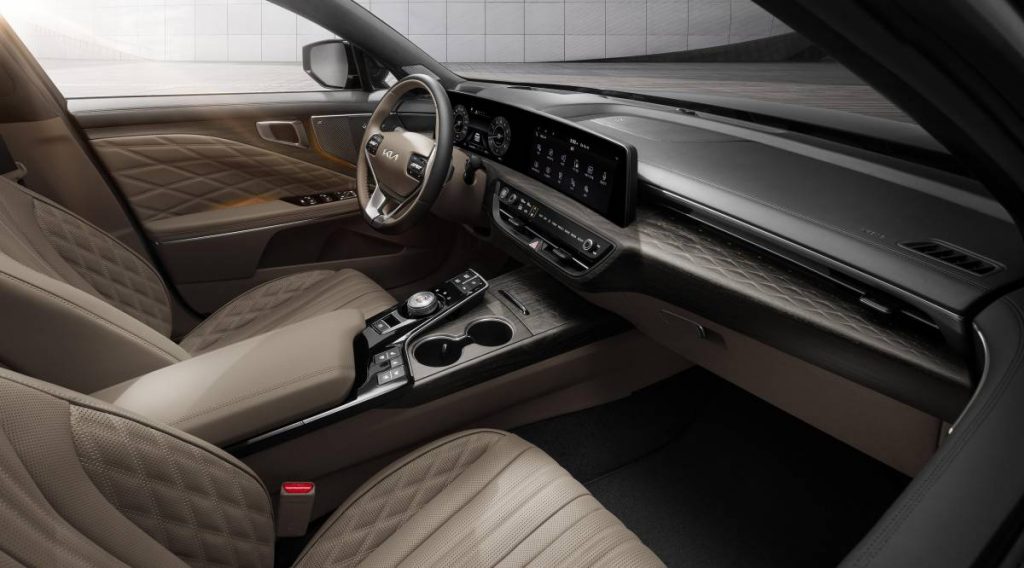
Kia K8 Interior

At the front sits a new signature frameless ‘tiger nose’ grille that gives the K8 presence and authority. The frameless grille, which is integrated within the front bumper to give a clean yet expansive look, features an intricate diamond lattice designed to express the movement of light. The front lamps include a turn signal that resembles a star could.

Symbolically pointing the way forward – and sitting proudly at the very front of the K8, just above the reimagined ‘tiger nose’ grille – is Kia’s contemporary new logo that expresses ‘symmetry’, ‘rhythm’ and ‘rising’ elements, embodying Kia’s confidence and renewed commitment to customers.

The elongated K8 (5,015mm) features a sporty side profile with a dynamic character line that runs the length of the sedan and takes inspiration from yachts sailing across calm waters. A chrome finish runs along the DLO (Daylight Opening) line and the bottom of the doors, and finishes its journey at the rear lamp – adding confidence and gracefulness to the side of the sports sedan.
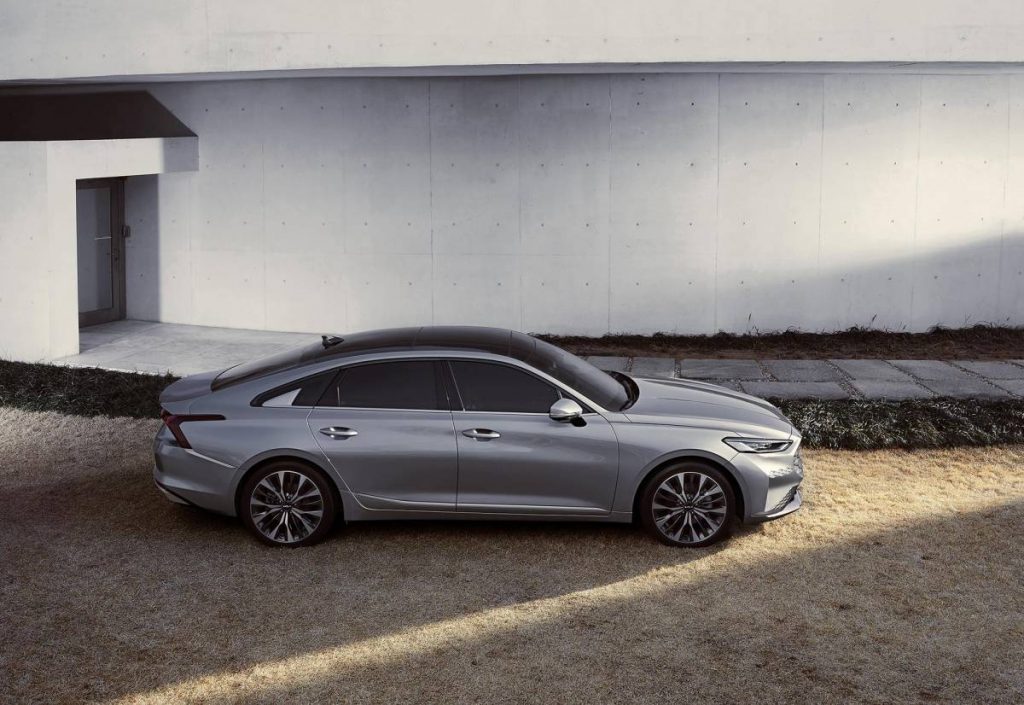
Kia K8 Exterior

Completing the progressive yet elegant front and side profile is a dynamic and muscular rear-end that re-interprets the sedan of today as a modern ‘fastback’ passenger car. Strong, dropping shoulders add to the drama of the K8 at the rear, while a clean tailored spoiler beautifully finishes the sporty, low roofline.

Running below the spoiler lip is a futuristic-looking horizontal taillight that carries across the jewel patterned arrangements from the front and side and connects the K8’s next-generation LED rear light clusters.

The 3D vertical clusters hug the corners of the K8, emphasizing clean, angular lines at the rear and further adding depth and width to the rear of the car.

The Kia’s new logo and first-ever K8 badge sit at the rear just below the horizontal light dash.
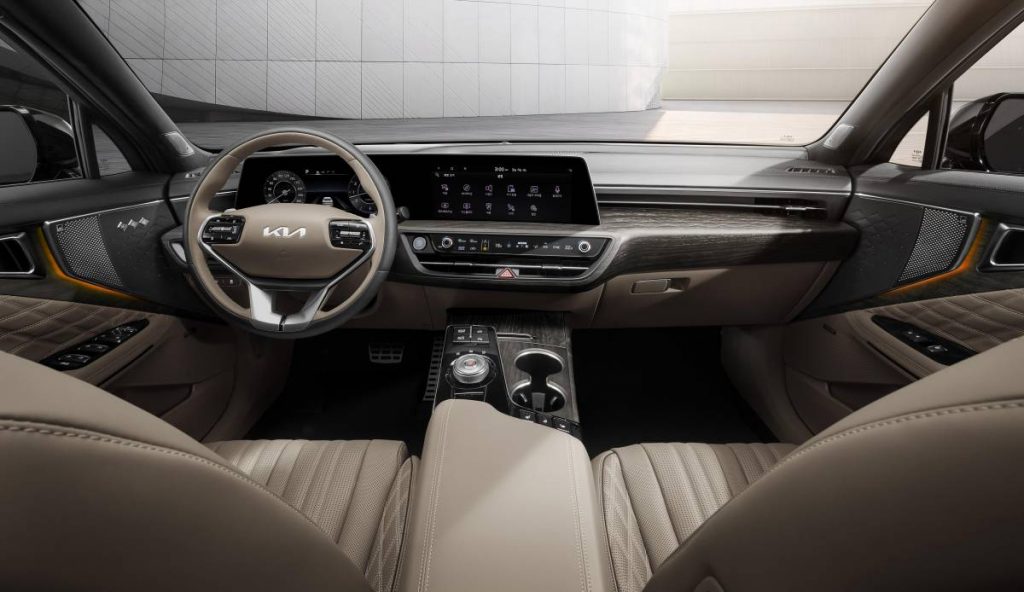
Kia K8 Interior

All-new car, all-new name

The introduction of an all-new model name – the K8 – is part of Kia’s brand transition and represents the premium space in which the new sports sedan will occupy.

The K8 will offer a comfortable yet high-performance driving experience that will complement the simple, ergonomic ‘first class’ interior. The new model signals an upward journey in design, technology and modernity, delivering a class-leading package that redefines the meaning of sports sedan.
Previous Story

Sri Lanka emerges as transit hub for drug cartels

Next Story

BBC under fire after shutting down scholar over Pak comments

Previous Story

Sri Lanka emerges as transit hub for drug cartels

Next Story

BBC under fire after shutting down scholar over Pak comments

Latest from Arab News

Pakistan Risks Overstretching Itself in Yemen War

Pakistan’s expanding military role in Saudi Arabia amid the Yemen conflict could strain its defence resources and fragile finances…reports Asian Lite News Desk Pakistan’s military involvement in the war in Yemen may prove unsustainable because of mounting financial pressures and competing security demands, according to a new report. Islamabad’s growing military presence in Saudi Arabia risks stretching its defence resources while exposing the country to greater strategic and economic challenges. An article by Andrew Wilson in One World Outlook describes Pakistan’s involvement as a case of “fiscal and strategic overreach”, arguing that the country lacks the financial flexibility to sustain an expanded military commitment. Pakistan’s external finances depend heavily on an International Monetary Fund (IMF) programme, financial support from Gulf countries and remittances from Pakistani workers in the region. The report argues that deeper military involvement in the conflict could place additional pressure on these sources of financial stability. It also warns that deploying troops and military equipment abroad could weaken Pakistan’s capacity to address security challenges along its eastern border and deal with two domestic insurgencies. The move could also draw Islamabad into a conflict it has sought to approach cautiously. A Reuters report in May, citing Pakistani security and government sources, said Islamabad had deployed around 8,000 troops, a squadron of approximately 16 aircraft, mostly JF-17 fighter jets, two drone squadrons and a Chinese HQ-9 air-defence battery to Saudi Arabia. According to those sources, Riyadh was financing the deployment, with Pakistani personnel operating the equipment. The sources also said a confidential agreement contemplated the possibility of deploying up to 80,000 troops. Islamabad has not confirmed those figures, although it has acknowledged its military presence in Saudi Arabia, including the deployment of fighter jets at King Abdulaziz Air Base from April. The One World Outlook article argues that Saudi financial support can cover allowances and operating expenses but cannot easily replace military equipment needed elsewhere or resolve the political and strategic challenges of participating in the Yemen conflict. Pakistan’s defence budget is another concern. For the 2026-27 financial year, the federal government allocated PKR 3 trillion, or approximately $10.8 billion, to defence services. The allocation represents an 18 per cent increase from the original PKR 2.55 trillion provision and amounts to around 2.1 per cent of projected gross domestic product (GDP). Defence spending accounts for approximately 16 per cent of the federal government’s PKR 18.8 trillion expenditure. Military pensions are budgeted separately at PKR 822 billion, while debt servicing costs stand at approximately PKR 8 trillion, more than two-and-a-half times the defence allocation. The report argues that these competing financial obligations leave little room for additional military expenditure without placing further pressure on public finances. Pakistan’s reliance on IMF assistance also limits its fiscal flexibility. The country must meet the conditions attached to the programme, including a primary budget surplus target of 2 per cent of GDP and continued restraint on development spending. According to the article, these requirements make it difficult for Islamabad to finance an additional military commitment without compromising other budgetary priorities. Pakistan’s economic indicators offer limited reassurance. Economic growth for the 2025-26 financial year is estimated at between 3.6 and 3.7 per cent, while inflation reached approximately 10.3 per cent in September following an energy price shock. Foreign exchange reserves stood at around $21.5 billion at the end of September. Although this marks an improvement from the low levels recorded in 2023, the report notes that the reserves cover only a few months of imports. Financial assistance from Gulf partners remains central to Pakistan’s external stability. The article says Islamabad holds approximately $8 billion in Saudi deposits at its central bank. In July, the State Bank of Pakistan said Riyadh had extended the maturity of $5 billion in deposits to December 2028, easing the country’s immediate external financing requirements. A further $3 billion deposit was also extended in the spring. However, the article argues that these arrangements provide temporary relief rather than long-term financial independence, particularly as regional conflict threatens the stability of the Gulf economies on which Pakistan relies. The report concludes that Pakistan faces a difficult balance between supporting Saudi Arabia militarily and preserving the financial and military resources needed to address its domestic and regional challenges.

Houthis Claim Missile Strike on Riyadh Airport

Yemen’s Houthi group claims a ballistic missile struck Riyadh’s King Khalid International Airport, with Saudi authorities yet to confirm the latest attack…reports Asian Lite News Desk Yemen’s Houthi group has claimed responsibility

Saudi Arabia to receive forces under Mecca Defence Alliance

Saudi Arabia, Pakistan and Turkiye have activated collective-defence commitments, agreeing to deploy military capabilities as regional tensions and threats against the Kingdom persist…reports Asian Lite News Desk Saudi Arabia, Pakistan and Turkiye

India-UAE Trade Ties in Focus

India and the UAE have discussed expanding bilateral trade, investment and business partnerships amid broader economic cooperation…reports Asian Lite News Desk India and the United Arab Emirates (UAE) discussed ways to further
Go toTop

Don't Miss

Sheikh Abdullah, UK minster for MENA region discuss ties

H.H. Sheikh Abdullah bin Zayed Al Nahyan, Minister of Foreign

MG Motor launches all-new MG GT

Third-generation MG family design language fully incorporated in the sporty