September 23, 2021
3 mins read

London Launches Emerging Tech Charter

The Charter will cover technology such as driverless cars, facial recognition software, drones, sensor networks, robotics etc., reports Asian Lite News

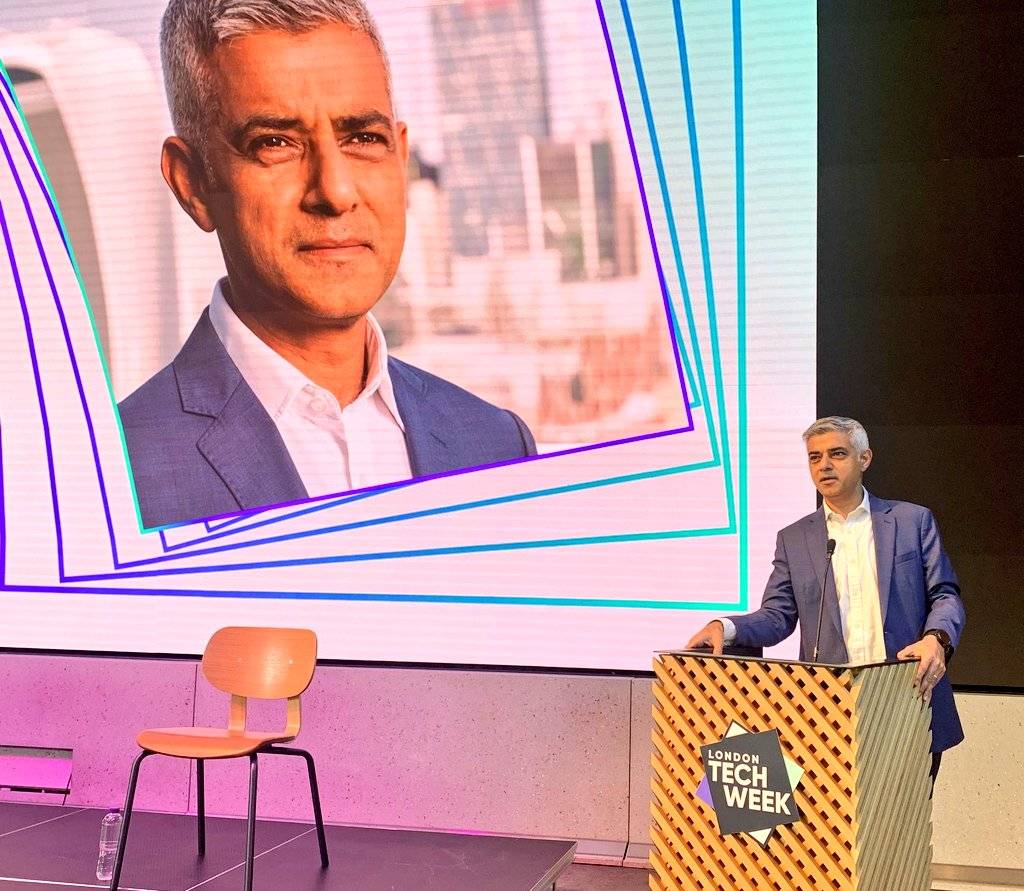
As part of London Tech Week, the Mayor of London Sadiq Khan on Wednesday laid out plans to simplify how technology that relies on data is used by public services and in the public realm.

London’s Emerging Technology Charter, the first of its kind in any UK city, is a set of practical and ethical guidelines focussed on openness, digital rights, use of data and sustainability of technology which is aimed at setting common expectations to tech buyers and makers to innovate successfully.

It will give Londoners and their elected representatives a clear framework to ask questions about the technologies proposed or deployed in London. It will also establish enhanced transparency for Londoners on products and services that data protection law considers potentially high risk to privacy. 

The Charter will cover technology such as driverless cars, facial recognition software, drones, sensor networks, robotics, mobility services, augmented and virtual reality, and automated and algorithmic decision-making. 

 The Charter is voluntary, but local government and public services, makers, innovators, technologists, elected representatives and interested Londoners are all encouraged to adopt it to improve how technology is implemented in the capital. 

The Mayor launched his Charter speaking at London Tech Week’s Future of Work summit, where he also celebrated London as a leading global tech city and reaffirmed his commitment to boost the city’s clusters of exciting and game-changing tech companies that call London home.

“London is and always will be open to business and innovation. In the face of Brexit and the global pandemic, our capital has proven itself to be one of the best global cities for tech,” Sadiq Khan said. 

“The tech sector in London has a huge role to play in rebuilding a fairer city for everyone as we recover from the pandemic. My new Emerging Tech Charter will play a significant part in that recovery, making sure both Londoners and tech businesses are using data efficiently to get the most out of technological innovation,” he added.

The Emerging Tech Charter will establish a register of Data Protection Impact Assessments (DPIAs), which are legally required in any data processing with a high risk to  individuals’ privacy.

“We want to foster a trustworthy environment for innovation to flourish, and to do so responsibly.,” said Theo Blackwell, Chief Digital Officer for London. “When a new technology is deployed it’s not easy for Londoners to find out about how privacy risks have been identified and managed.”

“Our principles create a central register of assessments organisations are required to carry out by law.  We think it’s important for transparency and good practice that these are published in one place and open to scrutiny,” Blackwell added.
Rachel Coldicutt, technology strategist specialising in ethics, regulation and the social impacts of technology, said: “I’m so proud to be a Londoner and support this leadership from the Chief Digital Officer and the Mayor to make sure emerging technology in our city is open, trustworthy, inclusive, and sustainable – exactly how it should be.”

“It’s so important that people who live and work in London have this framework to help understand more about data and technology, and it’s particularly great to see the register of Data Impact Protection Assessments – a real step forward for London as a leader in responsible, rights-respecting technology.”    

ALSO READ –Indian artistes, London Mozart Players to perform at ‘Peace and Harmony’ concert

READ MORE-Sadiq launches new ‘London Refugee Response’ fund

Previous Story

Imran focuses on Afghanistan as soaring inflation bites Pakistan

Next Story

UK-UAE bonhomie

Previous Story

Imran focuses on Afghanistan as soaring inflation bites Pakistan

Next Story

UK-UAE bonhomie

Latest from -Top News

Pakistan Risks Overstretching Itself in Yemen War

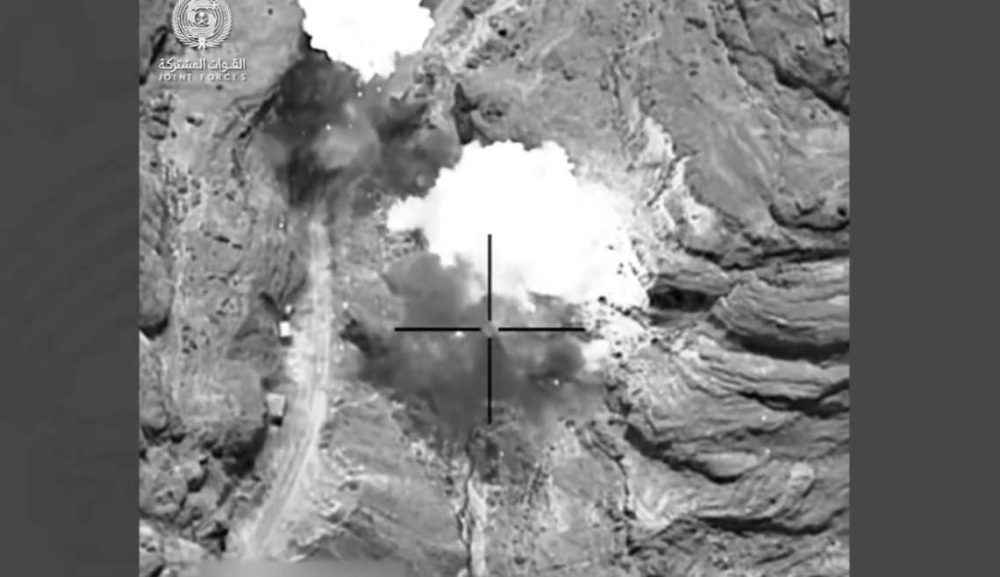
Pakistan’s expanding military role in Saudi Arabia amid the Yemen conflict could strain its defence resources and fragile finances…reports Asian Lite News Desk Pakistan’s military involvement in the war in Yemen may prove unsustainable because of mounting financial pressures and competing security demands, according to a new report. Islamabad’s growing military presence in Saudi Arabia risks stretching its defence resources while exposing the country to greater strategic and economic challenges. An article by Andrew Wilson in One World Outlook describes Pakistan’s involvement as a case of “fiscal and strategic overreach”, arguing that the country lacks the financial flexibility to sustain an expanded military commitment. Pakistan’s external finances depend heavily on an International Monetary Fund (IMF) programme, financial support from Gulf countries and remittances from Pakistani workers in the region. The report argues that deeper military involvement in the conflict could place additional pressure on these sources of financial stability. It also warns that deploying troops and military equipment abroad could weaken Pakistan’s capacity to address security challenges along its eastern border and deal with two domestic insurgencies. The move could also draw Islamabad into a conflict it has sought to approach cautiously. A Reuters report in May, citing Pakistani security and government sources, said Islamabad had deployed around 8,000 troops, a squadron of approximately 16 aircraft, mostly JF-17 fighter jets, two drone squadrons and a Chinese HQ-9 air-defence battery to Saudi Arabia. According to those sources, Riyadh was financing the deployment, with Pakistani personnel operating the equipment. The sources also said a confidential agreement contemplated the possibility of deploying up to 80,000 troops. Islamabad has not confirmed those figures, although it has acknowledged its military presence in Saudi Arabia, including the deployment of fighter jets at King Abdulaziz Air Base from April. The One World Outlook article argues that Saudi financial support can cover allowances and operating expenses but cannot easily replace military equipment needed elsewhere or resolve the political and strategic challenges of participating in the Yemen conflict. Pakistan’s defence budget is another concern. For the 2026-27 financial year, the federal government allocated PKR 3 trillion, or approximately $10.8 billion, to defence services. The allocation represents an 18 per cent increase from the original PKR 2.55 trillion provision and amounts to around 2.1 per cent of projected gross domestic product (GDP). Defence spending accounts for approximately 16 per cent of the federal government’s PKR 18.8 trillion expenditure. Military pensions are budgeted separately at PKR 822 billion, while debt servicing costs stand at approximately PKR 8 trillion, more than two-and-a-half times the defence allocation. The report argues that these competing financial obligations leave little room for additional military expenditure without placing further pressure on public finances. Pakistan’s reliance on IMF assistance also limits its fiscal flexibility. The country must meet the conditions attached to the programme, including a primary budget surplus target of 2 per cent of GDP and continued restraint on development spending. According to the article, these requirements make it difficult for Islamabad to finance an additional military commitment without compromising other budgetary priorities. Pakistan’s economic indicators offer limited reassurance. Economic growth for the 2025-26 financial year is estimated at between 3.6 and 3.7 per cent, while inflation reached approximately 10.3 per cent in September following an energy price shock. Foreign exchange reserves stood at around $21.5 billion at the end of September. Although this marks an improvement from the low levels recorded in 2023, the report notes that the reserves cover only a few months of imports. Financial assistance from Gulf partners remains central to Pakistan’s external stability. The article says Islamabad holds approximately $8 billion in Saudi deposits at its central bank. In July, the State Bank of Pakistan said Riyadh had extended the maturity of $5 billion in deposits to December 2028, easing the country’s immediate external financing requirements. A further $3 billion deposit was also extended in the spring. However, the article argues that these arrangements provide temporary relief rather than long-term financial independence, particularly as regional conflict threatens the stability of the Gulf economies on which Pakistan relies. The report concludes that Pakistan faces a difficult balance between supporting Saudi Arabia militarily and preserving the financial and military resources needed to address its domestic and regional challenges.
Go toTop

Don't Miss

Why the British must learn the full story of their Empire

British politicians like to talk about our shared past. What

‘Regulatory mismatch in services sector challenge for India-UK FTA’

An expert, on condition of anonymity, said that India’s restriction