December 15, 2021
3 mins read

How Tripura played its part during Bangladesh Liberation War

The state government and the Government of Bangladesh have lined up several events and functions to mark the day. Dhaka has also proposed to set up a Bangabandhu Centre in Tripura University…reports Mahua Venkatesh

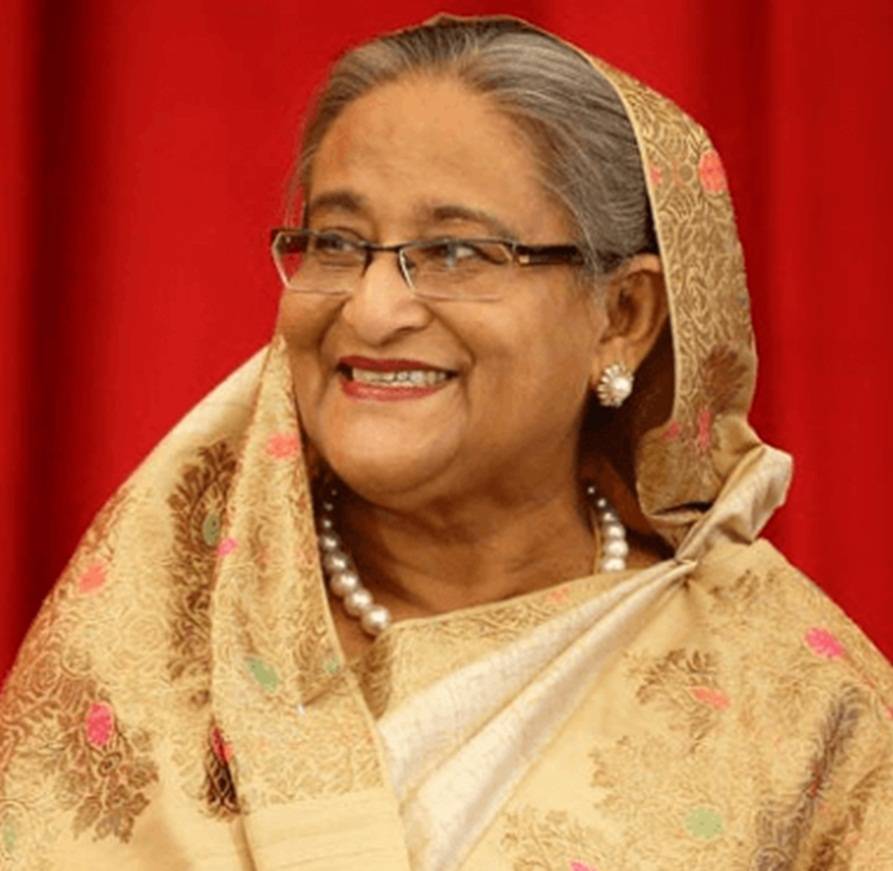
As India and Bangladesh gear up to celebrate December 16 marked as Vijay Diwas for the South Asian nation, elaborate preparations are on even in the small northeastern state of Tripura. An emotional Bangladesh Prime Minister Sheikh Hasina during her trip Agartala in 2012 had recalled the immense contribution of the people of the northeatern state.

“If Bangladesh is India-locked, Tripura is Bangladesh-locked – goes an adage in the region,” a study by the Observer Research Foundation noted.

India-Bangladesh relations have typically been driven by an overpowering narrative that emphasizes the commonalities between the people of West Bengal and the South Asian nation. True the two share common culture, language and food habits but the role of other states including that of Tripura, that is almost tucked within Bangladesh, cannot be ignored.

“About 84 per cent of the state’s border is actually with Bangladesh and Tripura had also a significant contribution in the 197 Liberation War,” Ashish Nath Professor, Department of Economics, Tripura University said.

The state government and the Government of Bangladesh have lined up several events and functions to mark the day. Dhaka has also proposed to set up a Bangabandhu Centre in Tripura University.

Nath said that during the war, the state government of Tripura opened its door to lakhs of refugees coming from the erstwhile East Pakistan- now Bangladesh. The state government provided “all kinds of support to the helpless refugees.”

Another analyst said that notwithstanding the political contours that drive New Delhi and Dhaka and the occasional ups and downs, the people of Tripura and Bangladesh have continued to maintain a strong bond. “The people living on both sides of the border have the same life, problems and livelihood..there are talks of increasing people to people contact but here we have always seen a continuation of that tradition,” he said.

Small wonder therefore that Seemin Hossain Rimi, member of Bangladesh Parliament and daughter of Tajuddin Ahmad, the country’s first prime minister, visited Tripura just a few days ago. Regarded as one of the architects of Bangladesh, Ahmad, as the Prime Minister, had led the country’s Provisional Government during the Liberation War in 1971.
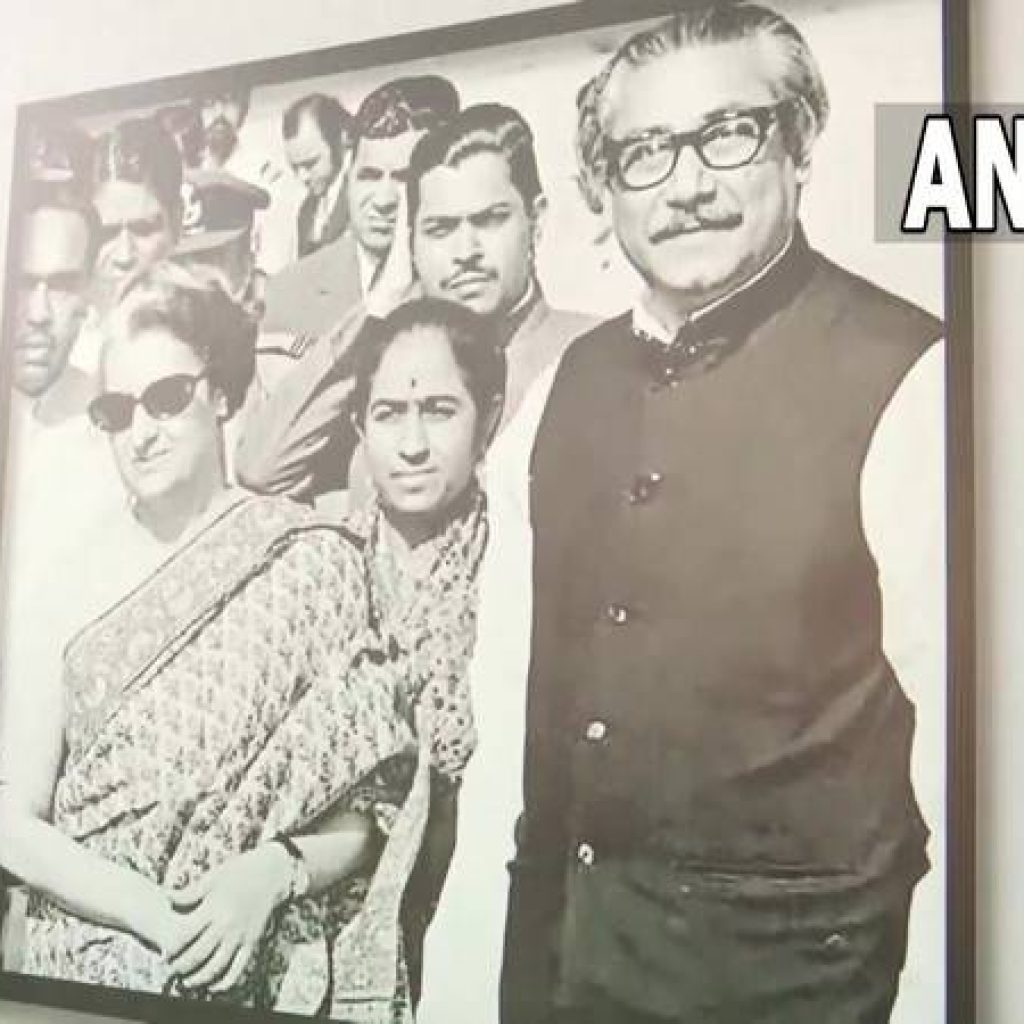
Picture of former PM Indira Gandhi and Sheikh Mujibur Rahman (Photo/ANI)

Rimi who “along with her family escaped to Tripura after a murderous military crackdown during the 1971 war for the liberation of Bangladesh, has made the journey back to thank the people of the tiny northeastern state.”

The news agency further noted that Sonamura, a small town bordering the Comilla district of Bangladesh sheltered thousands of refugees from Bangladesh. Not just that, during the war it also “housed a training camp for Mukti Bahini (Free Bangladesh forces) as well as a makeshift hospital for them.”

During her visit Hasina said, “Our freedom-fighters also received training and support on this side of the border, and eventually fought with our Indian friends to the final surrender of the occupation forces and liberation of Bangladesh on 16 December 1971. How can we not remember with gratitude our friends in need in Tripura and India?”
ALSO READ-‘Maitree Divas’ marks India-Bangladesh friendship

Previous Story

Finally, India lays hands on gangster Suresh Pujari

Next Story

Washington pays price for Kissinger’s realpolitik folly

Previous Story

Finally, India lays hands on gangster Suresh Pujari

Next Story

Washington pays price for Kissinger’s realpolitik folly

Latest from -Top News

Pakistan Risks Overstretching Itself in Yemen War

Pakistan’s expanding military role in Saudi Arabia amid the Yemen conflict could strain its defence resources and fragile finances…reports Asian Lite News Desk Pakistan’s military involvement in the war in Yemen may prove unsustainable because of mounting financial pressures and competing security demands, according to a new report. Islamabad’s growing military presence in Saudi Arabia risks stretching its defence resources while exposing the country to greater strategic and economic challenges. An article by Andrew Wilson in One World Outlook describes Pakistan’s involvement as a case of “fiscal and strategic overreach”, arguing that the country lacks the financial flexibility to sustain an expanded military commitment. Pakistan’s external finances depend heavily on an International Monetary Fund (IMF) programme, financial support from Gulf countries and remittances from Pakistani workers in the region. The report argues that deeper military involvement in the conflict could place additional pressure on these sources of financial stability. It also warns that deploying troops and military equipment abroad could weaken Pakistan’s capacity to address security challenges along its eastern border and deal with two domestic insurgencies. The move could also draw Islamabad into a conflict it has sought to approach cautiously. A Reuters report in May, citing Pakistani security and government sources, said Islamabad had deployed around 8,000 troops, a squadron of approximately 16 aircraft, mostly JF-17 fighter jets, two drone squadrons and a Chinese HQ-9 air-defence battery to Saudi Arabia. According to those sources, Riyadh was financing the deployment, with Pakistani personnel operating the equipment. The sources also said a confidential agreement contemplated the possibility of deploying up to 80,000 troops. Islamabad has not confirmed those figures, although it has acknowledged its military presence in Saudi Arabia, including the deployment of fighter jets at King Abdulaziz Air Base from April. The One World Outlook article argues that Saudi financial support can cover allowances and operating expenses but cannot easily replace military equipment needed elsewhere or resolve the political and strategic challenges of participating in the Yemen conflict. Pakistan’s defence budget is another concern. For the 2026-27 financial year, the federal government allocated PKR 3 trillion, or approximately $10.8 billion, to defence services. The allocation represents an 18 per cent increase from the original PKR 2.55 trillion provision and amounts to around 2.1 per cent of projected gross domestic product (GDP). Defence spending accounts for approximately 16 per cent of the federal government’s PKR 18.8 trillion expenditure. Military pensions are budgeted separately at PKR 822 billion, while debt servicing costs stand at approximately PKR 8 trillion, more than two-and-a-half times the defence allocation. The report argues that these competing financial obligations leave little room for additional military expenditure without placing further pressure on public finances. Pakistan’s reliance on IMF assistance also limits its fiscal flexibility. The country must meet the conditions attached to the programme, including a primary budget surplus target of 2 per cent of GDP and continued restraint on development spending. According to the article, these requirements make it difficult for Islamabad to finance an additional military commitment without compromising other budgetary priorities. Pakistan’s economic indicators offer limited reassurance. Economic growth for the 2025-26 financial year is estimated at between 3.6 and 3.7 per cent, while inflation reached approximately 10.3 per cent in September following an energy price shock. Foreign exchange reserves stood at around $21.5 billion at the end of September. Although this marks an improvement from the low levels recorded in 2023, the report notes that the reserves cover only a few months of imports. Financial assistance from Gulf partners remains central to Pakistan’s external stability. The article says Islamabad holds approximately $8 billion in Saudi deposits at its central bank. In July, the State Bank of Pakistan said Riyadh had extended the maturity of $5 billion in deposits to December 2028, easing the country’s immediate external financing requirements. A further $3 billion deposit was also extended in the spring. However, the article argues that these arrangements provide temporary relief rather than long-term financial independence, particularly as regional conflict threatens the stability of the Gulf economies on which Pakistan relies. The report concludes that Pakistan faces a difficult balance between supporting Saudi Arabia militarily and preserving the financial and military resources needed to address its domestic and regional challenges.

UK and Germany Ratify Kensington Treaty

Britain and Germany ratify the Kensington Treaty, agreeing new cooperation on AI, quantum research, defence and security while targeting investment, jobs and Russian hybrid threats…reports Asian Lite News Desk Britain and Germany

Economic tide is turning in Bangladesh

If there is one thing that can bring some comfort to the struggling Bangladeshi economy, it is good relations with India. Bangladesh should remember that Delhi’s backing, through easy supplies of essentials
Go toTop

Don't Miss

MEDIA SCAN: Air India cancels US flights and Bangladesh hailed a model country

Air India cancelled several of its flights to the US

Vaccine Delays Fuel Bangladesh Measles Outbreak

More than 32,000 suspected cases and over 250 deaths have