August 10, 2021
4 mins read

India-Taiwan ties are quietly cementing amid friction with China

Taipei’s “New Southbound Policy” under Taiwanese President Tsai Ing-wen is also in sync with Prime Minister Narendra Modi’s Act East Policy…reports Mahua Venkatesh

Taiwan is quietly increasing its investments in India from the current $2.3 billion. Recently, a Taiwanese delegation met Maharashtra officials to discuss ways to boost economic and technological activities between the two.

“Very fruitful discussion with Hon MP U. Patil, Hon MP Shevale and Hon MP H Patil. Looking forward to closer ties between Taiwan and India in general as well Taiwan and Maharashtra in particular,” Taipei Economic and Cultural Center (TECC) that serves as the de-facto embassy in India, said in a tweet.

Last month, the Telangana government proposed setting up a Taiwan specific industrial cluster in the state to attract more investments from Taiwan.

Several Taiwanese contract manufacturers including Foxconn, Wistron Corp and Pegatron Corp have already set up their manufacturing facilities in India. According to a Reuters report, these companies have drawn up plans to plough in $900 million in India over the next five years to tap into the government’s production-linked incentive plan.

Taiwan is also a key player in the global supply chains network.

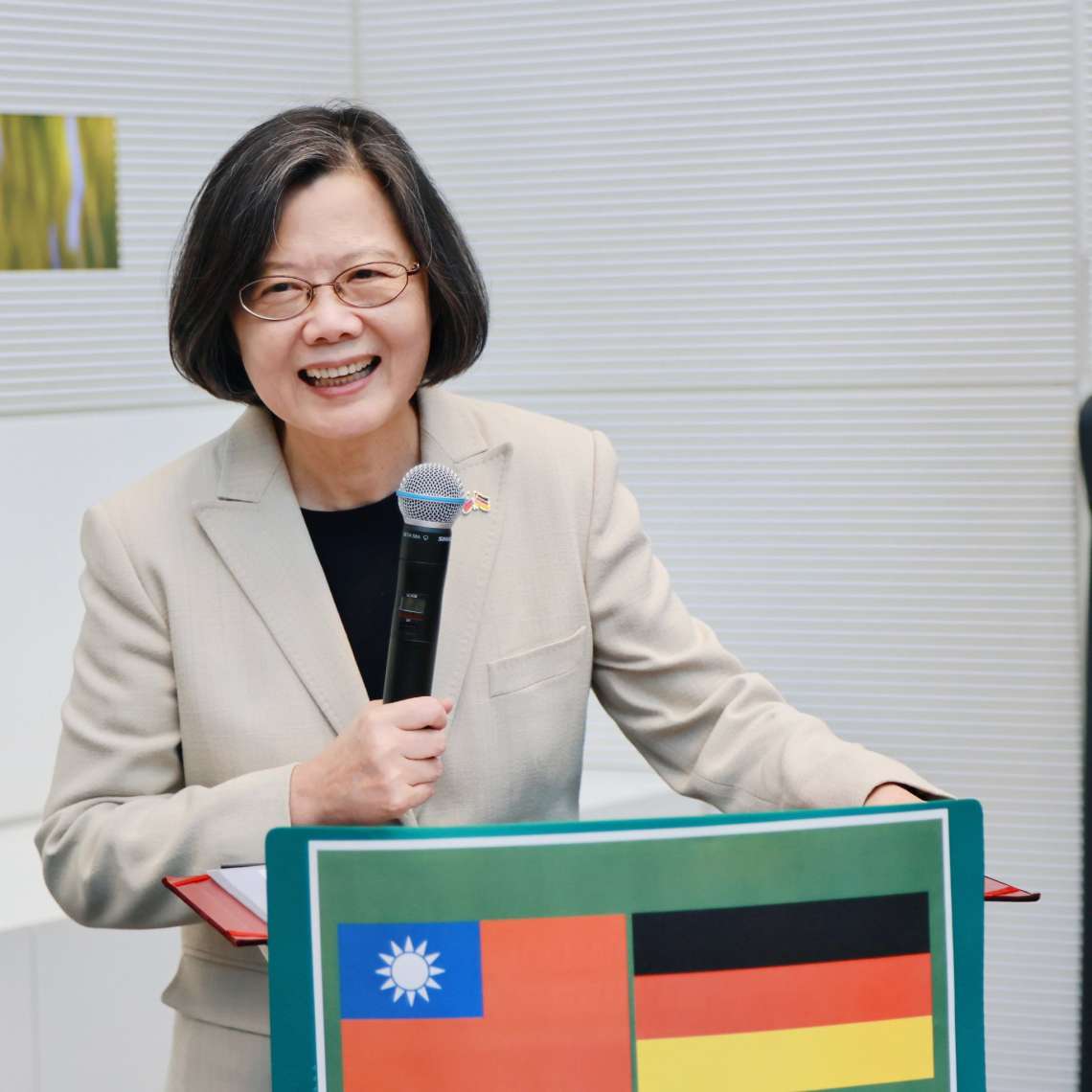
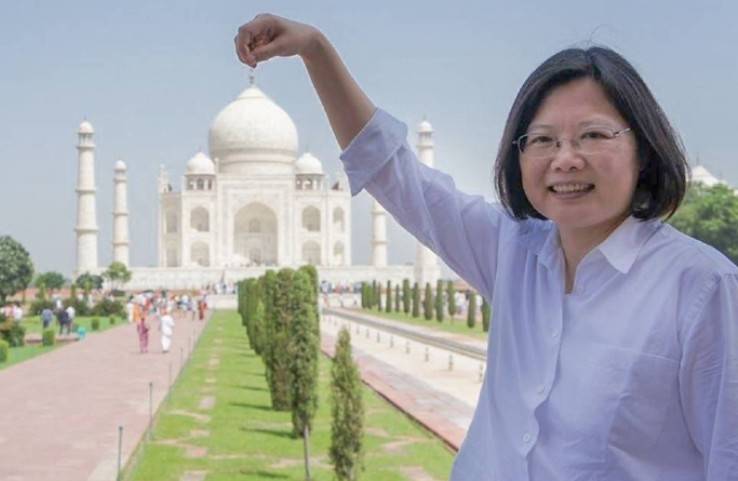
Taiwanese President Tsai Ing-wen Pic credits Twitter @iingwen

Though New Delhi and Taipei have no diplomatic ties at present, India is one the 18 countries under its New Southbound Policy” that Taiwan is expecting to expand its bilateral and economic ties with.

“There is a need to build greater economic co-operation and trust between India and Taiwan. The two countries need to leverage each other’s strengths,” Gopal Krishna Agarwal, BJP’s spokesperson on economic affairs said.

“It will be beneficial to both countries (India and Taiwan) to increase mutual cooperation economically and even diplomatically,” Agarwal said, adding that India’s foreign and economic policies need to be driven by domestic interests.

Taipei’s “New Southbound Policy” under Taiwanese President Tsai Ing-wen is also in sync with Prime Minister Narendra Modi’s Act East Policy.

Senior government officials pointed out the need to expand bilateral relations “based on mutual interests.”

“We should expand our ties with Taiwan irrespective of what our relations are with other countries. Taiwan is already a mature economy and a technology hub,” Shakti Sinha, former bureaucrat and director at Atal Bihari Vajpayee Institute of Policy Research and International Studies said.

In fact, last year, thousands of Indians took to the social media to celebrate and mark the National Day of Taiwan in October despite the Chinese embassy issuing a letter to the Indian media organisations to honour the “One China” policy. “All countries that have diplomatic relations with China should firmly honour their commitment to the One-China policy, which is also the long-standing official position of the Indian government,” the letter said.

“To us, it is very important to improve relations with India. It is a country that shares the same values with Taiwan and it is also a country that has a very rich, traditional culture and it is also a country that is so rich with its potential,” Taiwan Foreign Minister Joseph Wu told India Today in an interview in October.
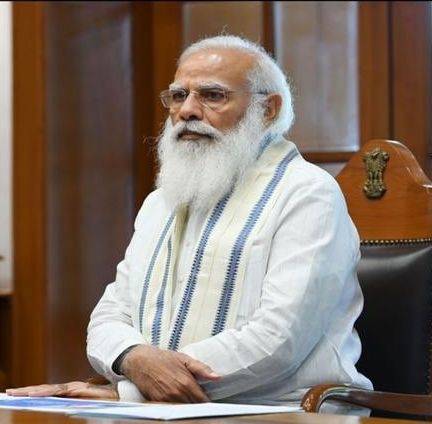
Is India gradually moving away from the One-China policy?

Eyebrows were raised when Prime Minister Narendra Modi wished Tibetan spiritual leader Dalai Lama publicly on his 86th birthday last month.

“But as this was the first time since 2015 that the Prime Minister was publicly greeting the Dalai Lama on his birthday, it has naturally raised a whole set of questions about India’s China policy at large,” an Observer Research Foundation paper said. There are growing demands in India to have a re-look at its �One China’ policy. Since 2010, India has not been using One China policy in its official statements and documents but as China is refusing to abide by the agreements of the past, New Delhi too should start thinking afresh of its commitment to the recognition of Tibet as an Autonomous Region of China, the paper added.
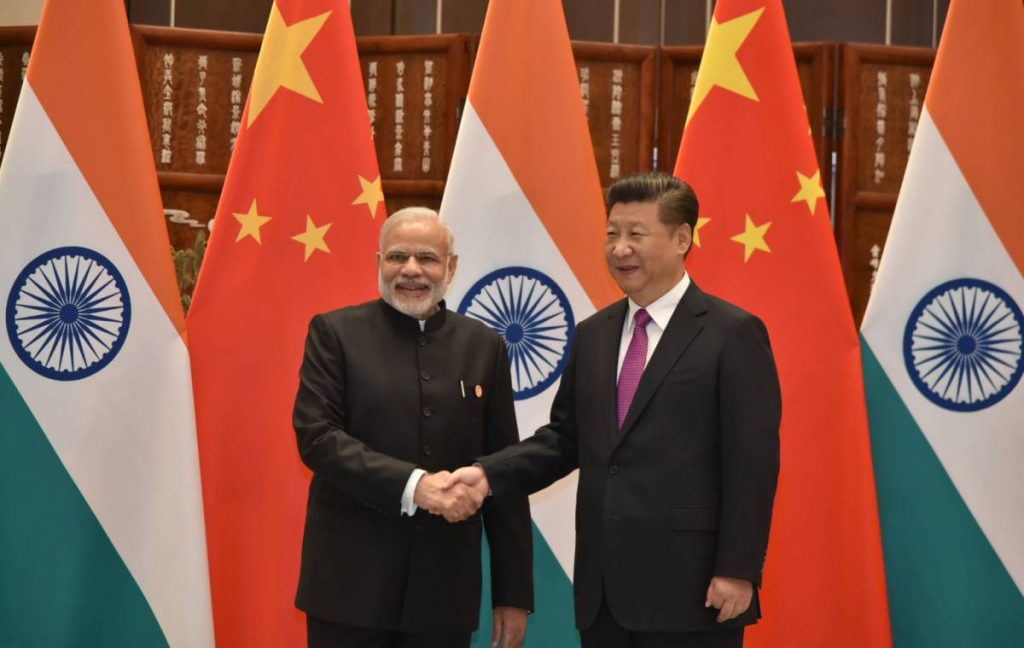
President Xi with Prime Minister Modi, during the G20 Summit in 2016 (Wikipedia)

In May, Taiwan also sent Covid 19 related medical assistance to India. “Taiwan’s deployment of medical supplies is testament to the close collaboration and partnership across multiple agencies on both sides,” the TECC had said in a statement.

Meanwhile, Japan, a member of the QUAD along with India, Australia and the US, in a shift of its Beijing policy, for the first time removed Taiwan from the map of China in the Defence of Japan white paper.

With the rapidly changing geopolitical contours, countries have aggressively started re-aligning and resetting their foreign policies.

“It is time India officially buries the One China policy and realign with other forces,” Agarwal said.

(The content is being carried under an arrangement with indianarrative.com)
ALSO READ: India, UAE conduct bilateral naval exercise ‘Zayed Talwar 2021’
Previous Story

Pakistan to host regional conference on Afghanistan

Next Story

France, India, Australia likely to hold leaders’ level meet soon

Previous Story

Pakistan to host regional conference on Afghanistan

Next Story

France, India, Australia likely to hold leaders’ level meet soon

Latest from -Top News

Pakistan Risks Overstretching Itself in Yemen War

Pakistan’s expanding military role in Saudi Arabia amid the Yemen conflict could strain its defence resources and fragile finances…reports Asian Lite News Desk Pakistan’s military involvement in the war in Yemen may prove unsustainable because of mounting financial pressures and competing security demands, according to a new report. Islamabad’s growing military presence in Saudi Arabia risks stretching its defence resources while exposing the country to greater strategic and economic challenges. An article by Andrew Wilson in One World Outlook describes Pakistan’s involvement as a case of “fiscal and strategic overreach”, arguing that the country lacks the financial flexibility to sustain an expanded military commitment. Pakistan’s external finances depend heavily on an International Monetary Fund (IMF) programme, financial support from Gulf countries and remittances from Pakistani workers in the region. The report argues that deeper military involvement in the conflict could place additional pressure on these sources of financial stability. It also warns that deploying troops and military equipment abroad could weaken Pakistan’s capacity to address security challenges along its eastern border and deal with two domestic insurgencies. The move could also draw Islamabad into a conflict it has sought to approach cautiously. A Reuters report in May, citing Pakistani security and government sources, said Islamabad had deployed around 8,000 troops, a squadron of approximately 16 aircraft, mostly JF-17 fighter jets, two drone squadrons and a Chinese HQ-9 air-defence battery to Saudi Arabia. According to those sources, Riyadh was financing the deployment, with Pakistani personnel operating the equipment. The sources also said a confidential agreement contemplated the possibility of deploying up to 80,000 troops. Islamabad has not confirmed those figures, although it has acknowledged its military presence in Saudi Arabia, including the deployment of fighter jets at King Abdulaziz Air Base from April. The One World Outlook article argues that Saudi financial support can cover allowances and operating expenses but cannot easily replace military equipment needed elsewhere or resolve the political and strategic challenges of participating in the Yemen conflict. Pakistan’s defence budget is another concern. For the 2026-27 financial year, the federal government allocated PKR 3 trillion, or approximately $10.8 billion, to defence services. The allocation represents an 18 per cent increase from the original PKR 2.55 trillion provision and amounts to around 2.1 per cent of projected gross domestic product (GDP). Defence spending accounts for approximately 16 per cent of the federal government’s PKR 18.8 trillion expenditure. Military pensions are budgeted separately at PKR 822 billion, while debt servicing costs stand at approximately PKR 8 trillion, more than two-and-a-half times the defence allocation. The report argues that these competing financial obligations leave little room for additional military expenditure without placing further pressure on public finances. Pakistan’s reliance on IMF assistance also limits its fiscal flexibility. The country must meet the conditions attached to the programme, including a primary budget surplus target of 2 per cent of GDP and continued restraint on development spending. According to the article, these requirements make it difficult for Islamabad to finance an additional military commitment without compromising other budgetary priorities. Pakistan’s economic indicators offer limited reassurance. Economic growth for the 2025-26 financial year is estimated at between 3.6 and 3.7 per cent, while inflation reached approximately 10.3 per cent in September following an energy price shock. Foreign exchange reserves stood at around $21.5 billion at the end of September. Although this marks an improvement from the low levels recorded in 2023, the report notes that the reserves cover only a few months of imports. Financial assistance from Gulf partners remains central to Pakistan’s external stability. The article says Islamabad holds approximately $8 billion in Saudi deposits at its central bank. In July, the State Bank of Pakistan said Riyadh had extended the maturity of $5 billion in deposits to December 2028, easing the country’s immediate external financing requirements. A further $3 billion deposit was also extended in the spring. However, the article argues that these arrangements provide temporary relief rather than long-term financial independence, particularly as regional conflict threatens the stability of the Gulf economies on which Pakistan relies. The report concludes that Pakistan faces a difficult balance between supporting Saudi Arabia militarily and preserving the financial and military resources needed to address its domestic and regional challenges.

UK and Germany Ratify Kensington Treaty

Britain and Germany ratify the Kensington Treaty, agreeing new cooperation on AI, quantum research, defence and security while targeting investment, jobs and Russian hybrid threats…reports Asian Lite News Desk Britain and Germany

Economic tide is turning in Bangladesh

If there is one thing that can bring some comfort to the struggling Bangladeshi economy, it is good relations with India. Bangladesh should remember that Delhi’s backing, through easy supplies of essentials
Go toTop

Don't Miss

Investopia partners with CII

The latest partnership will facilitate the exchange of expertise and

Foreign officials of India and Zambia discuss partnership

Both sides also discussed UN and other multilateral issues of