February 12, 2021
2 mins read

Sadiq visits new vax hub at Kingsbury Temple

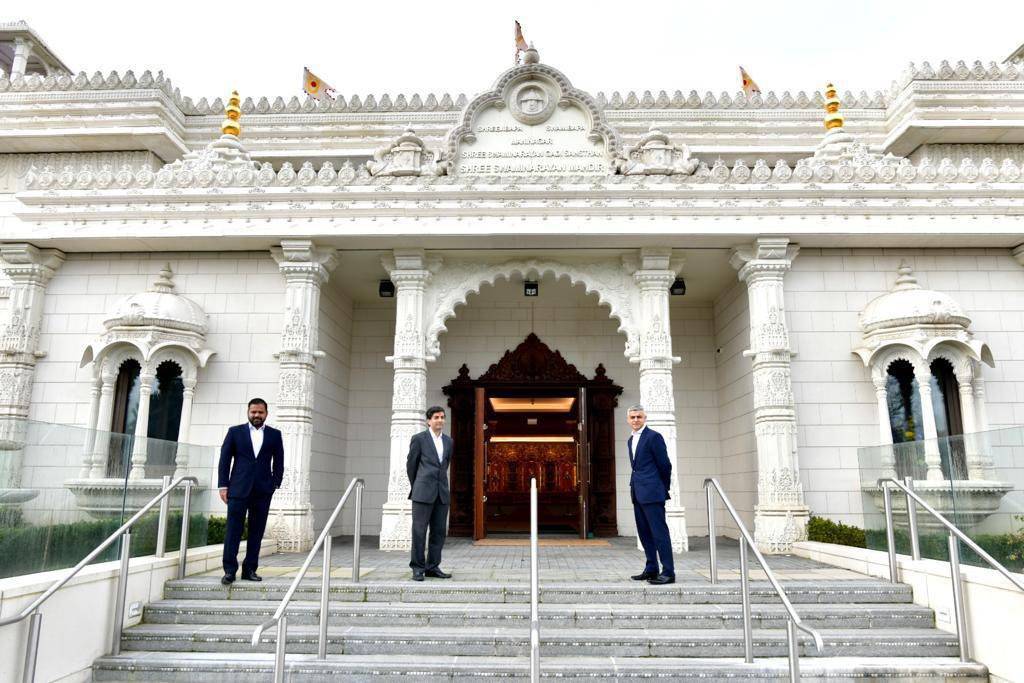
Mayor of London Sadiq Khan visited a new Covid-19 vaccination hub at Kingsbury Temple in the city last Thursday.

During his visit, Khan met representatives from the mandir, the NHS clinical team administering the vaccine, and patients who came there to take the jab.

“The temple plays a huge role in the community, supporting local people, and has now stepped forward to help save lives as one of nearly 200 vaccination sites operating across the city,” Khan said during his visit.

The volunteers started vaccinations in the temple’s multi-function hall since January 28.

Mayor Sadiq Khan speaks to NHS staff at the new vaccine hub at Shree Swaminarayan Mandir Kingsbury. (Photo: Mayor of London)

A number of other places of worship have offered their spaces to become vaccination centres. The Al-Abbas Islamic Centre in Balsall Heath, Birmingham, was the first mosque in the UK to open its door to patients in January.

Also Read: UK reports another 678 Covid deaths

The mayor said it is really important “we have as many Londoners as possible, who are eligible for the vaccine to receive it. One of the things we have got to do is make it easy for people to access the vaccine and having more sites like this, administering the vaccine means more and more Londoners can receive the vaccine near them from people they trust.”

Khan said he was so proud of the role the “faith communities have played during the pandemic.”
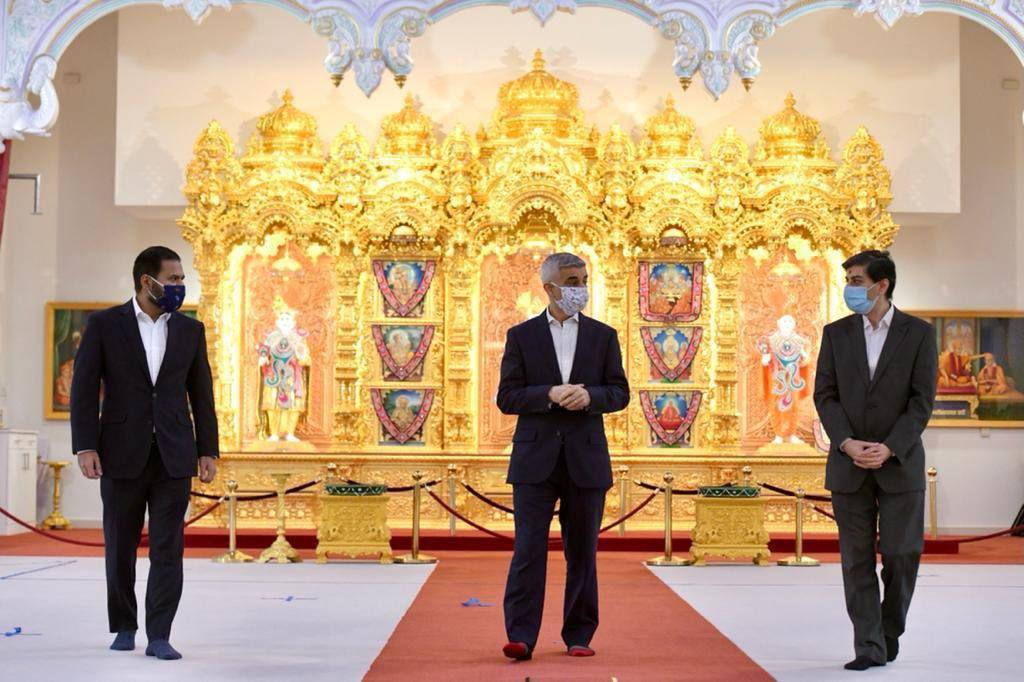
London mayor Sadiq Khan and deputy mayor for business, Rajesh Agrawal at Shree Swaminarayan Mandir Kingsbury. (Photo: Mayor of London)

“I am so proud of the role our faith communities have played during the pandemic. From going door to door to make sure people are okay to providing food at food banks. Also to make sure people aren’t lonely, at the same time making sure that they provide spiritual guidance and support than people can need. I am incredibly proud of the work our faith communities do anyway but this pandemic has really shown them at their best.

Also Read – NZ’s 1st shipment of Covid vaccine to arrive soon: PM

Earlier this month, London has achieved a landmark one million doses of Covid-19 vaccine administered to the citizens and residents as part of the nationwide mass vaccination drive.
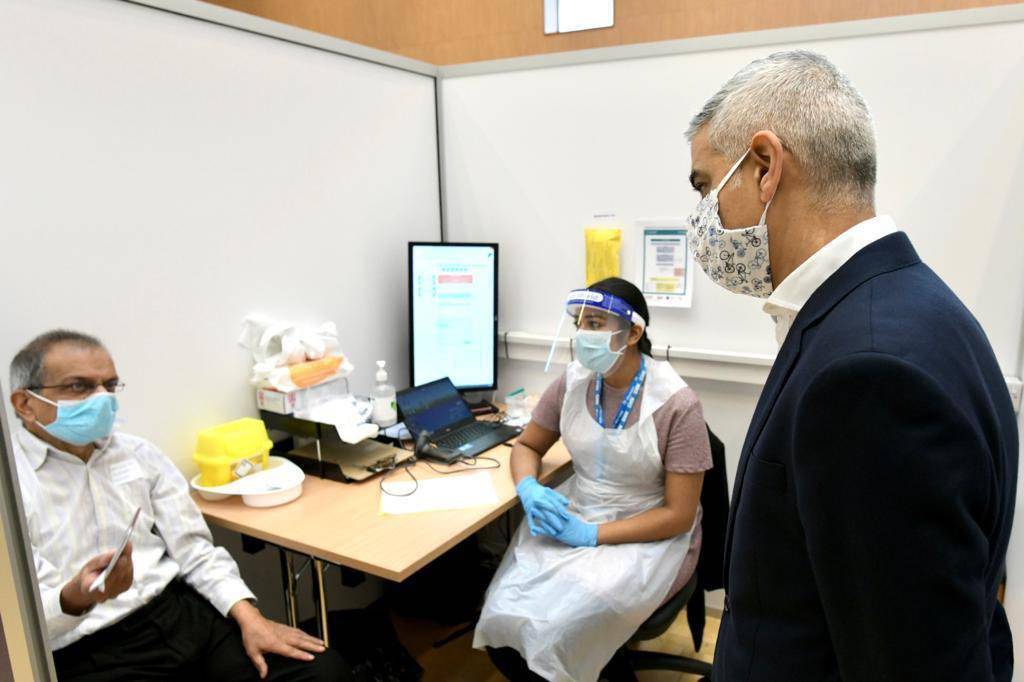
Mayor Sadiq Khan during a visit at the new vaccine hub at Shree Swaminarayan Mandir Kingsbury. (Photo: Mayor of London)

“This has been an incredibly difficult and challenging time for our city, but the vaccine is the light at the end of a dark tunnel. This major milestone is down to the heroic work and dedication of our NHS staff, volunteers and venues who have gone above and beyond to deliver these life-saving vaccinations,” Khan said.

“We know there is a long way to go in our fight against coronavirus and it’s crucial we do not take our foot off the pedal now. I want millions more to receive the safe and effective vaccine as quickly as possible, and I urge all Londoners to take it up when offered. For now, it’s vital we follow the rules and stay at home to protect ourselves, others and our NHS heroes.”

Newsdesk

Newsdesk

Aravind Rajeev is Deputy News Editor at Asian Lite, mostly covering the Middle East and GCC. He has over eight years of experience as a journalist, with a background in ground-level reporting, crime reporting, as well as international and regional news.

Previous Story

Nihira composes, fuses Hindi lyrics with authentic Cuban music

Next Story

Mario Draghi accepts post of Italian Prime Minister

Previous Story

Nihira composes, fuses Hindi lyrics with authentic Cuban music

Next Story

Mario Draghi accepts post of Italian Prime Minister

Latest from -Top News

Pakistan Risks Overstretching Itself in Yemen War

Pakistan’s expanding military role in Saudi Arabia amid the Yemen conflict could strain its defence resources and fragile finances…reports Asian Lite News Desk Pakistan’s military involvement in the war in Yemen may prove unsustainable because of mounting financial pressures and competing security demands, according to a new report. Islamabad’s growing military presence in Saudi Arabia risks stretching its defence resources while exposing the country to greater strategic and economic challenges. An article by Andrew Wilson in One World Outlook describes Pakistan’s involvement as a case of “fiscal and strategic overreach”, arguing that the country lacks the financial flexibility to sustain an expanded military commitment. Pakistan’s external finances depend heavily on an International Monetary Fund (IMF) programme, financial support from Gulf countries and remittances from Pakistani workers in the region. The report argues that deeper military involvement in the conflict could place additional pressure on these sources of financial stability. It also warns that deploying troops and military equipment abroad could weaken Pakistan’s capacity to address security challenges along its eastern border and deal with two domestic insurgencies. The move could also draw Islamabad into a conflict it has sought to approach cautiously. A Reuters report in May, citing Pakistani security and government sources, said Islamabad had deployed around 8,000 troops, a squadron of approximately 16 aircraft, mostly JF-17 fighter jets, two drone squadrons and a Chinese HQ-9 air-defence battery to Saudi Arabia. According to those sources, Riyadh was financing the deployment, with Pakistani personnel operating the equipment. The sources also said a confidential agreement contemplated the possibility of deploying up to 80,000 troops. Islamabad has not confirmed those figures, although it has acknowledged its military presence in Saudi Arabia, including the deployment of fighter jets at King Abdulaziz Air Base from April. The One World Outlook article argues that Saudi financial support can cover allowances and operating expenses but cannot easily replace military equipment needed elsewhere or resolve the political and strategic challenges of participating in the Yemen conflict. Pakistan’s defence budget is another concern. For the 2026-27 financial year, the federal government allocated PKR 3 trillion, or approximately $10.8 billion, to defence services. The allocation represents an 18 per cent increase from the original PKR 2.55 trillion provision and amounts to around 2.1 per cent of projected gross domestic product (GDP). Defence spending accounts for approximately 16 per cent of the federal government’s PKR 18.8 trillion expenditure. Military pensions are budgeted separately at PKR 822 billion, while debt servicing costs stand at approximately PKR 8 trillion, more than two-and-a-half times the defence allocation. The report argues that these competing financial obligations leave little room for additional military expenditure without placing further pressure on public finances. Pakistan’s reliance on IMF assistance also limits its fiscal flexibility. The country must meet the conditions attached to the programme, including a primary budget surplus target of 2 per cent of GDP and continued restraint on development spending. According to the article, these requirements make it difficult for Islamabad to finance an additional military commitment without compromising other budgetary priorities. Pakistan’s economic indicators offer limited reassurance. Economic growth for the 2025-26 financial year is estimated at between 3.6 and 3.7 per cent, while inflation reached approximately 10.3 per cent in September following an energy price shock. Foreign exchange reserves stood at around $21.5 billion at the end of September. Although this marks an improvement from the low levels recorded in 2023, the report notes that the reserves cover only a few months of imports. Financial assistance from Gulf partners remains central to Pakistan’s external stability. The article says Islamabad holds approximately $8 billion in Saudi deposits at its central bank. In July, the State Bank of Pakistan said Riyadh had extended the maturity of $5 billion in deposits to December 2028, easing the country’s immediate external financing requirements. A further $3 billion deposit was also extended in the spring. However, the article argues that these arrangements provide temporary relief rather than long-term financial independence, particularly as regional conflict threatens the stability of the Gulf economies on which Pakistan relies. The report concludes that Pakistan faces a difficult balance between supporting Saudi Arabia militarily and preserving the financial and military resources needed to address its domestic and regional challenges.

UK and Germany Ratify Kensington Treaty

Britain and Germany ratify the Kensington Treaty, agreeing new cooperation on AI, quantum research, defence and security while targeting investment, jobs and Russian hybrid threats…reports Asian Lite News Desk Britain and Germany

Economic tide is turning in Bangladesh

If there is one thing that can bring some comfort to the struggling Bangladeshi economy, it is good relations with India. Bangladesh should remember that Delhi’s backing, through easy supplies of essentials
Go toTop