November 23, 2021
2 mins read

The Mountbatten’s 38-year marriage was far from perfect

Lord Mountbatten – who Prince Louis is widely-believed to be named after – was “devastated” by her infidelity in the early days of their marriage. …reports Asian Lite News

She was hailed as “the most beautiful woman in England”, so when the dashing prince, Louis, and Edwina Mountbatten walked down the aisle in 1922, it was the society wedding of the decade, The Sun, UK reported.

But behind closed doors, their 38-year marriage was far from perfect — with Lord Mountbatten once admitting: “Edwina and I spent all our married lives getting into other people’s beds.”

She was said to be sexually obsessed, once being “thrusted” across a banquet table during a romp with one lover, The Sun reported.

Lord Mountbatten – who Prince Louis is widely-believed to be named after – was “devastated” by her infidelity in the early days of their marriage.

Realising he had little choice in the matter, he began taking lovers of his own, too, the report said.

In 2019, FBI documents from the 1940s revealed shocking claims that Mountbatten — who was murdered by an IRA bomb in 1979 — was secretly “a homosexual with a perversion for young boys”, The Sun reported.

The great-grandson of Queen Victoria, Mountbatten — the uncle of Prince Philip — was born in 1900 at Frogmore House, Windsor as Prince Louis of Battenberg, a title he lost when he and other royals dropped Germanic names during the First World War, the report said.

By the time he met 20-year-old Edwina Ashley, in 1920, she was a leading light in London society with an inheritance of 2 million pounds (equivalent to 53 million pounds today) from her grandfather, financier Ernest Cassel, to fund her party lifestyle.

Their wedding, at St Margaret’s chapel, Westminster, attracted a crowd of 8,000 and was attended by many members of the royal family including Queen Mary, Queen Alexandra and the then Prince of Wales — the future Edward VIII.

“Both were virgins when they wedded but Edwina soon revealed her love of sex when she asked to go to Paris on their honeymoon so they could explore — the most awful places we could find”.

Louis found sex less appealing, calling it a “mixture of psychology and hydraulics”, The Sun reported.

“As Edwina became increasingly close to Nehru, new rumours were beginning to circulate about Lord Mountbatten,” the Sun reported.

The FBI had interviewed several people who claimed the naval commander was bisexual, with one claiming he had a fetish for “young boys”.

The first FBI files date back to February 1944, soon after Mountbatten had become supreme allied commander of southeast Asia.

It reads: “Lord Louis Mountbatten and his wife are considered persons of extremely low morals.”

It also said there were claims that: “Lord Louis Mountbatten was known to be a homosexual with a perversion for young boys”, the report said.

Homosexual acts were banned in the UK until 1967, and many memos about Mountbatten’s sexuality have been edited or destroyed since.

ALSO READ: UK invites ASEAN to G-7 meeting

Previous Story

Britain adds Covaxin to list of valid jabs for travel

Next Story

UAE firms urged to invest in technology in digital era

Previous Story

Britain adds Covaxin to list of valid jabs for travel

Next Story

UAE firms urged to invest in technology in digital era

Latest from -Top News

Pakistan Risks Overstretching Itself in Yemen War

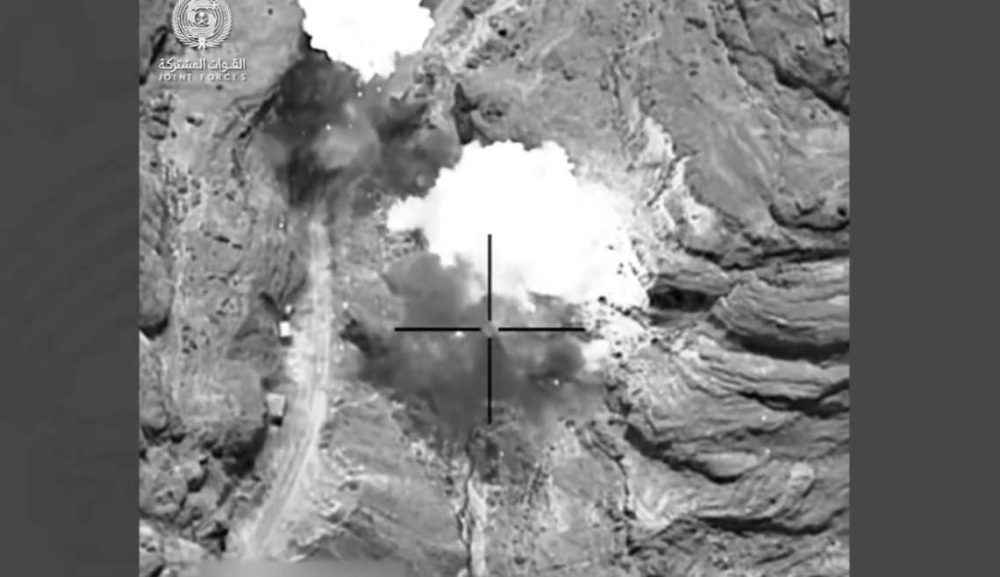
Pakistan’s expanding military role in Saudi Arabia amid the Yemen conflict could strain its defence resources and fragile finances…reports Asian Lite News Desk Pakistan’s military involvement in the war in Yemen may prove unsustainable because of mounting financial pressures and competing security demands, according to a new report. Islamabad’s growing military presence in Saudi Arabia risks stretching its defence resources while exposing the country to greater strategic and economic challenges. An article by Andrew Wilson in One World Outlook describes Pakistan’s involvement as a case of “fiscal and strategic overreach”, arguing that the country lacks the financial flexibility to sustain an expanded military commitment. Pakistan’s external finances depend heavily on an International Monetary Fund (IMF) programme, financial support from Gulf countries and remittances from Pakistani workers in the region. The report argues that deeper military involvement in the conflict could place additional pressure on these sources of financial stability. It also warns that deploying troops and military equipment abroad could weaken Pakistan’s capacity to address security challenges along its eastern border and deal with two domestic insurgencies. The move could also draw Islamabad into a conflict it has sought to approach cautiously. A Reuters report in May, citing Pakistani security and government sources, said Islamabad had deployed around 8,000 troops, a squadron of approximately 16 aircraft, mostly JF-17 fighter jets, two drone squadrons and a Chinese HQ-9 air-defence battery to Saudi Arabia. According to those sources, Riyadh was financing the deployment, with Pakistani personnel operating the equipment. The sources also said a confidential agreement contemplated the possibility of deploying up to 80,000 troops. Islamabad has not confirmed those figures, although it has acknowledged its military presence in Saudi Arabia, including the deployment of fighter jets at King Abdulaziz Air Base from April. The One World Outlook article argues that Saudi financial support can cover allowances and operating expenses but cannot easily replace military equipment needed elsewhere or resolve the political and strategic challenges of participating in the Yemen conflict. Pakistan’s defence budget is another concern. For the 2026-27 financial year, the federal government allocated PKR 3 trillion, or approximately $10.8 billion, to defence services. The allocation represents an 18 per cent increase from the original PKR 2.55 trillion provision and amounts to around 2.1 per cent of projected gross domestic product (GDP). Defence spending accounts for approximately 16 per cent of the federal government’s PKR 18.8 trillion expenditure. Military pensions are budgeted separately at PKR 822 billion, while debt servicing costs stand at approximately PKR 8 trillion, more than two-and-a-half times the defence allocation. The report argues that these competing financial obligations leave little room for additional military expenditure without placing further pressure on public finances. Pakistan’s reliance on IMF assistance also limits its fiscal flexibility. The country must meet the conditions attached to the programme, including a primary budget surplus target of 2 per cent of GDP and continued restraint on development spending. According to the article, these requirements make it difficult for Islamabad to finance an additional military commitment without compromising other budgetary priorities. Pakistan’s economic indicators offer limited reassurance. Economic growth for the 2025-26 financial year is estimated at between 3.6 and 3.7 per cent, while inflation reached approximately 10.3 per cent in September following an energy price shock. Foreign exchange reserves stood at around $21.5 billion at the end of September. Although this marks an improvement from the low levels recorded in 2023, the report notes that the reserves cover only a few months of imports. Financial assistance from Gulf partners remains central to Pakistan’s external stability. The article says Islamabad holds approximately $8 billion in Saudi deposits at its central bank. In July, the State Bank of Pakistan said Riyadh had extended the maturity of $5 billion in deposits to December 2028, easing the country’s immediate external financing requirements. A further $3 billion deposit was also extended in the spring. However, the article argues that these arrangements provide temporary relief rather than long-term financial independence, particularly as regional conflict threatens the stability of the Gulf economies on which Pakistan relies. The report concludes that Pakistan faces a difficult balance between supporting Saudi Arabia militarily and preserving the financial and military resources needed to address its domestic and regional challenges.
Go toTop

Don't Miss

No 10 fears ICC will ask UK to sign Netanyahu’s arrest warrant

There are concerns among some Foreign Office officials whether the

ABHI UK hosts event on ‘India UK shared values: Culture, Civilization and Democracy’

ABHI UK represents the true interests of the BHI community