September 15, 2022
2 mins read

India thrash Nepal 4-0 in  SAFF U-17 Championship

The second goal meant that Nepal began attacking the Indian half with a lot more urgency, but the Indian midfield was managing to frustrate their efforts…reports Asian Lite News

Indian boys’ football team clinched the SAFF U-17 Championship title after defeating a 10-man Nepal 4-0 in the final at the Racecourse International Stadium, here on Wednesday.

Boby Singh, Korou Singh, captain Vanlalpeka Guite, and Aman scored a goal each, to shape a resounding victory in India’s favour. With this win, India retained the title, which was previously labelled as the SAFF U-15 Championship.

In the group league, Nepal defeated India 3-1. However, in the final, India looked a side eager to take complete charge of the proceedings right from the word go.

They got off the blocks early in the match, looking to find the gaps in the Nepal defence, and managed to get the lead in the 18th minute through Boby, who headed it into the goal at the far post, after a good piece of play between Ricky Meetei and Vanlalpeka Guite, as the latter sailed a cross towards the eventual goalscorer.

Guite was in the thick of things again 12 minutes later, getting another assist to his name, as he played a through ball to Korou Singh, who just had to round the keeper and slot it home.

The second goal meant that Nepal began attacking the Indian half with a lot more urgency, but the Indian midfield was managing to frustrate their efforts.

The frustration came to the surface on the 39th minute, when Nepal captain Prashant Laksam elbowed Danny Laishram on the back after the two tangled up in a challenge – an action that was straightaway awarded with a red card by the referee.

With the man advantage, India saw out the rest of the first half, before resuming the proceedings after the change of ends. Soon enough, Guite, who had earlier provided two assists, netted a goal of his own in the 63rd minute, when his cross from the left swerved into the top corner, handing India a three-goal lead.

Nepal’s second half substitute Dhan Singh did create a couple of chances for his side in the closing minutes, but the one man advantage meant that India were able to thwart the efforts.

At the other end, India’s second half substitute Aman added salt to the wounds in injury time, netting the fourth goal, after he was set through behind the Nepal defence. The result was beyond doubt by the end, as India successfully defended their title.

India captain Vanlalpeka Guite was named the Most Valuable Player of the Tournament, while goalkeeper Sahil won the Best Goalkeeper awards.

“I am extremely proud of my boys. There has been a lot of hard work put in, and every support staff, and player deserves equal credit,” said head coach Bibiano Fernandes.

“The efforts put in by AIFF at the youth level by providing us continuous exposure tours with help from SAI has helped the boys mature,” he added.

ALSO READ-Phogat wins bronze at World Wrestling Championships
Previous Story

Handpicked destinations for a well-deserved holiday

Next Story

Pakistan rejects flood donation from Bangladesh

Previous Story

Handpicked destinations for a well-deserved holiday

Next Story

Pakistan rejects flood donation from Bangladesh

Latest from Nepal

Nepal Floods Cause $1.66 Billion In Damage, Says World Bank

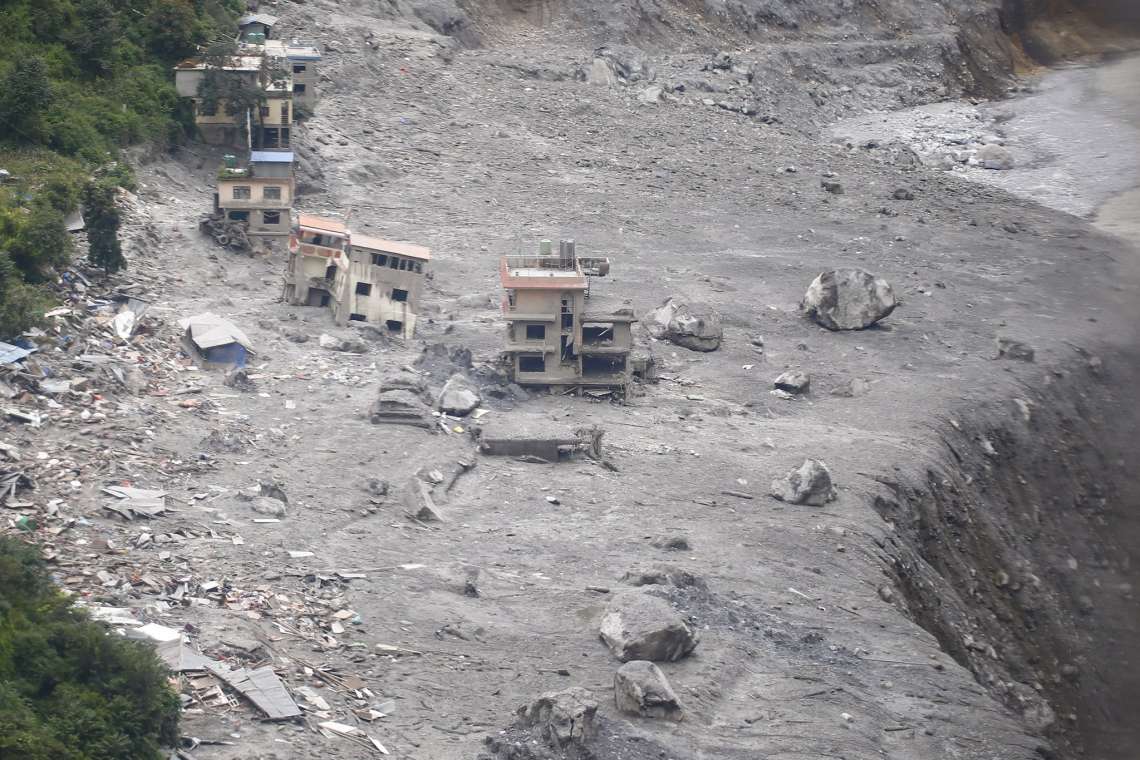
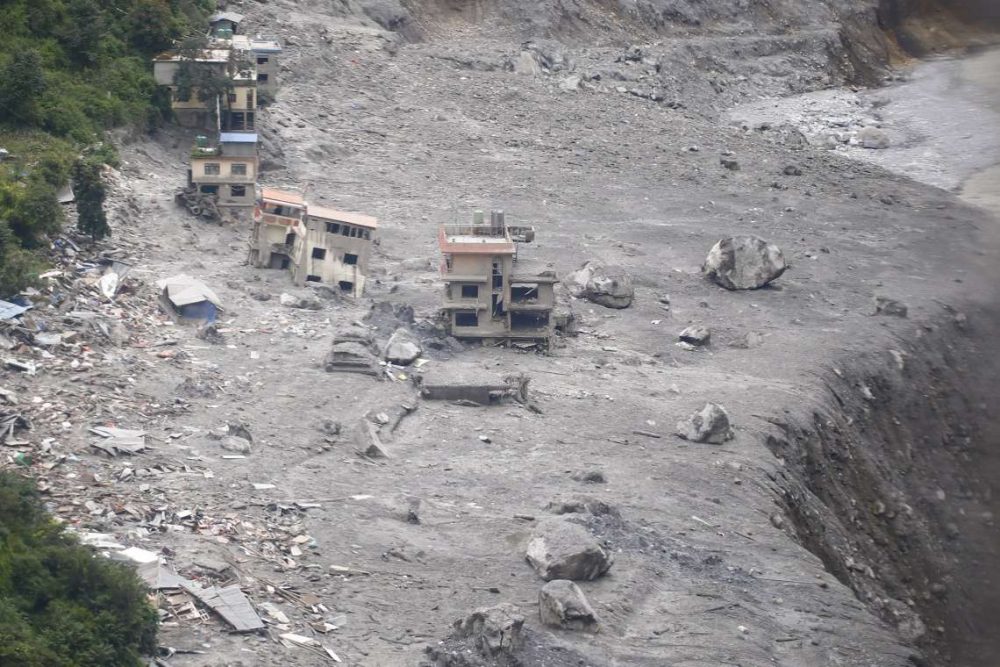
Nepal’s August 2026 floods caused an estimated US$1.66 billion in direct physical damage, with infrastructure accounting for 83 per cent of the total…reports Asian Lite News Desk Nepal’s devastating floods in August 2026 caused an estimated US$1.66 billion in direct physical damage, with infrastructure accounting for 83 per cent of the total, according to a World Bank report. The estimate, included in the World Bank’s Nepal Development Update unveiled this week, is close to the Nepal government’s preliminary Rapid Damage and Needs Assessment (RDNA), which put physical damage at US$1.81 billion. The government’s assessment also estimated losses beyond physical assets at US$883.32 million, taking the total economic effects of the disaster to approximately US$2.7 billion. The World Bank’s Global Rapid Post-Disaster Damage Estimation (GRADE) found that infrastructure suffered the greatest damage, estimated at US$1.38 billion, or 83 per cent of the total. Residential buildings accounted for US$185 million, or 11 per cent, while non-residential buildings sustained damage worth US$101 million, or 6 per cent. The floods along the Bhotekoshi and Trishuli rivers caused extensive damage to hydropower projects, solar energy facilities, electricity transmission infrastructure and transport networks. The energy sector, particularly hydropower, was among the worst affected. The August 2026 floods affected 12 hydropower projects and one solar project, involving 281.1 MW of operational capacity and 395.02 MW of capacity under construction. Damage to transmission lines and substations also disrupted the transmission of 149.6 MW of electricity to the national grid. The total affected capacity reached approximately 430.7 MW, equivalent to 10.6 per cent of Nepal’s installed hydropower and solar capacity at the end of fiscal year 2025-26, which concluded in mid-July. The disaster also severely damaged transport infrastructure along the 82-km Rasuwa trade corridor, which connects Kathmandu with the Rasuwagadhi border point with China. More than 55 km of the corridor was damaged, including 40 km that was completely destroyed. The floods also damaged 37 motorable bridges and 68 suspension bridges. The disaster resulted in significant human losses along the affected corridor and beyond. According to Nepal’s National Disaster Risk Reduction and Management Authority, 1,455 people had been confirmed dead, while 5,285 remained missing following the disaster. The World Bank report found that the physical damage was concentrated in three districts in central Nepal: Rasuwa, Nuwakot and Dhading. Rasuwa was the worst-affected district, accounting for US$1.07 billion, or 64 per cent, of the total direct damage. Nuwakot recorded an estimated US$551 million in damage, while Dhading suffered approximately US$39 million. “The findings highlight the concentration of physical damage in a small number of districts and the disproportionate impact on infrastructure, underscoring the scale of the reconstruction challenge facing the affected areas,” the World Bank said. The global development financier said the floods had demonstrated the scale and complexity of disaster risks in Nepal’s Himalayan environment. The event also showed how a single extreme weather event could trigger cascading impacts across sectors and geographical areas. The report said recovery efforts should extend beyond restoring infrastructure to its pre-disaster condition. While the principle of “Build Back Better” remained relevant, the World Bank stressed that rebuilding infrastructure to higher engineering standards in the same locations might not always be sufficient. “In some cases, simply rebuilding the same infrastructure in the same location to a higher engineering standard may not be sufficient. Nepal may need to build differently — based on a better understanding of risk, more careful decisions about location and design, greater redundancy in critical networks, stronger monitoring and early warning, and a more integrated approach to infrastructure development in the Himalayas,” the report said. The World Bank said Nepal’s recovery strategy should incorporate improved risk assessment, more informed infrastructure planning, stronger monitoring systems and better early warning mechanisms. The report emphasised that reconstruction should not only restore damaged assets but also reduce the impact of future disasters, particularly in the country’s vulnerable Himalayan regions.

Nepal Plans Period Leave for Women Workers

Nepal has proposed introducing menstrual leave for women civil servants as part of amendments to its federal civil service law….reports Asian Lite News Desk Nepal is considering introducing menstrual leave for women

Nepal seeks bigger role between India and China

Nepal is seeking to turn its location between India and China into an economic advantage by expanding trade, energy exports and connectivity with both neighbours…reports Asian Lite News Desk Nepal wants to
Go toTop

Don't Miss

Lanka Secures $200M from World Bank

According to the World Bank, this is the second operation

Baltimore Bridge Collapse Hits Indian Markets

India, a major importer of US thermal coal, is bracing