February 18, 2022
3 mins read

Beijing voices concern over ban on Chinese apps in India

It came after sources said on Monday that India will ban 54 more Chinese apps that pose a “threat” to India’s security, informed sources on Monday….reports Asian Lite News

Beijing has expressed concerns over the ban on more than 220 Chinese mobile applications in India, saying it affected the Chinese companies’ interests, reported Sputnik.

Chinese Commerce Ministry’s spokesperson Gao Feng during a press briefing on Thursday said that the ban damages the legitimate rights and interests of Chinese companies.

“For a certain period of time, the relevant Indian departments have been taking several measures to put pressure on Chinese enterprises and related services in the country, which has seriously damaged the legitimate rights and interests of Chinese companies, with China expressing serious concern in this regard,” said Gao.

He expressed hope that India would be able to take appropriate measures to maintain the positive dynamics of economic cooperation between the two countries, noting that bilateral trade increased by 43 per cent in 2021 in per year terms, reaching USD 125.7 billion, according to Sputnik.

It came after sources said on Monday that India will ban 54 more Chinese apps that pose a “threat” to India’s security, informed sources on Monday.

“Government of India to ban 54 Chinese apps that pose a threat to India’s security,” sources had said.

Earlier in June last year, India banned 59 Chinese mobile applications including the widely-used social media platforms such as TikTok, WeChat, and Helo keeping in view the threat to the nation’s sovereignty and security.

The majority of the apps banned in the June 29 order were red-flagged by intelligence agencies over concerns that they were collecting user data and possibly also sending them “outside”.

Google play store

Google, Apple pulldown apps

After the Indian government banned Tencent’s Xriver, Garena’s Free Fire, NetEase’s Onmyoji Arena and Astracraft along with 50 more Chinese apps in a fresh strike, Google on Monday said it has temporarily blocked the access of the notified apps on Play Store.

The Ministry of Electronics and Information Technology (MeitY) has formally issued a notification banning the operations of 54 Chinese apps in India, as several of such apps from the stable of Chinese companies like Tencent and Alibaba, changed hands to hide ownership.

“On receipt of the interim order passed under Section 69A of the IT Act, following established process, we have notified the affected developers and have temporarily blocked access to the apps that remained available on the Play Store in India,” Google India said in a statement.

Apple has also pulled down several of these apps, including Garena Free Fire, from its App Store.

The IT Ministry identified applications such as Sweet Selfie HD, Beauty Camera – Selfie Camera, Equaliser & Bass Booster etc which are cloned or refurbished versions of apps already banned by India in 2020.

The other banned apps are Music Plus – MP3 Player, equaliser Pro – Volume Booster & Bass Booster, Video Player Media All Format, Music Player – Equaliser & MP3, Volume Booster – Loud Speaker & Sound Booster, CamCard for SalesForce Ent, Isoland 2: Ashes of Time Lite, Rise of Kingdoms: Lost Crusade, APUS Security HD (Pad Version), Parallel Space Lite 32 Support, Viva Video Editor – Snack Video Maker with Music, Nice video baidu, AppLock, Astracraft and more.

The latest move could be a fallout of the current standoff between India and China locked in a protracted border dispute.

This is the first lot of apps to be banned by the government this year after a total of 270 apps were banned since 2020.


ALSO READ: China forays into Middle East

Previous Story

Paris to witness a ‘never tried before’ Olympics in 2024

Next Story

ISL final to be held at Fatorda on March 20

Previous Story

Paris to witness a ‘never tried before’ Olympics in 2024

Next Story

ISL final to be held at Fatorda on March 20

Latest from -Top News

Pakistan Risks Overstretching Itself in Yemen War

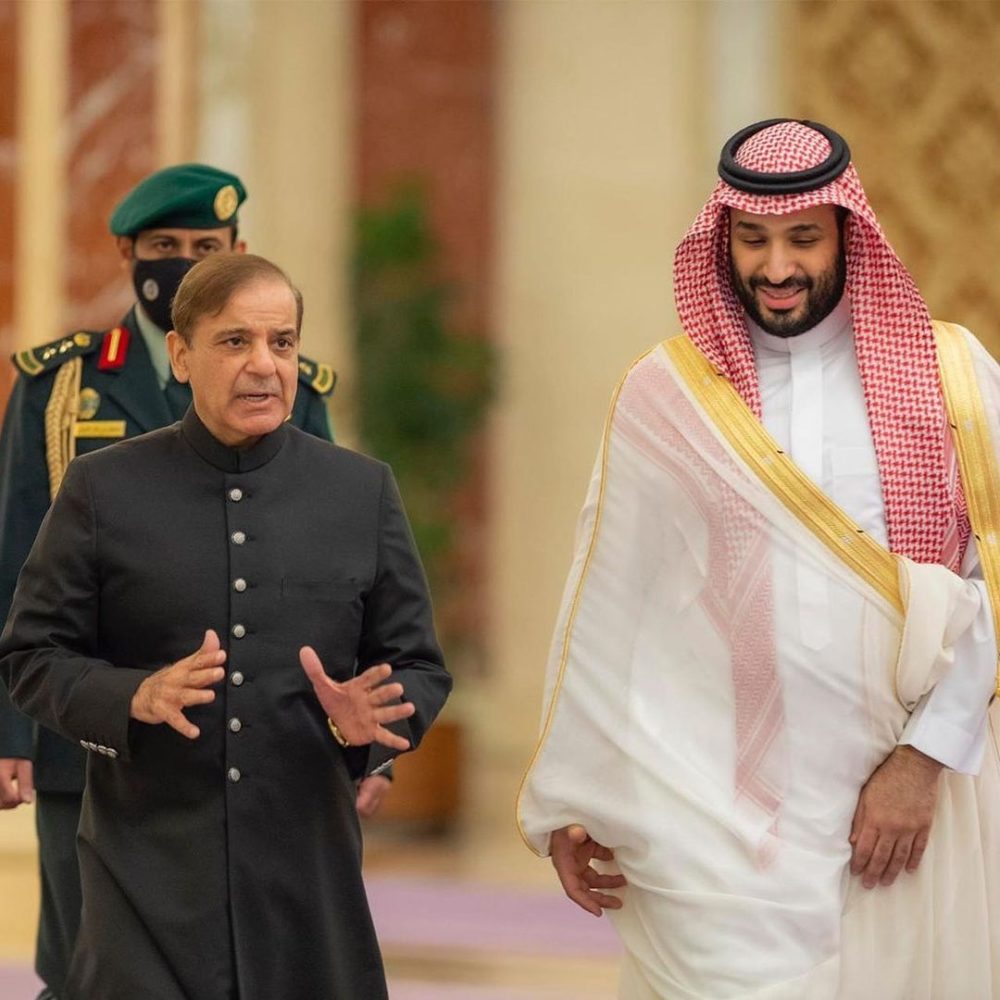
Pakistan’s expanding military role in Saudi Arabia amid the Yemen conflict could strain its defence resources and fragile finances…reports Asian Lite News Desk Pakistan’s military involvement in the war in Yemen may prove unsustainable because of mounting financial pressures and competing security demands, according to a new report. Islamabad’s growing military presence in Saudi Arabia risks stretching its defence resources while exposing the country to greater strategic and economic challenges. An article by Andrew Wilson in One World Outlook describes Pakistan’s involvement as a case of “fiscal and strategic overreach”, arguing that the country lacks the financial flexibility to sustain an expanded military commitment. Pakistan’s external finances depend heavily on an International Monetary Fund (IMF) programme, financial support from Gulf countries and remittances from Pakistani workers in the region. The report argues that deeper military involvement in the conflict could place additional pressure on these sources of financial stability. It also warns that deploying troops and military equipment abroad could weaken Pakistan’s capacity to address security challenges along its eastern border and deal with two domestic insurgencies. The move could also draw Islamabad into a conflict it has sought to approach cautiously. A Reuters report in May, citing Pakistani security and government sources, said Islamabad had deployed around 8,000 troops, a squadron of approximately 16 aircraft, mostly JF-17 fighter jets, two drone squadrons and a Chinese HQ-9 air-defence battery to Saudi Arabia. According to those sources, Riyadh was financing the deployment, with Pakistani personnel operating the equipment. The sources also said a confidential agreement contemplated the possibility of deploying up to 80,000 troops. Islamabad has not confirmed those figures, although it has acknowledged its military presence in Saudi Arabia, including the deployment of fighter jets at King Abdulaziz Air Base from April. The One World Outlook article argues that Saudi financial support can cover allowances and operating expenses but cannot easily replace military equipment needed elsewhere or resolve the political and strategic challenges of participating in the Yemen conflict. Pakistan’s defence budget is another concern. For the 2026-27 financial year, the federal government allocated PKR 3 trillion, or approximately $10.8 billion, to defence services. The allocation represents an 18 per cent increase from the original PKR 2.55 trillion provision and amounts to around 2.1 per cent of projected gross domestic product (GDP). Defence spending accounts for approximately 16 per cent of the federal government’s PKR 18.8 trillion expenditure. Military pensions are budgeted separately at PKR 822 billion, while debt servicing costs stand at approximately PKR 8 trillion, more than two-and-a-half times the defence allocation. The report argues that these competing financial obligations leave little room for additional military expenditure without placing further pressure on public finances. Pakistan’s reliance on IMF assistance also limits its fiscal flexibility. The country must meet the conditions attached to the programme, including a primary budget surplus target of 2 per cent of GDP and continued restraint on development spending. According to the article, these requirements make it difficult for Islamabad to finance an additional military commitment without compromising other budgetary priorities. Pakistan’s economic indicators offer limited reassurance. Economic growth for the 2025-26 financial year is estimated at between 3.6 and 3.7 per cent, while inflation reached approximately 10.3 per cent in September following an energy price shock. Foreign exchange reserves stood at around $21.5 billion at the end of September. Although this marks an improvement from the low levels recorded in 2023, the report notes that the reserves cover only a few months of imports. Financial assistance from Gulf partners remains central to Pakistan’s external stability. The article says Islamabad holds approximately $8 billion in Saudi deposits at its central bank. In July, the State Bank of Pakistan said Riyadh had extended the maturity of $5 billion in deposits to December 2028, easing the country’s immediate external financing requirements. A further $3 billion deposit was also extended in the spring. However, the article argues that these arrangements provide temporary relief rather than long-term financial independence, particularly as regional conflict threatens the stability of the Gulf economies on which Pakistan relies. The report concludes that Pakistan faces a difficult balance between supporting Saudi Arabia militarily and preserving the financial and military resources needed to address its domestic and regional challenges.
Go toTop

Don't Miss

China’s fury over US bill on Taiwan

The United States for decades has sold weapons to Taiwan

Louis Vuitton lands in soup in China

The brand’s different return and exchange policies have also triggered