February 5, 2022
5 mins read

Blinken, Jaishankar to hold bilateral meeting in Melbourne

United States Assistant Secretary of State for East Asia and the Pacific Daniel Kritenbrink said the meeting will “reaffirm our vitally important strategic partnership, reports Arul Louis

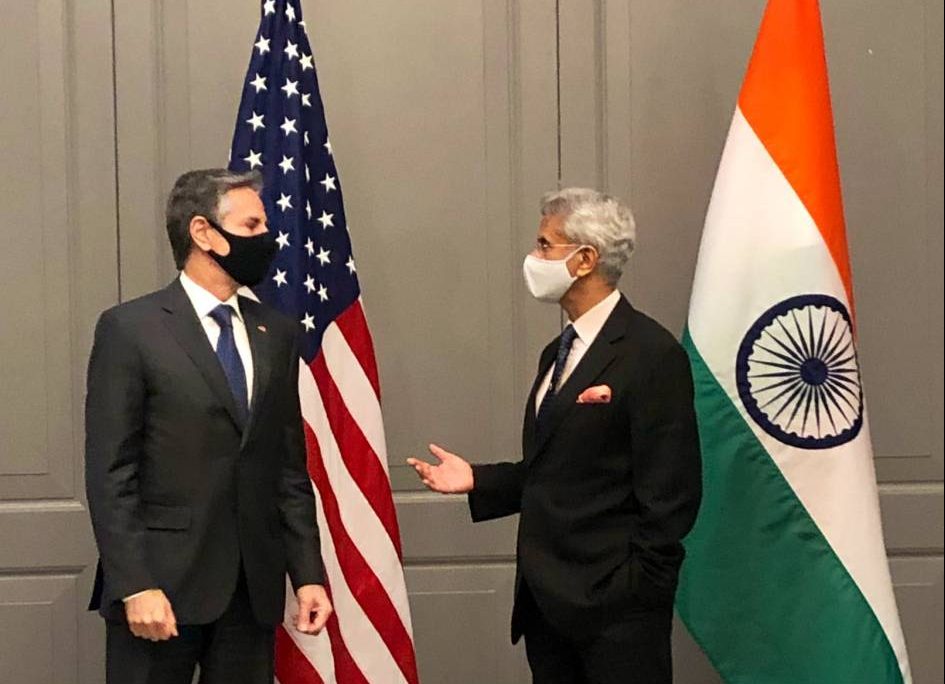
US Secretary of State Antony Blinken will meet Indian External Affairs Minister S. Jaishankar to “reaffirm our vitally important strategic partnership” when they are in Australia for a meeting of the Foreign Ministers of the Quad bloc next week, said Daniel Kritenbrink, the Assistant Secretary of State for East Asia and the Pacific.

At the Quad meeting, “I’m confident that part of that discussion will relate to the challenges that China poses to those values (of the Quad) and to that rules-based order in a number of sectors”, Kritenbrink said on Friday.

The meeting will take place as the world’s attention is focused on the situation in Europe where the US is facing off Russia over Ukraine, and will be an opportunity for Washington to reaffirm its continuing commitment to the Indo-Pacific strategy and to the Quad.

The message that Blinken will project through the meeting is that “in this era of intense competition, changing strategic landscapes, economic coercion, and, of course, this very difficult global pandemic, there is no greater global partnership than what we are trying to accomplish through the Quad with Australia, India and Japan”, Kritenbrink said.

The meeting is being hosted by Austria’s Marise Payne and Japan’s Hayashi Yoshimasa will also be there.

Jaishankar tweeted on January 27 that he had tested positive for Covid-19 and, according to media reports, Australian officials had hoped that the schedule of the meeting would allow time for him to recover.

In opting for a direct meeting instead of a virtual consultation despite the pandemic, Kritenbrink said that “there is simply nothing like these face-to-face meetings to solidify and institutionalize what we view as a foundation of our foreign policy in the Indo-Pacific”.

This will be the fourth meeting of the Foreign Ministers and it follows last September’s Quad summit of US President Joe Biden, Prime Ministers Narendra Modi of India and Scott Morrison of Australia, and Yoshihide Suga, who was the then premier of Japan.

Although, as Kritenbrink said that Jaishankar and Blinken speak frequently, this will be their first in-person meeting since they last met in October in Rome on the sidelines of the G20 meeting.
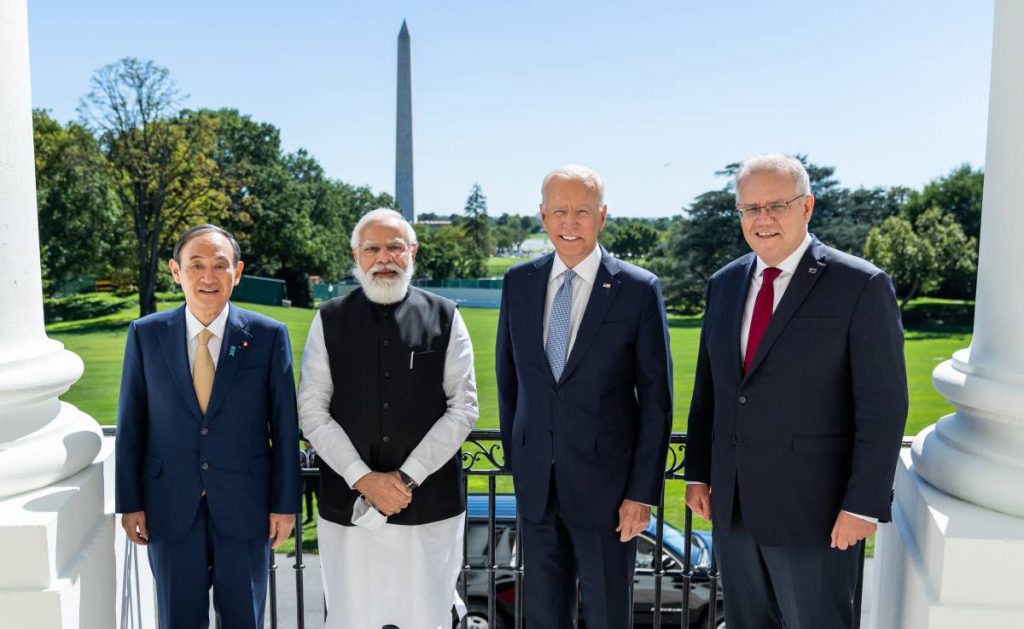
Former Japanese Prime Minister Yoshihide Suga, Indian Prime Minister Narendra Modi, US President Joe Biden, Australian Prime Minister Scott Morrison after the Quad Leader’s Summit in Washington in September 2021.

Last year’s annual 2+2 India-US ministerial meeting of Jaishankar and Blinken, and Defence Minister Rajnath Singh and Defence Secretary Lloyd Austin that was expected to have taken place in December had been postponed because of Russian President Vladimir Putin’s visit to India around that time.

Asked if Ukraine would figure at the Quad ministerial, Kritenbrink said: “As leaders of – for the world’s key democracies, I think it will be natural for them to address all of the important issues of the day, and I’m sure Ukraine will be one of them, given the seriousness of the issue and the threat it poses to the rules-based global order.

“I would underscore at the outset that the primary reason why Secretary Blinken is going on this trip is to demonstrate, first, the importance of the Indo-Pacific region to the prosperity and the security of the United States and the American people. The Indo-Pacific is absolutely central to our national interests and will have a great impact, again, on our own security and prosperity.

“Secondly, the Secretary will demonstrate the strength and the credibility of America’s commitment to the Indo-Pacific region, and specifically to our most important partners and democratic allies in the region.”
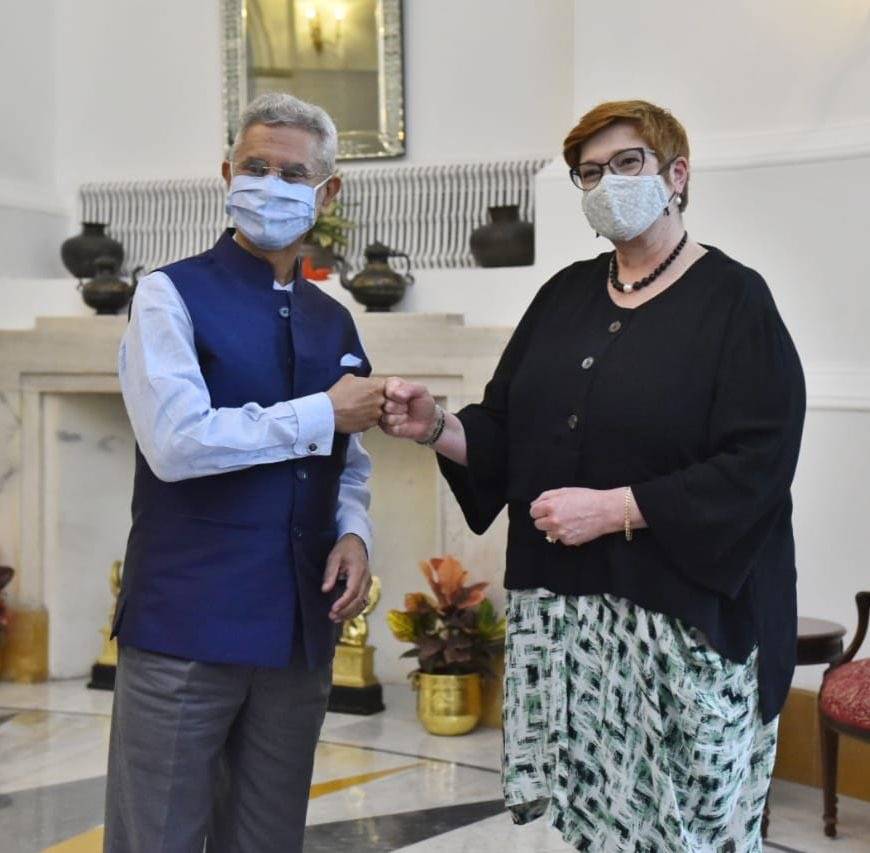
India’s External Affairs Minister S. Jaishankar meets Australian counterpart Marise Payne in New Delhi. (Credit : Twitter)

Talking about China, Kritenberg said: “The Quad is an informal grouping of like-minded democracies who share many interests, principles, and values vis-a-vis the kind of region that we want to live in – a region based on a rules-based order in which all countries big and small follow the rules, a region in which disputes are resolved peacefully, and in which countries have the freedom to make their own sovereign choices.

“It’s through this partnership that we’re strengthening the security environment in the region to push back against aggression and coercion.”

The Quad has evolved into a cooperative for joint action in the Indo-Pacific region on health and development going back to its roots when the four countries came together to provide relief in the aftermath of the 2004 Indian Ocean tsunami.

A key programme during the Covid-19 pandemic is to jointly provide 1 billion doses of vaccines to countries in the region by the end of the year.

The vaccines are being manufactured by India with US and Japanese financing, and Australia is to provide the logistics for their distribution.

“It is through our partnership with these three democratic countries that we are moving so fast to deliver vaccines around the world and to build a stronger health infrastructure,” Kritenbrink said.

“And it will be through this partnership that we help support global economic recovery. We intend to demonstrate that our partnerships deliver, and they deliver practical and real benefits to our own peoples and to the peoples of the region.”
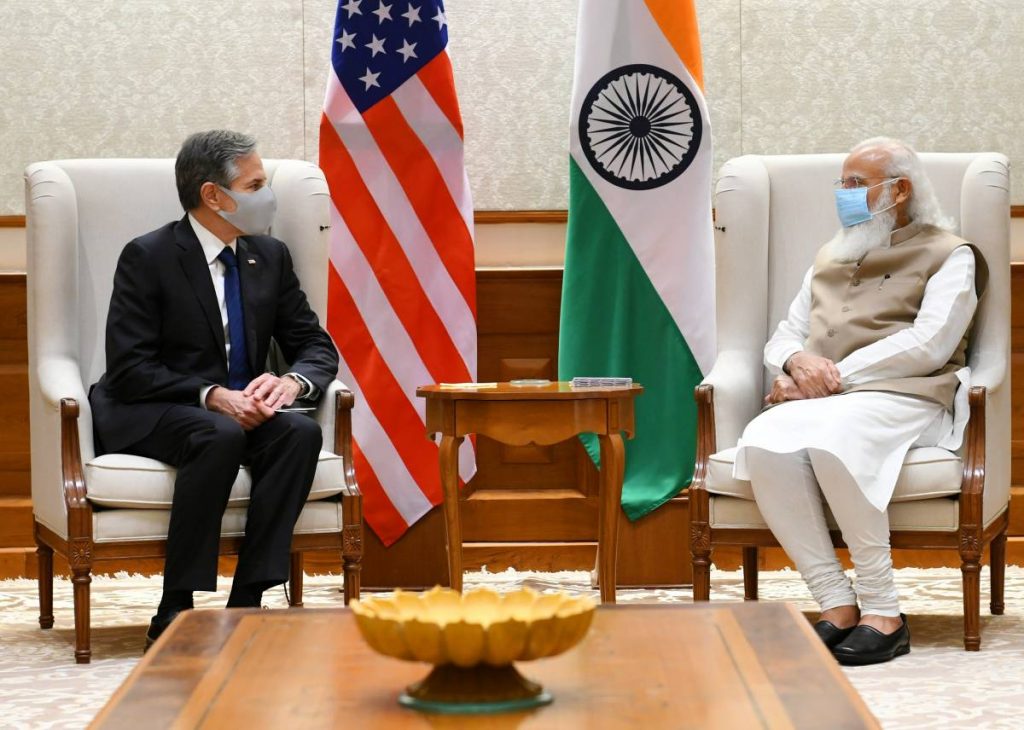
When US Secretary of State Antony Blinken met India’s Prime Minister Narendra Modi in New Delhi.

Blinken will also visit Fiji where 18 leaders from Pacific Island nations have been invited to participate in a hybrid meeting with him.

Besides the pandemic and climate change, they will “issues related to the maritime domain from maritime security to illegal fishing”, Kritenbrink said.

Maritime issues in the region centre around China’s claims, operations of its fishing fleets and actions by its coast guard against fishing personnel of other countries.

Blinken will end his trip in Honolulu with a meeting with Admiral John Aquilino, the head of the US Indo-Pacific Command, and a trilateral ministerial with South Korea’s Foreign Minister Chung Eui-Yong.

North Korea’s recent missile tests and the security situation in the region be on the trilateral’s agenda, State Department spokesperson Ned Price had said earlier.

ALSO READ: Winds of change most apparent in Indo-Pacific: Jaishankar
Newsdesk

Newsdesk

Aravind Rajeev is Deputy News Editor at Asian Lite, mostly covering the Middle East and GCC. He has over eight years of experience as a journalist, with a background in ground-level reporting, crime reporting, as well as international and regional news.

Previous Story

Naya Kashmir On Cusp of Progress

Next Story

India turns down Tesla’s call for tax breaks

Previous Story

Naya Kashmir On Cusp of Progress

Next Story

India turns down Tesla’s call for tax breaks

Latest from -Top News

US Green Card Freeze Hits Indian IT Giants

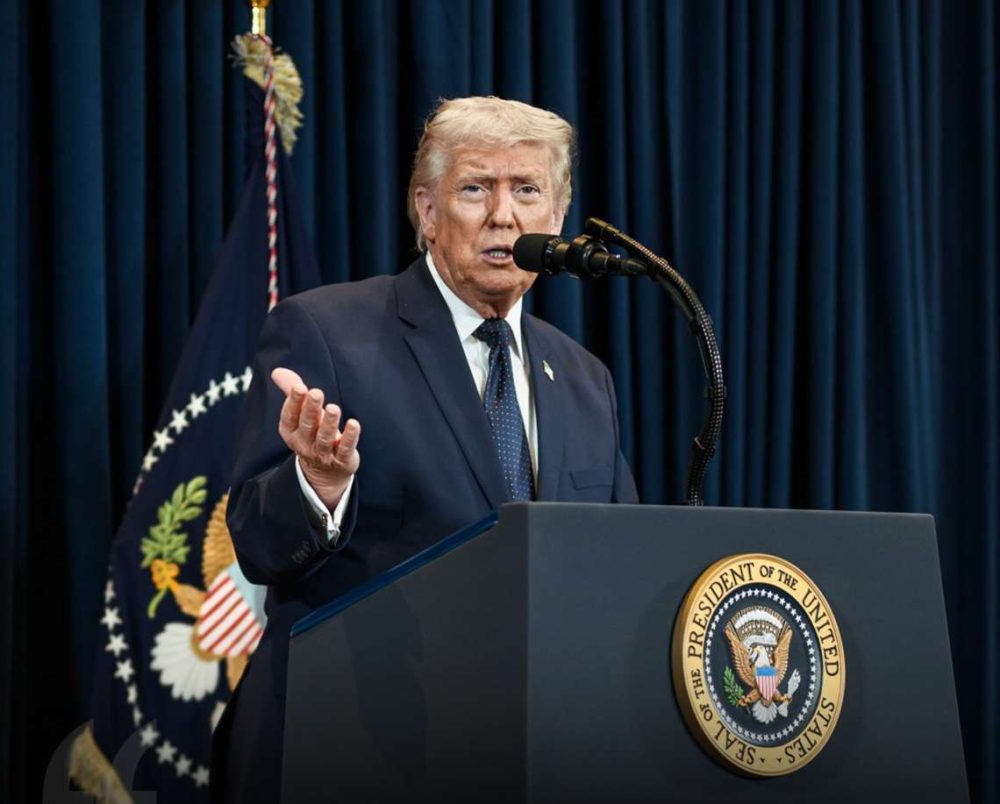
The Trump administration has suspended employment-based green card processing for eight major technology companies, including Infosys, TCS, Wipro and HCL, citing ongoing investigations…reports Asian Lite News Desk The Trump administration has suspended a key employment-based green card process for eight major technology and outsourcing companies, including Indian IT giants Infosys, Tata Consultancy Services, Wipro and HCL, as Vice President JD Vance announced a crackdown on alleged visa fraud. The suspension, announced on Thursday by US Labour Secretary Keith Sonderling at a press conference led by Vance, also covers Cognizant, Capgemini, Microsoft and Adobe. It bars the companies from filing new permanent labour certification applications and halts the processing of pending applications under the programme. Sonderling said the decision followed ongoing criminal and federal investigations into the companies. “Due to ongoing criminal investigations led by the Department of Labour’s Inspector General Anthony DiEsposito, who will get into this shortly, I am hereby suspending from the Permanent Labour Certification Program some of the largest IT outsourcing firms in the world, Cognizant, Infosys, Tata, Wipro, HCL, and Capgemini,” Sonderling said. He added that Microsoft and Adobe were also being suspended because of multiple active federal investigations. “We will not accept or process any pending permanent labour certification applications involving these companies,” he said. The Permanent Labour Certification programme, commonly known as PERM, is a key step in the process through which employers sponsor foreign workers for employment-based permanent residence in the United States. According to figures presented by Sonderling, the eight companies had collectively requested nearly three million foreign workers since 2009. They had received more than 230,000 H-1B visa approvals and over 100,000 permanent labour certifications. The administration did not disclose company-specific findings or provide details of the alleged violations during the press conference. Vance accused employers of using the H-1B visa programme to replace American workers with lower-paid foreign employees. He said the programme was intended to help companies recruit highly skilled workers for positions that could not be filled by American employees. “The H-1B visa program is meant to allow companies to bring in really the best of the best from outside the United States of America for positions that are completely impossible to fill with American workers,” he said. Vance singled out Microsoft, alleging that the company had laid off 6,000 American workers while benefiting from 6,300 H-1B visas and nearly 3,000 green cards. He said the administration wanted companies to change their hiring practices rather than withdraw from the American market. Asked whether the suspension would be temporary or permanent, Vance said, “The suspension of PERM is gonna last as long as it needs to.” He added that the administration had the tools to continue the suspension indefinitely but wanted the companies to improve their conduct. The US Justice Department also announced that it was actively investigating companies suspected of favouring foreign workers over American employees. Attorney General Todd Blanche said the authorities could pursue criminal prosecutions and civil lawsuits as part of the enforcement measures. The decision could have significant implications for Indian technology professionals and outsourcing companies operating in the United States, where Indian firms have long relied on employment-based immigration programmes to deploy skilled workers to American clients. The H-1B visa programme allows US employers to hire foreign workers in qualifying specialised occupations on a temporary basis. PERM, meanwhile, is part of a separate process through which employers seek to sponsor eligible foreign workers for permanent residence. The suspension announced on Thursday specifically concerns permanent labour certification applications involving the eight named companies. It does not, by itself, establish the cancellation of existing H-1B visas or green cards. The impact on individual employees will depend on their immigration status and the stage of their applications. The administration did not provide a detailed timeline for the suspension or specify when processing might resume.

Nepal Floods Cause $1.66 Billion In Damage, Says World Bank

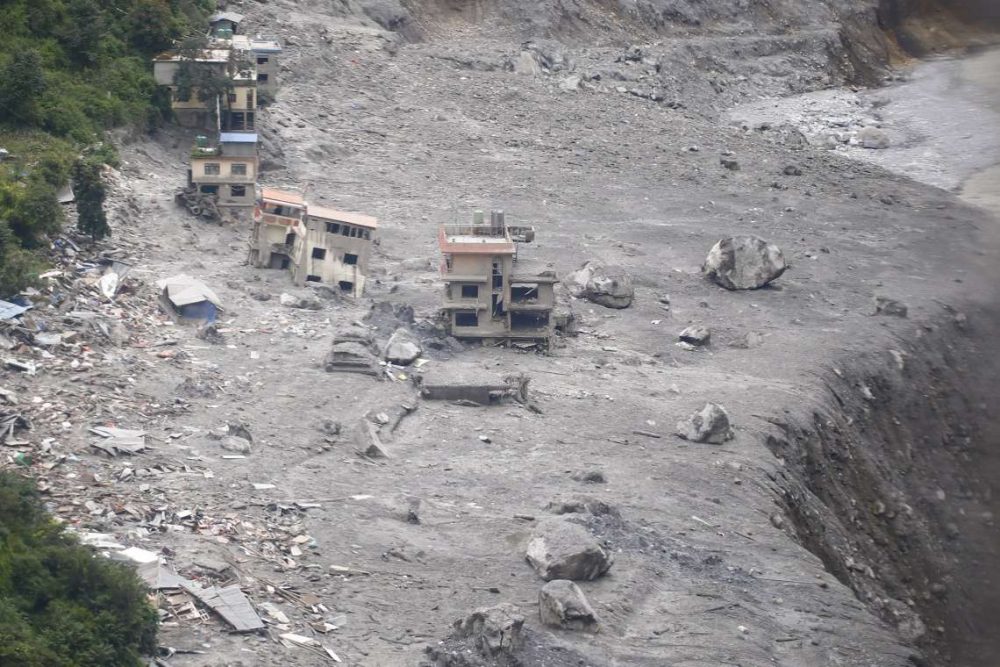
Nepal’s August 2026 floods caused an estimated US$1.66 billion in direct physical damage, with infrastructure accounting for 83 per cent of the total…reports Asian Lite News Desk Nepal’s devastating floods in August 2026 caused an estimated US$1.66 billion in direct physical damage, with infrastructure accounting for 83 per cent of the total, according to a World Bank report. The estimate, included in the World Bank’s Nepal Development Update unveiled this week, is close to the Nepal government’s preliminary Rapid Damage and Needs Assessment (RDNA), which put physical damage at US$1.81 billion. The government’s assessment also estimated losses beyond physical assets at US$883.32 million, taking the total economic effects of the disaster to approximately US$2.7 billion. The World Bank’s Global Rapid Post-Disaster Damage Estimation (GRADE) found that infrastructure suffered the greatest damage, estimated at US$1.38 billion, or 83 per cent of the total. Residential buildings accounted for US$185 million, or 11 per cent, while non-residential buildings sustained damage worth US$101 million, or 6 per cent. The floods along the Bhotekoshi and Trishuli rivers caused extensive damage to hydropower projects, solar energy facilities, electricity transmission infrastructure and transport networks. The energy sector, particularly hydropower, was among the worst affected. The August 2026 floods affected 12 hydropower projects and one solar project, involving 281.1 MW of operational capacity and 395.02 MW of capacity under construction. Damage to transmission lines and substations also disrupted the transmission of 149.6 MW of electricity to the national grid. The total affected capacity reached approximately 430.7 MW, equivalent to 10.6 per cent of Nepal’s installed hydropower and solar capacity at the end of fiscal year 2025-26, which concluded in mid-July. The disaster also severely damaged transport infrastructure along the 82-km Rasuwa trade corridor, which connects Kathmandu with the Rasuwagadhi border point with China. More than 55 km of the corridor was damaged, including 40 km that was completely destroyed. The floods also damaged 37 motorable bridges and 68 suspension bridges. The disaster resulted in significant human losses along the affected corridor and beyond. According to Nepal’s National Disaster Risk Reduction and Management Authority, 1,455 people had been confirmed dead, while 5,285 remained missing following the disaster. The World Bank report found that the physical damage was concentrated in three districts in central Nepal: Rasuwa, Nuwakot and Dhading. Rasuwa was the worst-affected district, accounting for US$1.07 billion, or 64 per cent, of the total direct damage. Nuwakot recorded an estimated US$551 million in damage, while Dhading suffered approximately US$39 million. “The findings highlight the concentration of physical damage in a small number of districts and the disproportionate impact on infrastructure, underscoring the scale of the reconstruction challenge facing the affected areas,” the World Bank said. The global development financier said the floods had demonstrated the scale and complexity of disaster risks in Nepal’s Himalayan environment. The event also showed how a single extreme weather event could trigger cascading impacts across sectors and geographical areas. The report said recovery efforts should extend beyond restoring infrastructure to its pre-disaster condition. While the principle of “Build Back Better” remained relevant, the World Bank stressed that rebuilding infrastructure to higher engineering standards in the same locations might not always be sufficient. “In some cases, simply rebuilding the same infrastructure in the same location to a higher engineering standard may not be sufficient. Nepal may need to build differently — based on a better understanding of risk, more careful decisions about location and design, greater redundancy in critical networks, stronger monitoring and early warning, and a more integrated approach to infrastructure development in the Himalayas,” the report said. The World Bank said Nepal’s recovery strategy should incorporate improved risk assessment, more informed infrastructure planning, stronger monitoring systems and better early warning mechanisms. The report emphasised that reconstruction should not only restore damaged assets but also reduce the impact of future disasters, particularly in the country’s vulnerable Himalayan regions.

Vaccine Delays Fuel Bangladesh Measles Outbreak

More than 32,000 suspected cases and over 250 deaths have been reported since mid-March, with children making up most of the fatalities….reports Asian Lite News Desk Bangladesh’s measles outbreak has intensified, with
Go toTop

Don't Miss

UAE, Japan cement ‘historic’ ties

The UAE and Japan have inked several agreements and memoranda

Gun violence too expensive in US

More than 1,94,000 were killed by gun violence in America