March 21, 2022
5 mins read

Covid not gone, expect uptick in cases, says Fauci

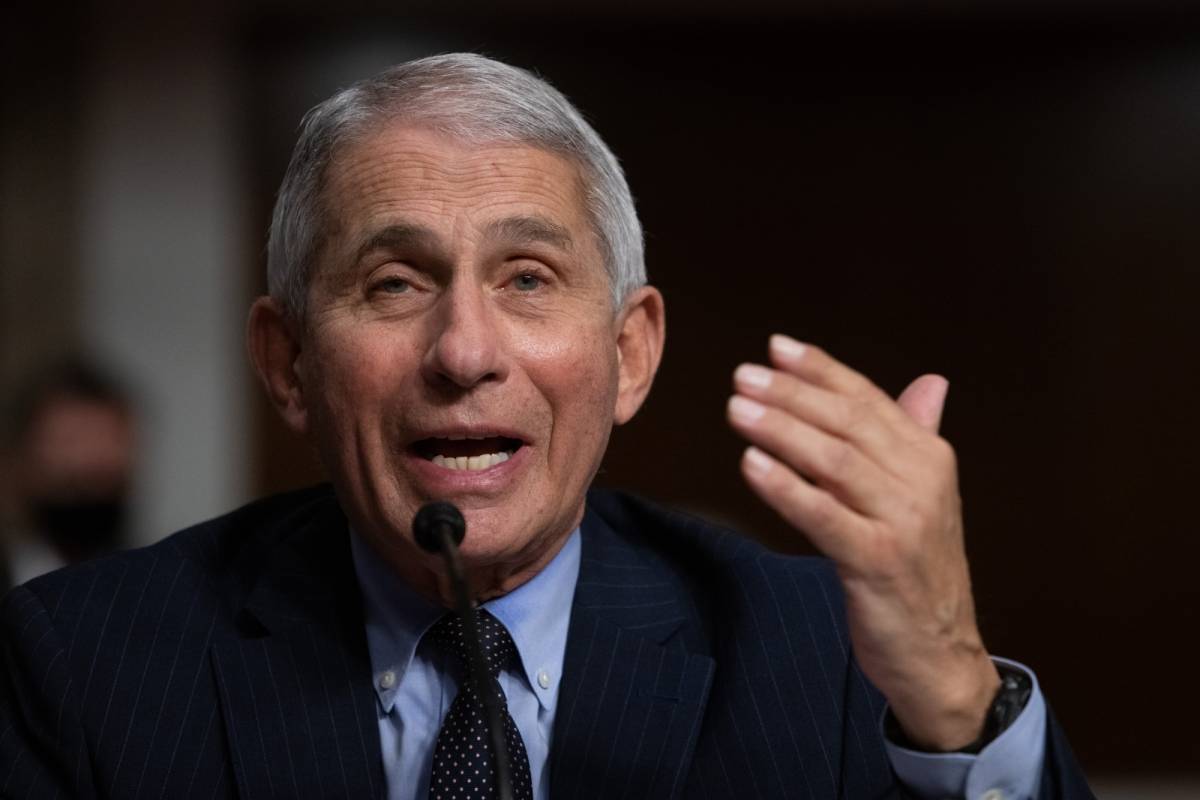
According to Fauci, who is also the White House chief medical advisor, BA.2 subvariant is about 50 to 60 per cent more transmissible than Omicron, yet it does not appear to be more severe….reports Asian Lite News

The Covid-19 pandemic is not over and the US is soon likely to see an uptick in cases due to the BA.2 subvariant of Omicron, according to the country’s infectious disease expert Anthony Fauci.

Fauci said that the BA.2 subvariant is estimated to account for about 25 or 30 per cent of new cases in the US, and could also become the most dominant variant in the country, CNBC reported.

While Fauci said he expects a rise in cases, it will not necessarily result in a massive surge like other variants have caused.

According to Fauci, who is also the White House chief medical advisor, BA.2 subvariant is about 50 to 60 per cent more transmissible than Omicron, yet it does not appear to be more severe.

“It does have increased transmission capability,” Fauci was quoted as saying on ABC News on Sunday.

“However, when you look at the cases, they do not appear to be any more severe and they do not appear to evade immune responses either from vaccines or prior infections.”
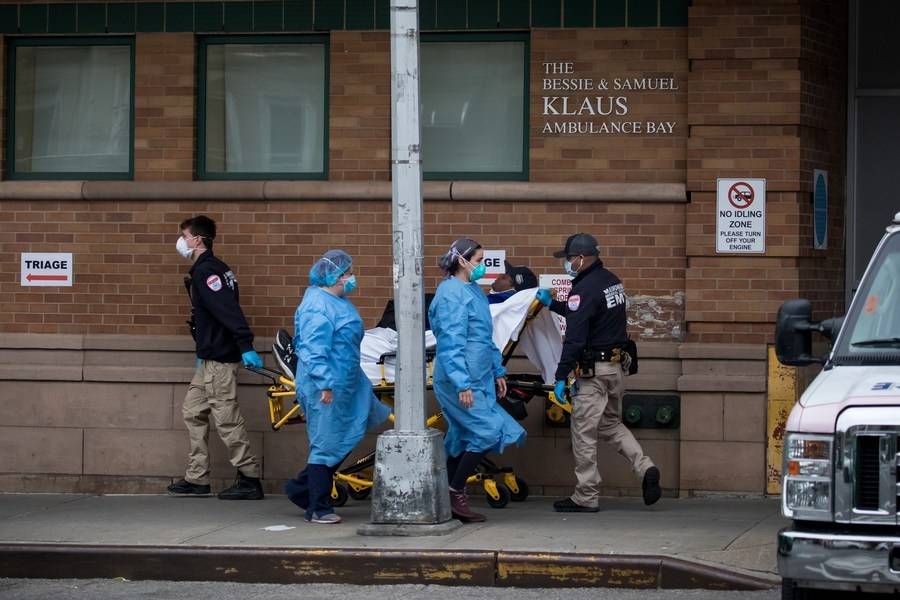
The variant has already caused cases to increase in China and several parts of Europe including the UK. Health officials continue to stress that coronavirus vaccines and boosters remain the best ways to prevent serious illness from the virus.

Other US health experts are also warning about the emergence of the BA.2, sub-variant of the highly contagious Omicron variant that led to a significant spike in cases in the US recently.

The variant could cause a new spike in cases but that the country is in a better position now than it was in the previous two years, when Covid-19 “defined our lives”, US Surgeon General Vivek Murthy was quoted as saying on Fox News on Sunday

“We should be prepared, Covid hasn’t gone away. Our focus should be on preparation, not on panic.”

Scott Gottlieb, a board member of Covid vaccine maker Pfizer and a former head of the Food and Drug Administration, similarly said he also expects “some uptick” due to BA.2 but “not a big wave of infection”.

“I think we’re going to continue to see low levels of infection through the summer. But before we get there, we’re probably going to see some tick-up of infection like the Europeans are seeing right now, maybe not as pronounced,” Gottlieb was quoted as saying on CBS.

Meanwhile, the US Centers for Disease Control and Prevention reported more than 31,200 new Covid cases on Saturday, including 958 deaths.

However, both are significantly down from the beginning of the year, the report said.

Murthy too issues warning

The COVID-19 pandemic has not gone away, Surgeon General Vivek Murthy warned on Sunday, saying that cases may rise and fall in the months to come.

Dr Murthy also expressed his concern over the lack of funding to fight the coronavirus pandemic.

“When we look at what’s happening around the world and over the last two years, we recognise that when cases increase in one part of the world, that often leads to increases in the other part of the world. And we should be prepared that, you know, COVID hasn’t gone away,” he told Fox News in an interview.

“There may be rises and falls in cases in the months ahead. But here’s the key, our goal is to keep people out of the hospital, it’s to save their lives, and we have more tools to do that than ever before. So our focus should be on preparation, not on panic. And if we get people these tools, vaccines, boosters, treatments, then we can actually get through waves that may come and go.”

“The thing that concerns me right now is that as much work as we’ve done in the last two years to get the right tools, we’ve got to continue funding them and supporting them so they are available to people across the country. That’s what Congress moving to provide that funding is so cortical,” Dr Murthy said.

During the last wave of the omicron variant, most sick were unvaccinated.

“So, the bottom line is those vaccinations and boosters work and the treatments that we now have in greater quantities than ever before, those also help to reduce our risk, but you’d rather prevent an infection than get it and treat it. That’s why these vaccines and boosters are essential,” he asserted.

Older age and illnesses like obesity are the ones that put one at higher risk.

“Those include the vaccines and boosters, but we’ve also found that other tools, whether they are masks, whether they are using testing strategically, these can be helpful in limiting the spread of the virus,” Dr Murthy said.

Responding to a question, Dr Murthy said that he does not think they can afford to move on.

“But I do think that we can move forward with more confidence, that we can live our lives and not let COVID define our lives, because we do have, in fact, better tools that have proven to save our lives and keep us out of the hospital,” he said.

“Over the last two years, COVID defined our lives, it restricted us in profound ways. But because we have better tools, we have the power to move forward now and manage the virus and do so thoughtfully because, you know, we’ve been able to get our kids back to school, you know, over the last year.

“I mean more than 95 per cent of kids are back in school. That’s a big win. I’m a dad of two small kids who, thankfully, are back in school. We’ve gotten people back to work. People are seeing their family and friends again. We need to keep doing these things. We now have the tools to do so safely,” Dr Murthy added.


ALSO READ: Global Covid caseload tops 470.6 mn

Previous Story

India steps up game in Sri Lanka

Next Story

How Western countries joined hands to punish Putin?

Previous Story

India steps up game in Sri Lanka

Next Story

How Western countries joined hands to punish Putin?

Latest from -Top News

Pakistan Risks Overstretching Itself in Yemen War

Pakistan’s expanding military role in Saudi Arabia amid the Yemen conflict could strain its defence resources and fragile finances…reports Asian Lite News Desk Pakistan’s military involvement in the war in Yemen may prove unsustainable because of mounting financial pressures and competing security demands, according to a new report. Islamabad’s growing military presence in Saudi Arabia risks stretching its defence resources while exposing the country to greater strategic and economic challenges. An article by Andrew Wilson in One World Outlook describes Pakistan’s involvement as a case of “fiscal and strategic overreach”, arguing that the country lacks the financial flexibility to sustain an expanded military commitment. Pakistan’s external finances depend heavily on an International Monetary Fund (IMF) programme, financial support from Gulf countries and remittances from Pakistani workers in the region. The report argues that deeper military involvement in the conflict could place additional pressure on these sources of financial stability. It also warns that deploying troops and military equipment abroad could weaken Pakistan’s capacity to address security challenges along its eastern border and deal with two domestic insurgencies. The move could also draw Islamabad into a conflict it has sought to approach cautiously. A Reuters report in May, citing Pakistani security and government sources, said Islamabad had deployed around 8,000 troops, a squadron of approximately 16 aircraft, mostly JF-17 fighter jets, two drone squadrons and a Chinese HQ-9 air-defence battery to Saudi Arabia. According to those sources, Riyadh was financing the deployment, with Pakistani personnel operating the equipment. The sources also said a confidential agreement contemplated the possibility of deploying up to 80,000 troops. Islamabad has not confirmed those figures, although it has acknowledged its military presence in Saudi Arabia, including the deployment of fighter jets at King Abdulaziz Air Base from April. The One World Outlook article argues that Saudi financial support can cover allowances and operating expenses but cannot easily replace military equipment needed elsewhere or resolve the political and strategic challenges of participating in the Yemen conflict. Pakistan’s defence budget is another concern. For the 2026-27 financial year, the federal government allocated PKR 3 trillion, or approximately $10.8 billion, to defence services. The allocation represents an 18 per cent increase from the original PKR 2.55 trillion provision and amounts to around 2.1 per cent of projected gross domestic product (GDP). Defence spending accounts for approximately 16 per cent of the federal government’s PKR 18.8 trillion expenditure. Military pensions are budgeted separately at PKR 822 billion, while debt servicing costs stand at approximately PKR 8 trillion, more than two-and-a-half times the defence allocation. The report argues that these competing financial obligations leave little room for additional military expenditure without placing further pressure on public finances. Pakistan’s reliance on IMF assistance also limits its fiscal flexibility. The country must meet the conditions attached to the programme, including a primary budget surplus target of 2 per cent of GDP and continued restraint on development spending. According to the article, these requirements make it difficult for Islamabad to finance an additional military commitment without compromising other budgetary priorities. Pakistan’s economic indicators offer limited reassurance. Economic growth for the 2025-26 financial year is estimated at between 3.6 and 3.7 per cent, while inflation reached approximately 10.3 per cent in September following an energy price shock. Foreign exchange reserves stood at around $21.5 billion at the end of September. Although this marks an improvement from the low levels recorded in 2023, the report notes that the reserves cover only a few months of imports. Financial assistance from Gulf partners remains central to Pakistan’s external stability. The article says Islamabad holds approximately $8 billion in Saudi deposits at its central bank. In July, the State Bank of Pakistan said Riyadh had extended the maturity of $5 billion in deposits to December 2028, easing the country’s immediate external financing requirements. A further $3 billion deposit was also extended in the spring. However, the article argues that these arrangements provide temporary relief rather than long-term financial independence, particularly as regional conflict threatens the stability of the Gulf economies on which Pakistan relies. The report concludes that Pakistan faces a difficult balance between supporting Saudi Arabia militarily and preserving the financial and military resources needed to address its domestic and regional challenges.

UK and Germany Ratify Kensington Treaty

Britain and Germany ratify the Kensington Treaty, agreeing new cooperation on AI, quantum research, defence and security while targeting investment, jobs and Russian hybrid threats…reports Asian Lite News Desk Britain and Germany

Economic tide is turning in Bangladesh

If there is one thing that can bring some comfort to the struggling Bangladeshi economy, it is good relations with India. Bangladesh should remember that Delhi’s backing, through easy supplies of essentials
Go toTop

Don't Miss

No test needed to fly into Britain now

An additional 194,747 new cases were reported across the U.K.

US Senate nod for bill making lynching a hate crime

US President Joe Biden promised to sign the bill, which