Top security officials from India and Central Asia have agreed to abide by the principles of transparency, financial prudence and sovereignty in defining grand connectivity projects for the region.
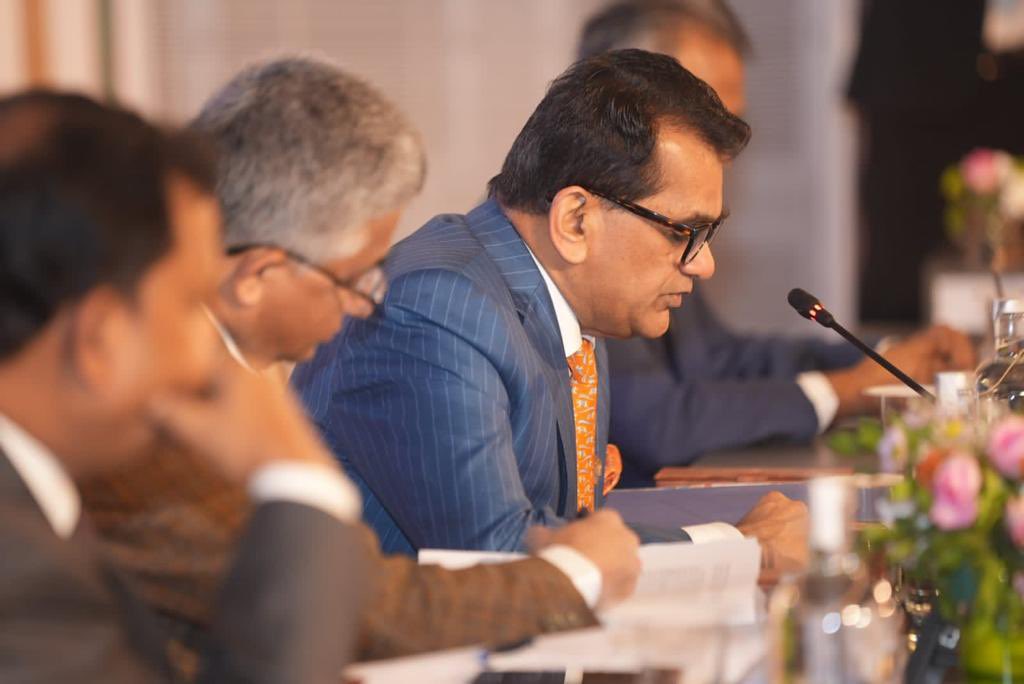
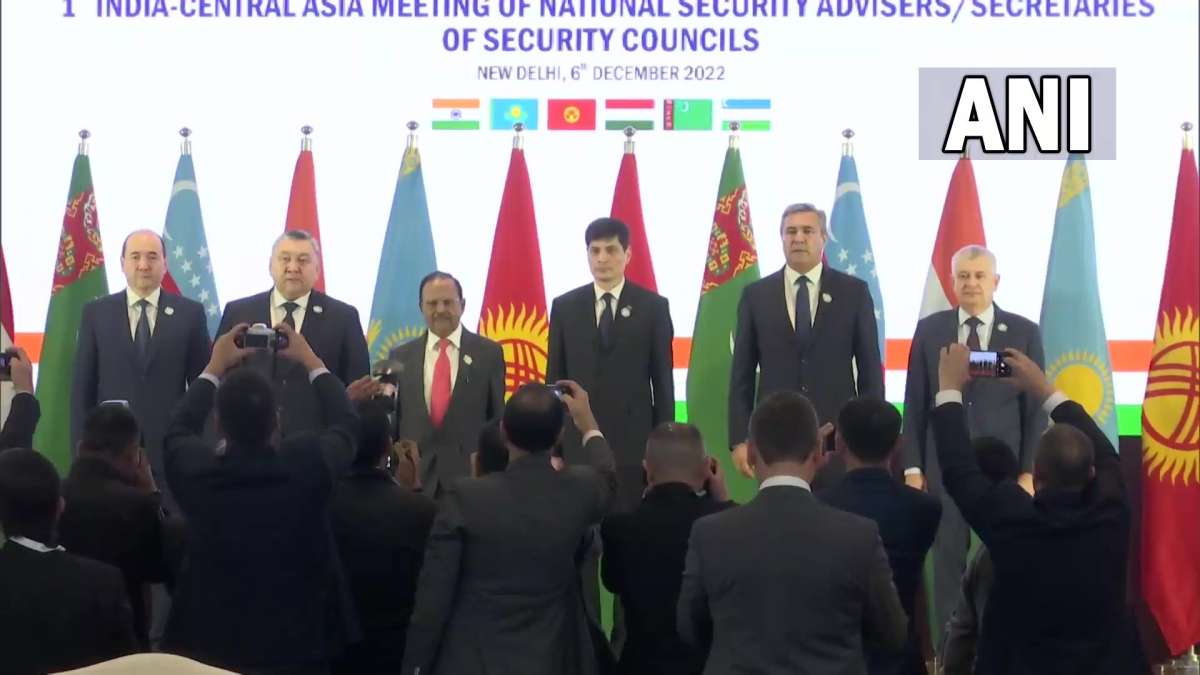
In a joint communique at the end of the First India-Central Asia Meeting of National Security Advisers/Secretaries of the Security Council hosted by National Security Advisor (NSA) Ajit Doval, the participants agreed that greater connectivity could be a force multiplier for enhancing trade and commerce as well as closer interactions between India and Central Asian countries.
Apart from India, representatives of the National Security Councils of Kazakhstan, Kyrgyzstan, Tajikistan, and Uzbekistan participated in the event. Turkmenistan was represented by their Ambassador in New Delhi.
“They agreed that connectivity initiatives should be based on the principles of transparency, broad participation, local priorities, financial sustainability, and respect for sovereignty and territorial integrity of all countries,” the joint communique mentioned.
Monday’s meeting flows from the agreement reached during the first India-Central Asia Summit held on January 27 this year on holding regular interactions of Secretaries of the Security Council to discuss issues of regional security.
Lured for long by China’s Belt and Road Initiative (BRI) infrastructural projects, the landlocked countries of Central Asia are realising the significance of India-backed plans of unlocking the full potential of the region through greater usage of Iran’s Chabahar port and development of the International North-South Transport Corridor (INSTC).
“We stand ready to cooperate, invest and build connectivity in the region. While expanding connectivity it is important to ensure that the initiatives are consultative, transparent and participatory,” NSA Doval told his counterparts from the Central Asian region.
New Delhi has been batting for the improvement of the transport and logistics architecture of the Eurasian region much before it took over the presidency of the Shanghai Cooperation Organization (SCO) in Samarkand in September this year.
Since the takeover of operations by India Ports Global Chabahar Free Zone (IPGCFZ) in December 2018, the Shahid Behesti Terminal of Chabahar Port in Iran has witnessed a gradual increase in transit traffic between Central and South Asia through the transportation corridor.
India has also utilized the Chabahar port to ship lakhs of tonnes of wheat and pulses as humanitarian food assistance to Afghanistan since 2020, especially during the Covid-19 pandemic – a step that has not gone unnoticed.
Discussing further development of the transport corridor, the NSAs on Monday supported India’s proposal to include Chabahar within the framework of INSTC – a mechanism that allows Uzbekistan and other Central Asian countries to connect to Chabahar for the transit of goods.
They called upon other Central Asian countries to consider joining the initiative, including the Ashgabat Agreement on International Transport and Transit Corridor.
The importance of the implementation of the TAPI gas pipeline project in expanding connectivity between Central Asian countries and India was also stated by Turkmenistan during the meeting.
Interestingly, India’s renewed push for realising the full potential of Chabahar – and its linking with INSTC – comes at a time when Beijing continues to make deep inroads into the region by planning new alternative regional and interregional transport corridors.
Last month, while speaking at the Summit of the Organisation of Turkic States in Samarkand, Kyrgyzstan President Sadyr Japarov spoke about the “practical implementation” of the China-Kyrgyzstan-Uzbekistan railway construction project which will accelerate the delivery of goods to western countries.
However, as the Central Asian countries acknowledged once again on Monday, the 30-year diplomatic partnership with India is based on “mutual trust, understanding, and friendship” – a reason big enough for them to engage with New Delhi in shaping a better future of Eurasia.