January 3, 2022
3 mins read

India offers Bangladesh use of inland waterways system up to Varanasi

“When it comes to roads, we already have a reciprocal agreement with Nepal. Our trucks can ply on Nepalese roads, Nepalese trucks can also come to Kolkata or wherever they need to go,” he stated…reports Asian Lite News.

With an aim to push two-way trade with Bangladesh, India has offered Dhaka the use of an inland waterways system up to Varanasi.

This was hinted by Indian High Commissioner in Bangladesh, Vikram K Doraiswami in a recent interview with Bangladesh daily Prothom Alo.

He emphasized that sub-regional connectivity is a good thing for everybody, a game changer.

“We are consistently interested in connectivity for better two-way trade with Bangladesh and for connectivity through Bangladesh,” said Doraiswami.

Mentioning that sub-regional connectivity is a good thing for everybody and that everybody will benefit from it he explained that just as people here correctly understand that India does want access to its northeast through Bangladesh, Bangladesh wants access into India, to Nepal, to Bhutan and now towards Myanmar also.

Recalling that the Prime Minister has specifically said this, the Indian High Commissioner said, “Just as we need you, you need us, so it makes sense to us to work together.”

“When it comes to roads, we already have a reciprocal agreement with Nepal. Our trucks can ply on Nepalese roads, Nepalese trucks can also come to Kolkata or wherever they need to go,” he stated.

“Bhutan has a non-reciprocal agreement with us where Bhutanese trucks can ply on Indian roads, including up to the Bangladesh border, but Indian trucks can’t go into Bhutanese territory. So that integration is already happening,” Doraiswami informed.

“So it actually makes sense for all four of us to integrate together. And this can progress towards Myanmar and Thailand also. There is no such initiative where only one side benefits. Everybody benefits,” he said, adding that Bangladesh can do it in a manner in which your interests are preserved, and our interests are also preserved, everybody’s interests are preserved.

Turning to the other ways of connectivity, the Indian High Commissioner said, there are railways.

“People in Bangladesh are not aware but since 1976 we have an arrangement for the use of Indian railway wagons to carry Bangladesh goods to Nepal and vice versa. It’s been a slow process because it’s only the last decade that Bangladesh has focused strongly on building the railway,” he reckoned.

“But more railway connectivity will be the game changer for Bangladesh, just as much as it is for the entire region. Railway is faster, environmentally friendly, carries much more goods and eventually can help seriously connect,” Doraiswami said.

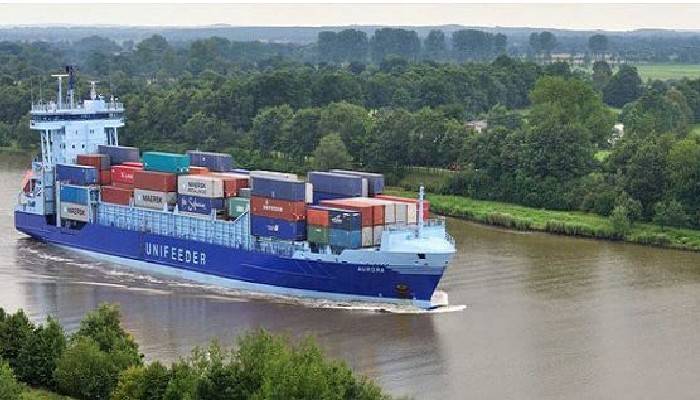
“Similarly, airports. We can start looking at sub-regional connectivity for freight. And even inland waterways. We have even offered the use of our inland waterway system up to Varanasi so you can actually shop goods from Varanasi to Nepal, using the India-Nepal water connectivity,” he maintained.

“And looking at Bangladesh’s extensive riverine network, we could also ship goods to Tripura further afield from there,” the Indian envoy to Bangladesh added.

“So long term, we have to re-imagine connectivity as a benefit for everybody. It’s not a one-way benefit. But it is a fact, and I have been trying to convey this to people, there is this impression that somehow India has got connectivity across Bangladesh and Bangladesh hasn’t. Actually it’s the other way around,” he said.

According to Doraiswami, since the agreement on the Chattogram and Mongla port was signed, and the SOPs were signed that in 2019, there has been only one trial shipment of containers and the total number of containers has been exactly four, not 400.

“So your government and your establishment had taken all the blame for giving it, but nothing has actually happened! So there is really no reason for people to get upset,” he said.

“In fact, it would be much more useful if we could get this going, because there is money to be made from the transport. It will cost and we are happy to pay the cost,” the Indian High Commissioner said.

ALSO READ-US eyes closer ties with Bangladesh
Previous Story

UK To Lure Indians With New Visa Schemes

Next Story

Winter storm strikes Chicago

Previous Story

UK To Lure Indians With New Visa Schemes

Next Story

Winter storm strikes Chicago

Latest from -Top News

Pakistan Risks Overstretching Itself in Yemen War

Pakistan’s expanding military role in Saudi Arabia amid the Yemen conflict could strain its defence resources and fragile finances…reports Asian Lite News Desk Pakistan’s military involvement in the war in Yemen may prove unsustainable because of mounting financial pressures and competing security demands, according to a new report. Islamabad’s growing military presence in Saudi Arabia risks stretching its defence resources while exposing the country to greater strategic and economic challenges. An article by Andrew Wilson in One World Outlook describes Pakistan’s involvement as a case of “fiscal and strategic overreach”, arguing that the country lacks the financial flexibility to sustain an expanded military commitment. Pakistan’s external finances depend heavily on an International Monetary Fund (IMF) programme, financial support from Gulf countries and remittances from Pakistani workers in the region. The report argues that deeper military involvement in the conflict could place additional pressure on these sources of financial stability. It also warns that deploying troops and military equipment abroad could weaken Pakistan’s capacity to address security challenges along its eastern border and deal with two domestic insurgencies. The move could also draw Islamabad into a conflict it has sought to approach cautiously. A Reuters report in May, citing Pakistani security and government sources, said Islamabad had deployed around 8,000 troops, a squadron of approximately 16 aircraft, mostly JF-17 fighter jets, two drone squadrons and a Chinese HQ-9 air-defence battery to Saudi Arabia. According to those sources, Riyadh was financing the deployment, with Pakistani personnel operating the equipment. The sources also said a confidential agreement contemplated the possibility of deploying up to 80,000 troops. Islamabad has not confirmed those figures, although it has acknowledged its military presence in Saudi Arabia, including the deployment of fighter jets at King Abdulaziz Air Base from April. The One World Outlook article argues that Saudi financial support can cover allowances and operating expenses but cannot easily replace military equipment needed elsewhere or resolve the political and strategic challenges of participating in the Yemen conflict. Pakistan’s defence budget is another concern. For the 2026-27 financial year, the federal government allocated PKR 3 trillion, or approximately $10.8 billion, to defence services. The allocation represents an 18 per cent increase from the original PKR 2.55 trillion provision and amounts to around 2.1 per cent of projected gross domestic product (GDP). Defence spending accounts for approximately 16 per cent of the federal government’s PKR 18.8 trillion expenditure. Military pensions are budgeted separately at PKR 822 billion, while debt servicing costs stand at approximately PKR 8 trillion, more than two-and-a-half times the defence allocation. The report argues that these competing financial obligations leave little room for additional military expenditure without placing further pressure on public finances. Pakistan’s reliance on IMF assistance also limits its fiscal flexibility. The country must meet the conditions attached to the programme, including a primary budget surplus target of 2 per cent of GDP and continued restraint on development spending. According to the article, these requirements make it difficult for Islamabad to finance an additional military commitment without compromising other budgetary priorities. Pakistan’s economic indicators offer limited reassurance. Economic growth for the 2025-26 financial year is estimated at between 3.6 and 3.7 per cent, while inflation reached approximately 10.3 per cent in September following an energy price shock. Foreign exchange reserves stood at around $21.5 billion at the end of September. Although this marks an improvement from the low levels recorded in 2023, the report notes that the reserves cover only a few months of imports. Financial assistance from Gulf partners remains central to Pakistan’s external stability. The article says Islamabad holds approximately $8 billion in Saudi deposits at its central bank. In July, the State Bank of Pakistan said Riyadh had extended the maturity of $5 billion in deposits to December 2028, easing the country’s immediate external financing requirements. A further $3 billion deposit was also extended in the spring. However, the article argues that these arrangements provide temporary relief rather than long-term financial independence, particularly as regional conflict threatens the stability of the Gulf economies on which Pakistan relies. The report concludes that Pakistan faces a difficult balance between supporting Saudi Arabia militarily and preserving the financial and military resources needed to address its domestic and regional challenges.

UK and Germany Ratify Kensington Treaty

Britain and Germany ratify the Kensington Treaty, agreeing new cooperation on AI, quantum research, defence and security while targeting investment, jobs and Russian hybrid threats…reports Asian Lite News Desk Britain and Germany

Economic tide is turning in Bangladesh

If there is one thing that can bring some comfort to the struggling Bangladeshi economy, it is good relations with India. Bangladesh should remember that Delhi’s backing, through easy supplies of essentials
Go toTop

Don't Miss

Major win for India in climate diplomacy

India manages to convince the world to include coal to

EC books 23 cases of hate speech in Karnataka

Till date 18 cases were lodged against eight speeches, 28