September 25, 2022
5 mins read

Russia toughens penalty for soldiers who surrender

Those developments come days after Russia instigated a partial mobilisation affecting up to 300,000 additional troops…reports Asian Lite News

Russia has toughened penalties for soldiers voluntarily surrendering or refusing to fight, with up to 10 years imprisonment, and it replaced its top logistics general after a series of setbacks to its seven-month war in Ukraine.

Those developments come days after Russia instigated a partial mobilisation affecting up to 300,000 additional troops, at a time when Kyiv has taken back more and more territory in a stunning counter-offensive.

Seemingly in response to the new Russian penalties, Ukrainian President Volodymyr Zelensky directly addressed Russian citizens on Saturday, telling them that their president was knowingly “sending citizens to their death.”

Speaking in Russian, he called on Moscow’s forces to surrender, saying, “You will be treated in a civilized manner… No one will know the circumstances of your surrendering.”

His pointed remarks came as Kremlin-held regions of eastern and southern Ukraine voted for a second day on whether to become part of Russia, dramatically raising the stakes in the conflict.

Integrating the four regions into Russia would mean that Moscow would consider any military move there as an attack on its own territory.

Zelensky has denounced the polls, on Friday calling them “crimes against international law and the law of Ukraine”.

Ukraine’s recent gains have laid bare flaws in Russia’s approach since it invaded on February 24, with some analysts seeing logistics as the weak link in Moscow’s army.

“Army General Dmitry Bulgakov has been relieved of the post of deputy minister of defence” and will be replaced by Colonel General Mikhail Mizintsev, aged 60, the defence ministry said.

Russia’s partial mobilisation, announced on Wednesday, will likely be one of Mizintsev’s first big logistical challenges, with the hundreds of thousands of reservists being called up needing equipment and training before deployment.

Military-age men have sought to leave, with flights full and neighbouring countries receiving an influx of Russians. Some 2,300 private vehicles were waiting at one crossing into Georgia, regional Russian authorities said.

“We were talking to our friends and many are thinking about leaving,” said Daria, 22, after fleeing Russia to Istanbul with many of her compatriots.

“Not everyone wanted to leave in February. The (mobilisation) decision of September 21 forced many to think about it again.”

More than 700 people were detained in protests on Saturday against the partial mobilisation, according to independent monitoring group OVD-Info.

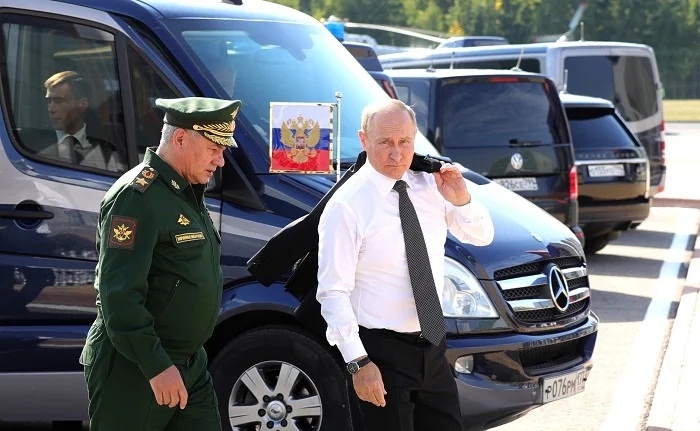
Now that President Vladimir Putin has signed the legislation, servicemen who desert, surrender “without authorisation”, refuse to fight or disobey orders can face up to 10 years imprisonment.

Looting will be punishable by 15 years imprisonment.

A separate law, also signed on Saturday, facilitates Russian citizenship for foreigners who enlist in the Russian army as the Kremlin seeks to bolster the ranks.
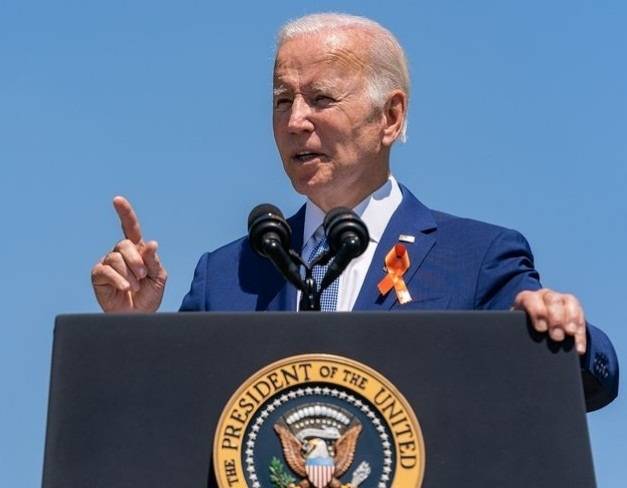
Biden calls vote a ‘sham’

Meanwhile, US President Joe Biden dismissed as a “sham” the voting on whether Russia should annex four regions of Ukraine.

And in remarks at the UN General Assembly in New York, even Beijing, Moscow’s closest ally since the war began, called on Russia and Ukraine not to let the effects of the war “spill over”.

In his own address to the UN on Saturday, Russian Foreign Minister Sergei Lavrov bitterly criticized Western nations, saying the United States and its allies sought to “destroy” his country.

“The official Russophobia in the West is unprecedented. Now the scope is grotesque,” he said.

He also defended the referendums, describing them as people claiming land “where their ancestors have been living for hundreds of years.”

The voting is being held in Russian-controlled areas of Donetsk and Lugansk in the east, and Kherson and Zaporizhzhia in the south.

Authorities there are going door-to-door to collect votes.

Polling stations then open Tuesday for residents to cast ballots on the final day of voting. Results are expected as early as late Tuesday.

“Ultimately, things are moving towards the restoration of the Soviet Union. The referendum is one step towards this,” Leonid, a 59-year-old military official said.

The snap referendums were announced just this week after the Ukrainian counter-offensive seized most of the northeast Kharkiv region — bringing hundreds of settlements back under Kyiv’s control after months of Russian occupation.

On Saturday, bad weather and stiff Russian resistance caused Ukraine’s counter-offensive to slow to a brutal slog in Kupiansk, in the eastern Kharkiv region.

“For now, the rain is making it difficult to use heavy weapons everywhere. We can only use paved roads,” Ukrainian army sergeant Roman Malyna said.

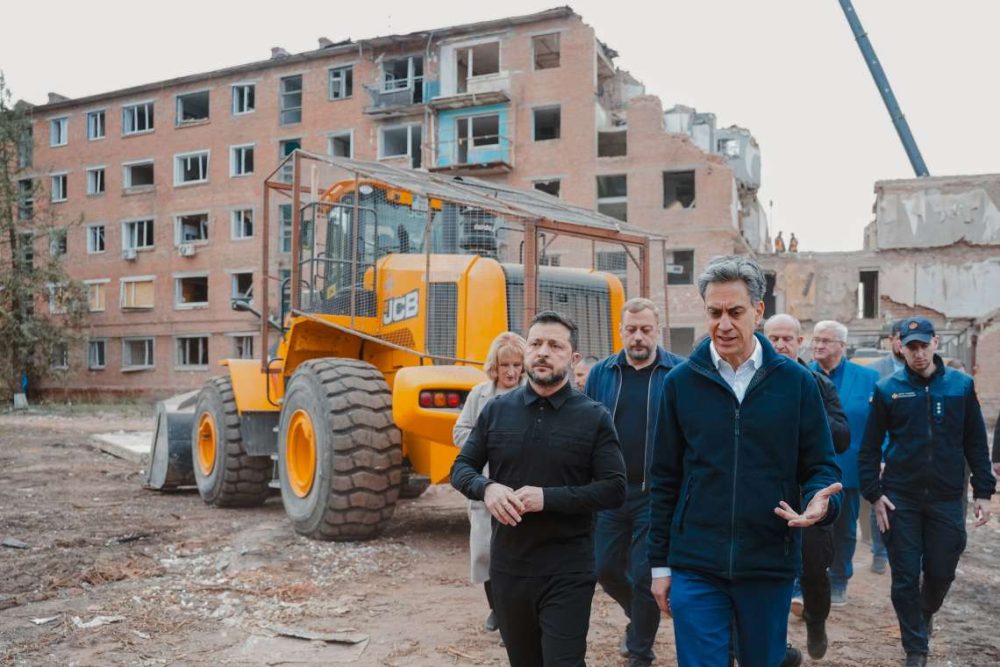
Irpin, close to the capital, was recaptured after weeks of fighting and residents have rallied to start rebuilding before winter sets in.

More than 100 apartment blocks in Irpin — dubbed a “hero city” by Zelensky for holding back Russian invaders — were badly damaged by shelling.

Evidence of ‘war crimes’

Head of the residents’ association in his building, Mykhailo Kyrylenko looked proudly at the new roof taking shape.

“People don’t have much money, but they agreed” to donate funds to gradually restore shattered homes, he said.

Putin this week warned that Moscow would use “all means” to protect its territory — which former Russian leader Dmitry Medvedev said on social media could include the use of “strategic nuclear weapons”.

UN investigators on Friday accused Russia of committing war crimes on a “massive scale” in Ukraine — listing bombings, executions, torture and horrific sexual violence.

In the eastern Kharkiv region, Ukrainian officials said they had exhumed 447 bodies from a site near the city of Izyum, which was recaptured from Russian forces.

The Kremlin has accused Kyiv of fabricating evidence of the alleged war crimes.
ALSO READ: Blinken ramps up criticism of Russia for war in Ukraine

Previous Story

Saudi crown prince, Scholz discuss relations

Next Story

Mumbai to Host Arabian Sea Dialogue

Previous Story

Saudi crown prince, Scholz discuss relations

Next Story

Mumbai to Host Arabian Sea Dialogue

Latest from -Top News

Pakistan Risks Overstretching Itself in Yemen War

Pakistan’s expanding military role in Saudi Arabia amid the Yemen conflict could strain its defence resources and fragile finances…reports Asian Lite News Desk Pakistan’s military involvement in the war in Yemen may prove unsustainable because of mounting financial pressures and competing security demands, according to a new report. Islamabad’s growing military presence in Saudi Arabia risks stretching its defence resources while exposing the country to greater strategic and economic challenges. An article by Andrew Wilson in One World Outlook describes Pakistan’s involvement as a case of “fiscal and strategic overreach”, arguing that the country lacks the financial flexibility to sustain an expanded military commitment. Pakistan’s external finances depend heavily on an International Monetary Fund (IMF) programme, financial support from Gulf countries and remittances from Pakistani workers in the region. The report argues that deeper military involvement in the conflict could place additional pressure on these sources of financial stability. It also warns that deploying troops and military equipment abroad could weaken Pakistan’s capacity to address security challenges along its eastern border and deal with two domestic insurgencies. The move could also draw Islamabad into a conflict it has sought to approach cautiously. A Reuters report in May, citing Pakistani security and government sources, said Islamabad had deployed around 8,000 troops, a squadron of approximately 16 aircraft, mostly JF-17 fighter jets, two drone squadrons and a Chinese HQ-9 air-defence battery to Saudi Arabia. According to those sources, Riyadh was financing the deployment, with Pakistani personnel operating the equipment. The sources also said a confidential agreement contemplated the possibility of deploying up to 80,000 troops. Islamabad has not confirmed those figures, although it has acknowledged its military presence in Saudi Arabia, including the deployment of fighter jets at King Abdulaziz Air Base from April. The One World Outlook article argues that Saudi financial support can cover allowances and operating expenses but cannot easily replace military equipment needed elsewhere or resolve the political and strategic challenges of participating in the Yemen conflict. Pakistan’s defence budget is another concern. For the 2026-27 financial year, the federal government allocated PKR 3 trillion, or approximately $10.8 billion, to defence services. The allocation represents an 18 per cent increase from the original PKR 2.55 trillion provision and amounts to around 2.1 per cent of projected gross domestic product (GDP). Defence spending accounts for approximately 16 per cent of the federal government’s PKR 18.8 trillion expenditure. Military pensions are budgeted separately at PKR 822 billion, while debt servicing costs stand at approximately PKR 8 trillion, more than two-and-a-half times the defence allocation. The report argues that these competing financial obligations leave little room for additional military expenditure without placing further pressure on public finances. Pakistan’s reliance on IMF assistance also limits its fiscal flexibility. The country must meet the conditions attached to the programme, including a primary budget surplus target of 2 per cent of GDP and continued restraint on development spending. According to the article, these requirements make it difficult for Islamabad to finance an additional military commitment without compromising other budgetary priorities. Pakistan’s economic indicators offer limited reassurance. Economic growth for the 2025-26 financial year is estimated at between 3.6 and 3.7 per cent, while inflation reached approximately 10.3 per cent in September following an energy price shock. Foreign exchange reserves stood at around $21.5 billion at the end of September. Although this marks an improvement from the low levels recorded in 2023, the report notes that the reserves cover only a few months of imports. Financial assistance from Gulf partners remains central to Pakistan’s external stability. The article says Islamabad holds approximately $8 billion in Saudi deposits at its central bank. In July, the State Bank of Pakistan said Riyadh had extended the maturity of $5 billion in deposits to December 2028, easing the country’s immediate external financing requirements. A further $3 billion deposit was also extended in the spring. However, the article argues that these arrangements provide temporary relief rather than long-term financial independence, particularly as regional conflict threatens the stability of the Gulf economies on which Pakistan relies. The report concludes that Pakistan faces a difficult balance between supporting Saudi Arabia militarily and preserving the financial and military resources needed to address its domestic and regional challenges.

UK and Germany Ratify Kensington Treaty

Britain and Germany ratify the Kensington Treaty, agreeing new cooperation on AI, quantum research, defence and security while targeting investment, jobs and Russian hybrid threats…reports Asian Lite News Desk Britain and Germany

Economic tide is turning in Bangladesh

If there is one thing that can bring some comfort to the struggling Bangladeshi economy, it is good relations with India. Bangladesh should remember that Delhi’s backing, through easy supplies of essentials
Go toTop

Don't Miss

Rubio, Jaishankar Discuss Trade and Regional Security

During the call, Rubio congratulated India on enacting the Sustainable

US journalist detained in Russia for espionage

This is the first such case of an American journalist